
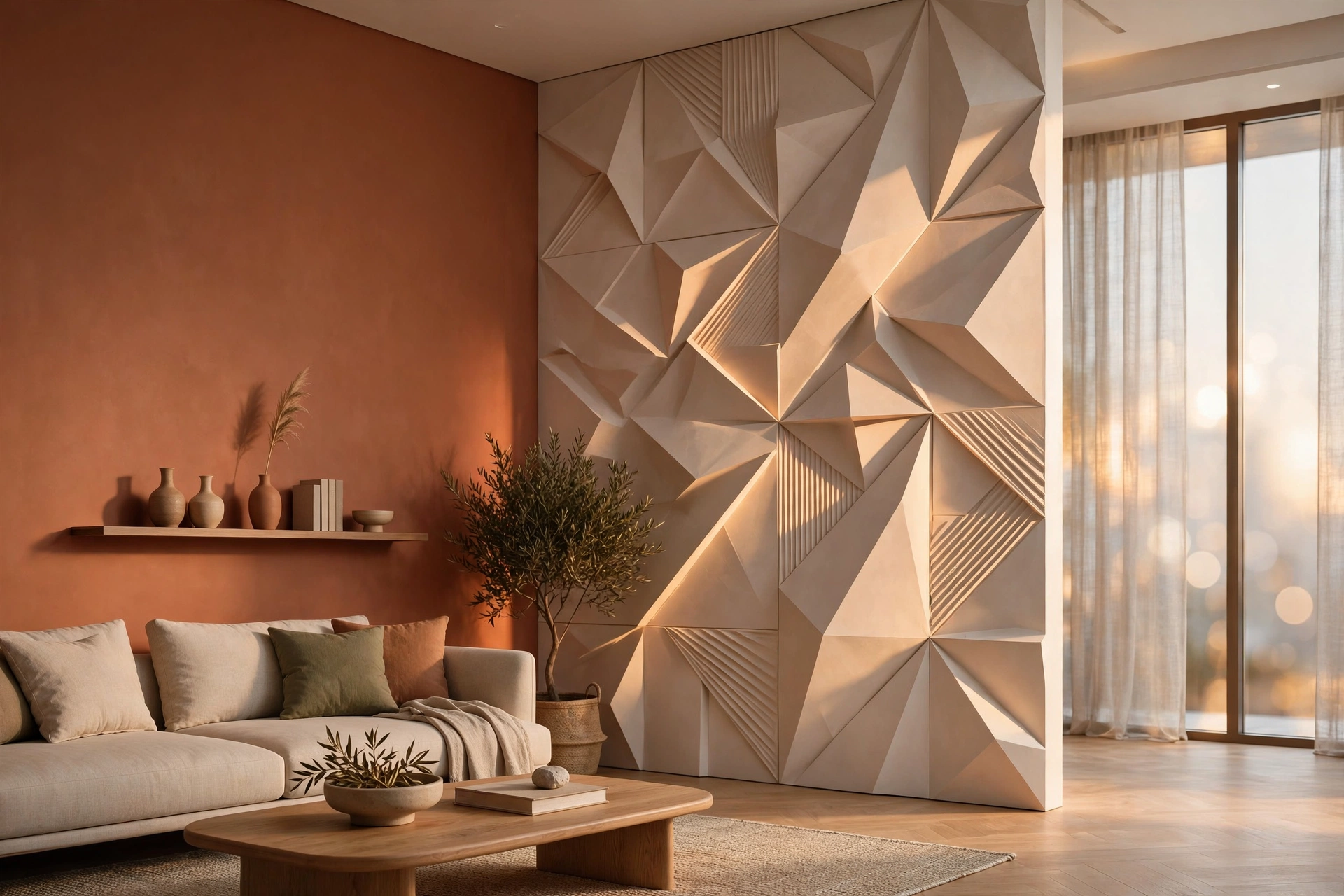
Accent Wall vs Feature Wall — What's the Difference?by Dubai Profixer
People use these terms interchangeably — but accent walls and feature walls differ in materials, cost, impact and design intent. Here's the complete honest comparison for Dubai homes, from a team that builds both every week.
On this page
- The Definitions
- Head-to-Head Comparison
- When to Choose an Accent Wall
- When to Choose a Feature Wall
- Accent Wall Ideas: The Full Menu
- Feature Wall Ideas: The Full Menu
- What Works Best in Dubai
- Can You Combine Them?
- Room-by-Room Guidance
- Cost Comparison: Honest Numbers
- The Psychology: Why Statement Walls Work
- Decision Framework: Which Should You Choose?
- Common Mistakes
- What Designers Actually Mean
- Briefing Your Contractor
- The Final Verdict
- Accent vs Feature Wall: FAQs
"I want a feature wall" — "You mean an accent wall?" This conversation happens in every design consultation. The terms overlap, professionals use them loosely, and Pinterest doesn't help. This guide settles it: what each term really means, how they differ in materials, cost and effect, when to choose which, and when to combine them. By the end, you'll know exactly what to ask for — and you'll understand why the distinction matters for your budget, your timeline and your room.
The Definitions
Accent Wall
- One wall treated differently from the others
- Uses colour or surface pattern: paint, limewash, wallpaper, murals
- Relatively flat — the interest is visual, not structural
- Affordable, fast to complete, easy to change
- The "jewellery" of the room
Feature Wall
- One wall designed as an architectural element
- Uses dimensional materials: stone, timber slats, 3D panels, panelling, cladding
- Physical depth and texture — the interest is structural
- Higher investment, a longer project, more permanent
- The "architecture" of the room
The simplest test: run your hand across it. If the interest is flat — colour, pattern, texture you can barely feel — it's an accent wall. If your hand meets real depth — stone relief, timber battens, sculptural panels — it's a feature wall. And if you're still unsure what to call yours, don't worry: what matters is the effect, not the label. Contractors price the work, not the word.
Head-to-Head Comparison
| Accent Wall | Feature Wall | |
|---|---|---|
| Primary tool | Colour & pattern | Material & dimension |
| Typical materials | Paint, limewash, wallpaper, murals | Stone, timber slats, 3D panels, panelling |
| Depth | Flat to minimal | Real physical relief |
| Cost in Dubai | Most accessible | Moderate to premium |
| Timeline | Fast | Longer |
| Changeability | Repaint or re-paper easily | More involved to change |
| Best for | Rentals, quick refreshes, colour lovers | Forever homes, luxury statements, architecture |
| Lighting needs | Standard | Designed lighting essential |
When to Choose an Accent Wall
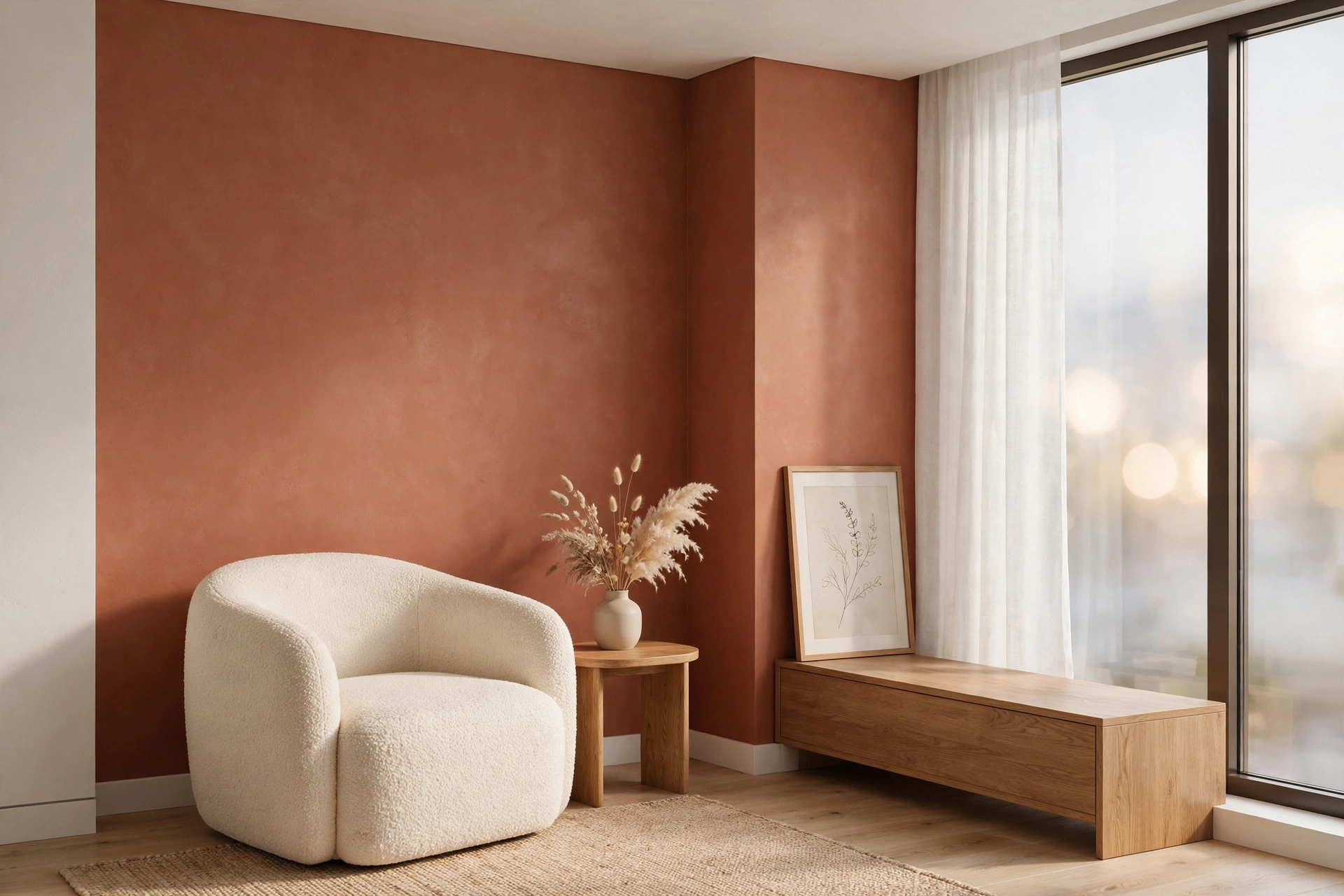
- You're renting: paint is the renter's superpower — maximum impact, fully reversible.
- You like change: repainting every couple of years keeps the home feeling fresh.
- Budget is tight: one wall of bold paint transforms a room for the least investment.
- You love colour: if your joy is colour itself, paint and wallpaper give you the full spectrum.
- Speed matters: a painted accent wall is usually completed quickly.
When to Choose a Feature Wall
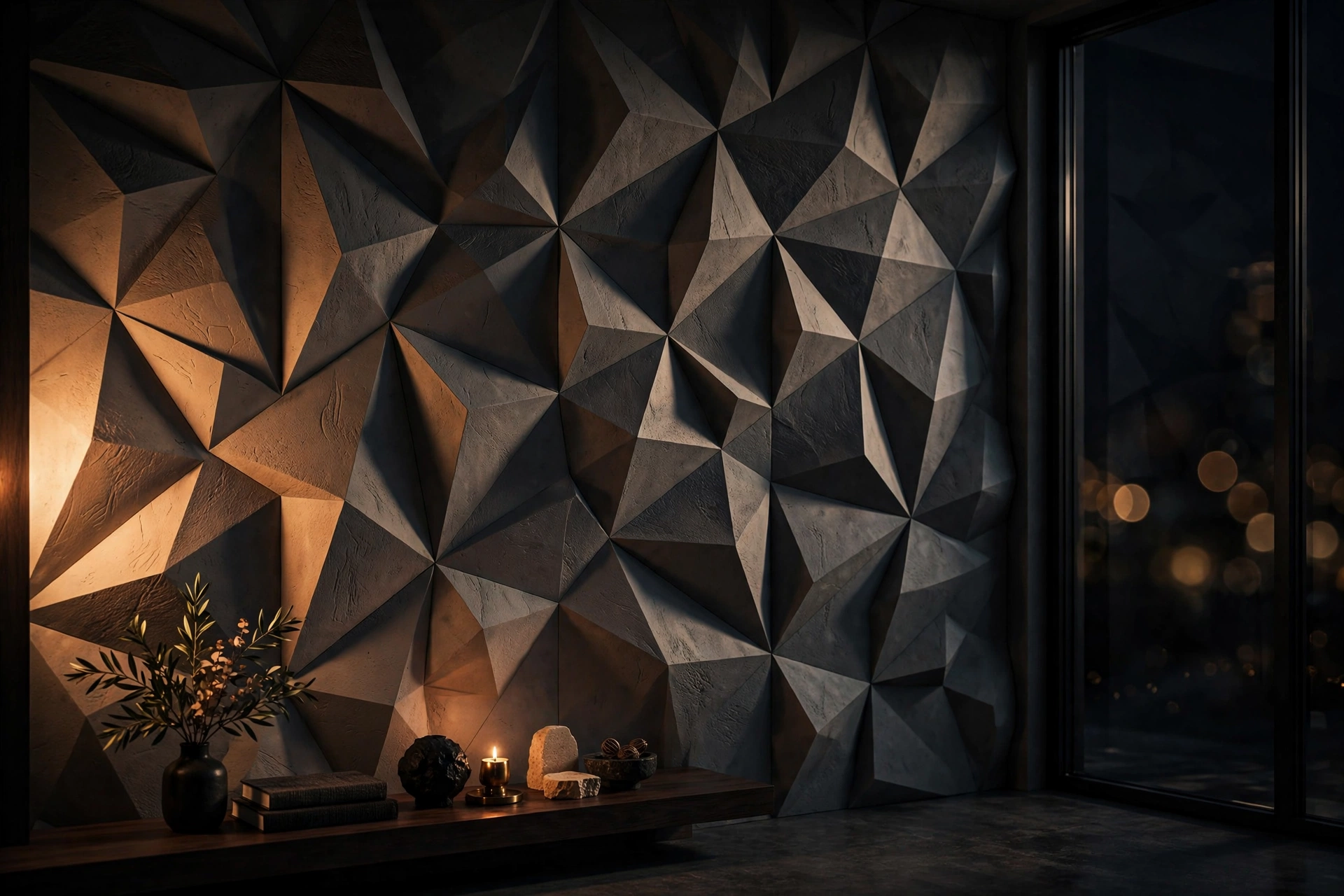
- You own the home: feature walls are investments in a place you'll enjoy for years.
- You want architecture: when the room needs structure, not just colour.
- Luxury is the goal: stone, timber and 3D panels signal permanence and quality.
- The wall is the view: in open-plan spaces, the feature wall anchors the entire composition.
- You're selling: a stunning feature wall photographs beautifully and lifts perceived value.
Accent Wall Ideas — The Full Menu
Bold Solid Colour
One wall in a saturated hue — emerald, navy, terracotta, charcoal. The fastest transformation in interiors: a day's work, dramatic result. Choose colours with depth (not primary brights) for sophistication.
Limewash & Textured Paint
Cloudy, artisanal texture in earthy tones. Limewash adds movement that flat paint can't — very current, very forgiving of imperfect walls.
Wallpaper Statement
Botanical prints, art-deco geometrics, large-scale murals. Wallpaper brings pattern complexity no paint can match. One wall keeps it affordable and tasteful — see our wallpaper installation service.
Geometric Colour Blocking
Painted arches, colour-blocked sections, two-tone bands. Graphic, modern, and achievable with painter's tape and patience.
Two-Tone Walls
Darker below a dado line, lighter above — or vice versa. Classic proportion play that adds architecture with paint alone.
Feature Wall Ideas — The Full Menu
Natural Stone Cladding
Travertine, slate, stacked stone — the permanent luxury statement. Each piece unique; the wall becomes geology. For interiors and exteriors.
Timber Slats
Vertical battens in oak, walnut or WPC — rhythm, warmth, and the defining look of contemporary Dubai. Behind TVs, beds and in entrances.
3D Panels
Sculptural relief that plays with light — geometric, wave, hexagonal. Maximum impact per square metre. See our feature wall designs.
Wall Panelling
Shaker, fluted, panel moulding — crafted timber or MDF treatments with heritage or modern character.
Backlit Onyx & Marble
Translucent stone glowing from within — the ultimate feature wall. Dramatic, luxurious, unforgettable.
What Works Best in Dubai
- Heat and sun: dark accent colours on sun-blasted walls fade faster — choose quality paint and accept maintenance, or go with stone/timber features that age gracefully.
- Dust: textured feature walls need occasional dusting; flat accent paint just needs wiping. Factor your cleaning tolerance.
- Resale: Dubai's market rewards neutral luxury. Bold accent colours photograph well but can polarise buyers; timeless stone and timber features are safer investments.
- Apartments vs villas: apartments suit accent walls and lighter features (WPC, 3D panels); villas can carry full stone and double-height timber.
- Humidity: bathrooms and kitchens need moisture-appropriate choices on either path — washable paints, PVC panels, sealed stone.
Can You Combine Them?
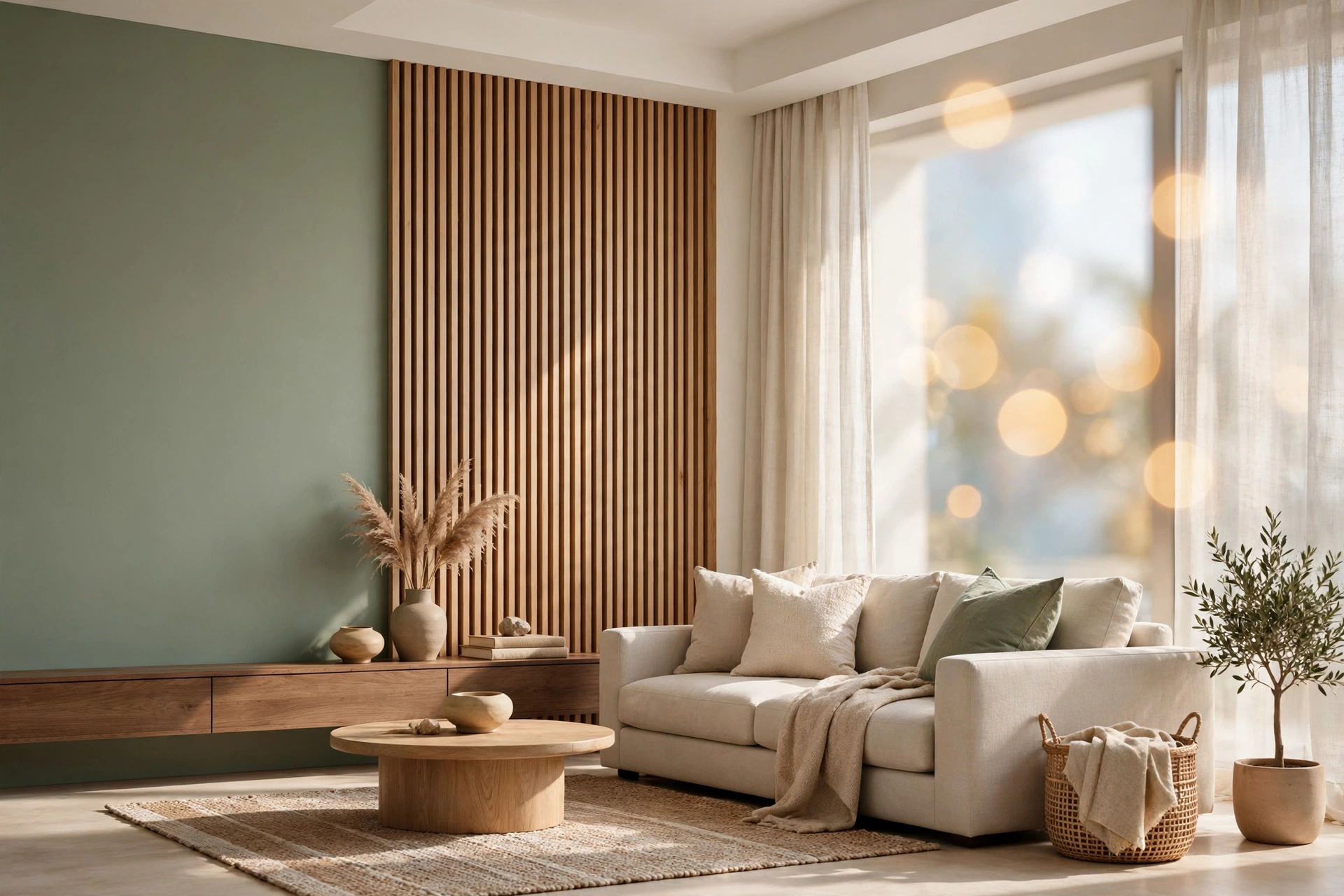
Absolutely — the best walls often do. A sage green painted wall (accent) with a timber slat section (feature). Limewash (accent) behind 3D panels (feature). The paint sets the mood; the material provides the architecture. Our designers routinely compose hybrid walls — see both our accent wall and feature wall services.
Room-by-Room Guidance
Living Rooms
The living room can carry either. Choose accent walls for quick, colourful refreshes; feature walls when the living room is the home's showpiece. The TV wall specifically rewards the feature treatment — see our feature wall service.
Bedrooms
Bedrooms favour accent walls — paint, limewash and wallpaper create calm without stimulation. Feature walls work behind the bed in master suites (upholstered panels, soft 3D waves), but keep them serene. More in our bedroom wall design service.
Dining Rooms
Dining rooms love drama — this is where deep colours (accent) or textured stone/timber (feature) shine under evening lighting. A dining feature wall is one of the highest-joy investments in a home.
Home Offices
Video-call backgrounds need to look good on camera: fluted panels or a calm painted accent wall behind you. Avoid busy patterns that moiré on camera.
Entrances
First impressions deserve features — stone cladding, dramatic panelling or a bold colour moment. The entrance sets expectations for the whole home.
Kids' Rooms
Accent walls rule here — playful colour, murals, colour blocking. Kids' tastes change fast; paint keeps up. Save feature walls for the rooms that don't need redecorating every three years.
Cost Comparison — Honest Numbers
Dubai pricing varies by wall size, material and finish — but the relative order never changes. Here's how the options stack up for a typical single wall, design plus installation:
- Painted accent wall: the most accessible option — a day's work.
- Limewash accent: a modest step up for artisanal texture.
- Wallpaper accent: varies hugely by paper — high-street to designer.
- WPC fluted feature: the feature-wall sweet spot — real architecture, sensible cost.
- 3D panel feature: moderate, with outsized visual impact.
- Natural stone feature: premium — the forever choice.
WhatsApp us your wall dimensions and a photo for an exact quote on either. We quote both options side by side when you're undecided — seeing the real numbers for your actual wall makes the decision easy. Most clients are surprised at how accessible the feature-wall sweet spot (WPC flutes, 3D panels) really is.
The Psychology — Why Statement Walls Work
There's science behind the statement wall. Human vision seeks focal points — a room without one feels restless, the eye wandering without landing. A single treated wall gives the eye somewhere to rest, which the brain reads as order and calm. This is why even a simple painted accent wall makes a room feel "designed": it creates hierarchy.
Feature walls go further, engaging the sense of touch as well as sight. Texture triggers a deeper perceptual response — we experience stone, timber and relief not just visually but almost physically. That's why feature walls feel more "luxurious": luxury, perceptually, is largely about material richness.
Colour psychology matters too. Deep greens and navies (popular accent choices) lower perceived heart rate — calming. Warm terracottas energise. The accent wall is the room's emotional thermostat; choose the feeling before the colour.
Decision Framework — Which Should You Choose?
Answer these five questions:
- Do you own or rent? Rent → accent wall. Own → either.
- What's your timeline? Need it this week → accent wall. Planning a renovation → feature wall.
- How often do you redecorate? Every 2–3 years → accent wall (repaintable). Once a decade → feature wall.
- What's the room's role? Bedroom calm → accent wall usually. Showpiece living room → feature wall earns its place.
- What excites you more — colour or material? Colour lovers thrive with accent walls; material lovers need the real thing.
If you're still torn, start with an accent wall. It's affordable, fast, and reversible — and living with a statement wall teaches you what you actually want. Many of our feature-wall clients started with paint.
Common Mistakes
- Wrong wall: the accent/feature wall should be the room's natural focal point — usually the first wall you see entering, or behind the key furniture. Accenting a random wall confuses the room.
- Too many features: one statement wall per room. Two competing features fight; the room loses.
- Ignoring light: dark accent colours need good light; feature walls need designed lighting. A beautiful wall in bad light is a wasted wall.
- Feature wall, flat light: 3D panels and stone without grazing light are half the product.
- Trendy colours on permanent features: bold colour belongs on paint (changeable); keep stone and timber timeless.
- Forgetting the other walls: the accent wall makes the other walls look plain by comparison — ensure they hold up (fresh paint, considered colour).
What Designers Actually Mean
Insider truth: professionals use the terms interchangeably half the time. "Feature wall" sounds more premium, so it's often used to sell any statement wall. When briefing a designer or contractor, don't rely on the label — describe what you want: "one wall in deep green paint" or "floor-to-ceiling timber slats with lighting." The description eliminates all confusion. And if a contractor quotes you a "feature wall" price for what's essentially paint, you'll now know to question it.
Similarly, when we quote, we quote the treatment, not the term. Tell us the wall, show us inspiration photos, and we'll tell you honestly whether paint, panels or stone serves you best — even if it's the cheaper option. That's the advantage of a contractor who does both: no incentive to upsell you past what your room needs.
Briefing Your Contractor
Whether you choose accent or feature, brief clearly:
- Show, don't just tell: save 3–5 inspiration photos. "Feature wall" means different things to different contractors; photos eliminate ambiguity.
- Name the wall: specify exactly which wall — "the wall behind the sofa" beats "the living room wall."
- Discuss the other walls: a statement wall changes the room's balance; agree what happens to the remaining walls (usually a fresh coat in a coordinating neutral).
- Lighting: for feature walls especially, agree the lighting plan upfront — it's part of the wall, not an extra.
- Samples in situ: approve paint colours, wallpaper, stone and timber samples on your actual wall, in your actual light, at different times of day.
- Get it in writing: materials, finish, timeline and what's included (preparation? lighting? cleanup?) — all in the quote.
The Final Verdict
Neither is "better" — they serve different needs. The accent wall is the smart, swift, colourful move: maximum transformation per dirham, changeable with your taste. The feature wall is the architectural commitment: material richness, permanence, the kind of wall people photograph.
The best advice? Start with the room, not the trend. A serene bedroom wants paint; a grand living room deserves stone. And when in doubt, ask someone who does this daily — send us a photo of your room on WhatsApp, and we'll tell you honestly which path serves it best. Sometimes the answer is a simple painted wall. We'll say so, even though we'd earn more from stone.
Accent vs Feature Wall — FAQs
Accent or Feature? We'll Help You Decide
Send us a photo of your room — we'll tell you honestly which treatment suits it best, and quote both options. No pushy sales talk; just straight advice from people who build these walls every day.
Get My Free Quote