
FurnishedPergola Dubaiby Dubai Profixer
The pergola and the furniture, designed together as one complete outdoor living space — wooden or aluminium structure, outdoor sofas, dining sets and lighting, all planned around how you'll actually use it.
What Is a Furnished Pergola?
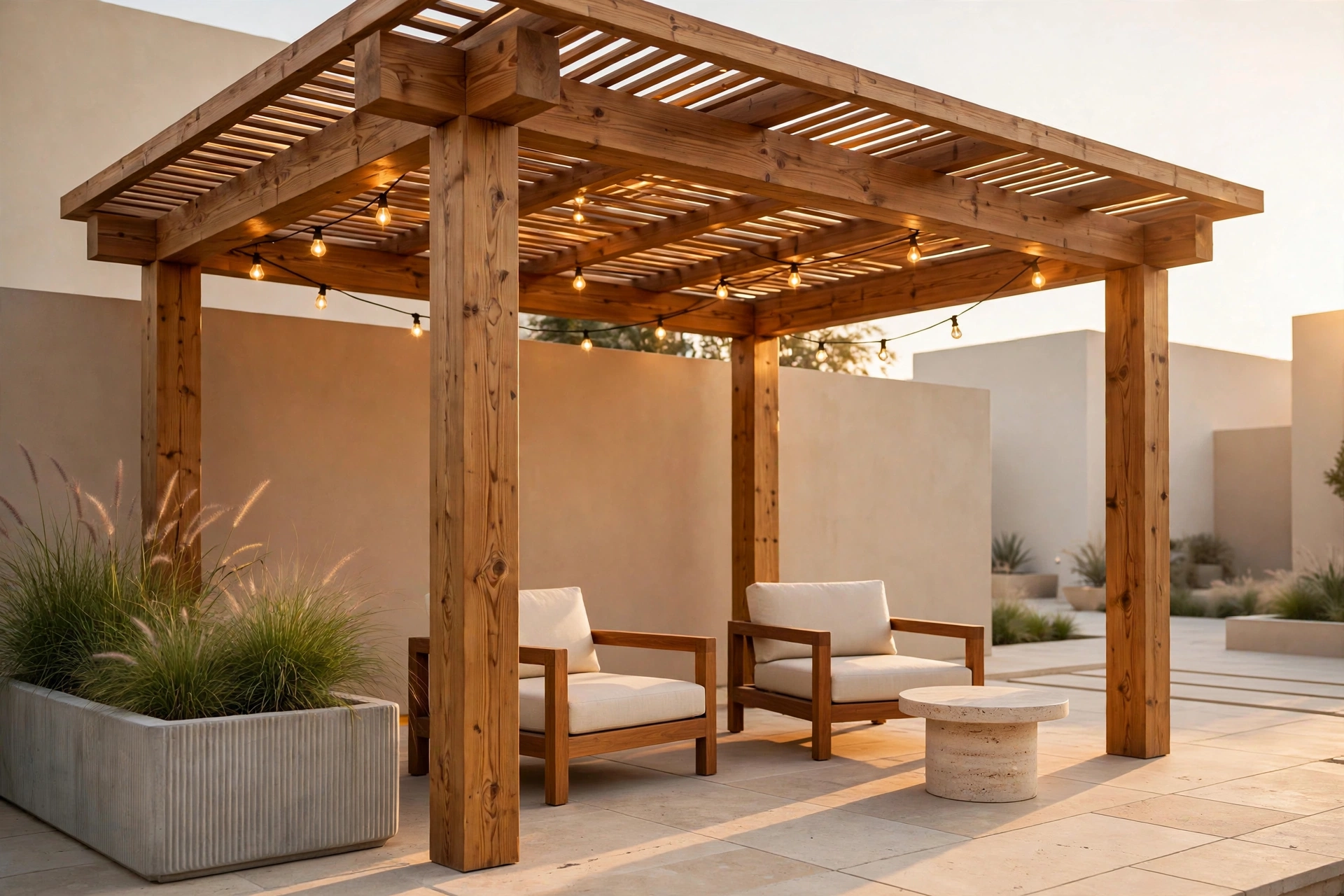
A furnished pergola is exactly what it sounds like — a pergola that arrives as a finished, usable space rather than an empty frame. The structure provides shade and defines the outdoor room; the furniture makes it somewhere you actually want to spend time. When the two are designed together, every decision reinforces the others: the pergola's dimensions are set around the seating layout, the posts land where they won't block conversation or walkways, and the furniture is chosen for the exact light and weather conditions under that roof.
The alternative — structure first, furniture later — creates most of the problems we see in Dubai gardens. A pergola sized for four ends up hosting eight at every gathering. A dining set ordered online turns out too wide for the posts. Beautiful indoor-style furniture fades, warps or rusts within a single summer because nobody checked whether it was rated for Gulf heat and humidity. Designing structure and furnishing together avoids all of this, because the space is planned around real use from day one.
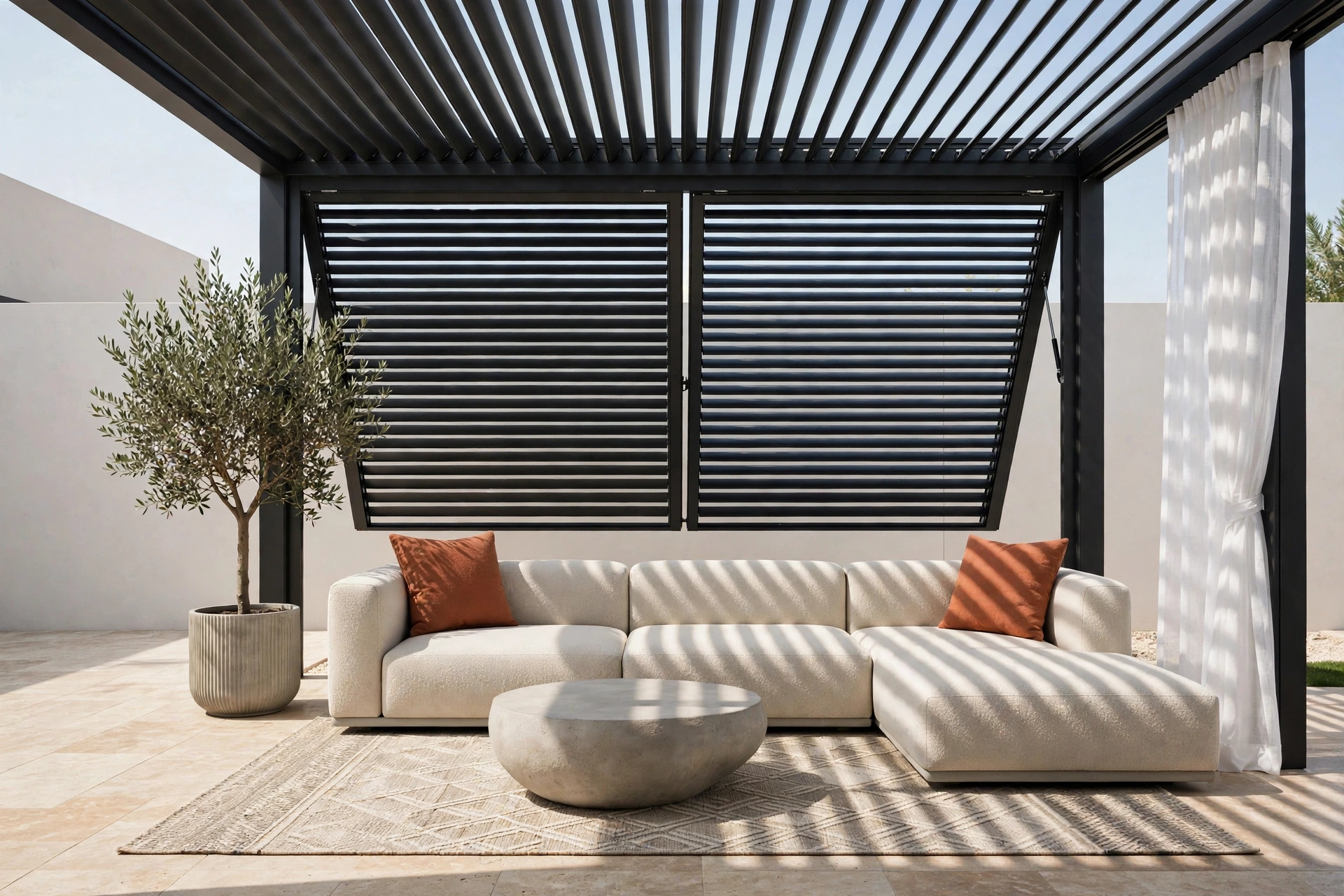
Our furnished pergolas are built on two structure options. Wooden pergolas bring natural warmth — timber posts and beams that suit garden settings, traditional architecture and anyone who wants the outdoor room to feel organic rather than engineered. Aluminium pergolas bring clean, modern lines — slim powder-coated frames that suit contemporary villas, rooftop terraces and anyone who wants minimal maintenance from the structure itself. Both can be furnished in any of the layouts below; the choice of structure is about the look you want and the character of your home.
What makes the space "furnished" rather than merely "shaded" is the layering: seating chosen for the way you entertain, a dining arrangement if you eat outdoors, lighting that makes the space work after sunset, and practical details like side tables within arm's reach and storage for cushions during the harshest summer weeks. Each layer is decided during design, not discovered as a problem afterwards.
The 5 Layers of a Furnished Pergola
Every furnished pergola we design is built from these five layers, planned in order — each one shapes the next.
Wooden or aluminium frame sized around your space and how you'll use it
Fixed roof coverage planned for Dubai's sun angles, not just the footprint
Sofas, loungers or majlis arranged for conversation, not just placed
Table and chairs scaled to the posts, with real walkway space around them
Lighting, planting and accessories that make it inviting after dark
Outdoor Sofa & Lounge Setups
The lounge setup is the heart of most furnished pergolas in Dubai — an outdoor living room where the family gathers in the evening and guests are received.
Geometry first, furniture second
Getting it right is mostly about geometry: seating arranged so people face each other, a coffee table within easy reach of every seat, and enough circulation space that nobody climbs over anyone else to get up.
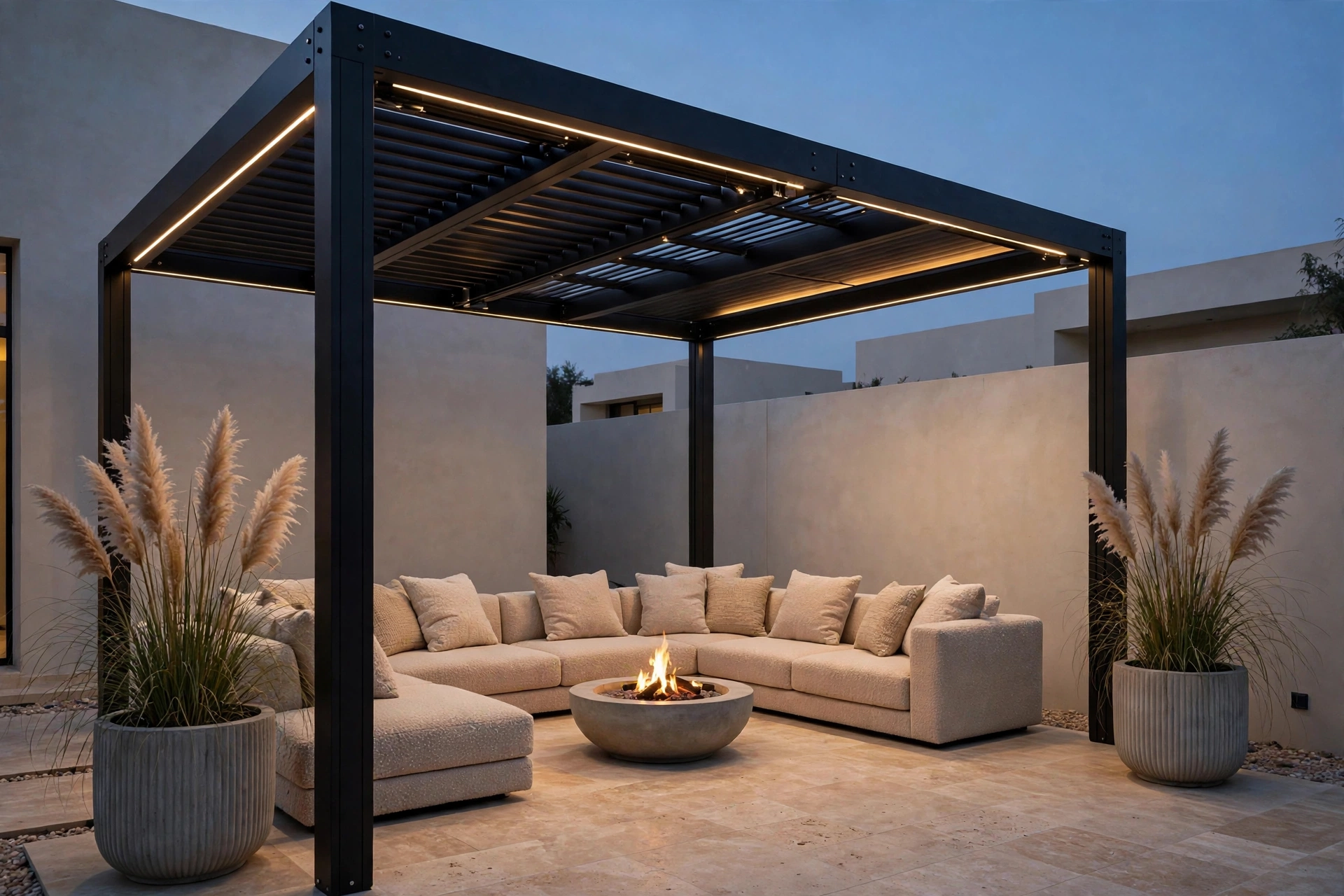
Sectional sofas work beautifully under pergolas because they anchor the space — an L-shaped or U-shaped sectional defines the lounge zone the way walls define a room indoors. Under a wooden pergola, deep-seated sectionals in natural fabrics lean into the garden-room feeling. Under an aluminium pergola, lower-profile modular seating with clean lines suits the modern frame. In both cases, the pergola's posts should frame the seating rather than interrupt it — which is why the structure is designed around the furniture layout, not the other way round.
- Face-to-face layouts: sofas facing each other (or an L-shape) create conversation; a single sofa facing a view is for one person, not a family.
- The 45cm rule: coffee tables sit roughly 40–50cm from seat edges — close enough for a cup, far enough for legs.
- Walkways stay clear: at least 75–90cm of clear passage behind and beside seating so the space flows during gatherings.
- Side tables matter: every seat should have a surface within arm's reach — the detail that separates a designed lounge from placed furniture.
- Daybeds for poolside: where the pergola sits near a pool, a daybed or sun loungers under the shade edge replace part of the sofa layout.
- Rugs ground the zone: an outdoor-rated rug under the seating group makes the pergola feel like a room, not a patio with furniture on it.
Dubai's climate shapes lounge furnishing more than most people expect. Cushion fabrics need to handle intense UV without fading to grey in a season, and sudden humidity means quick-dry foam beats standard fills. We select seating with these realities in mind and advise on simple seasonal care — such as storing loose cushions during the peak summer weeks when the space gets less use — so the lounge looks as good in its third year as its first.
Outdoor Dining Areas
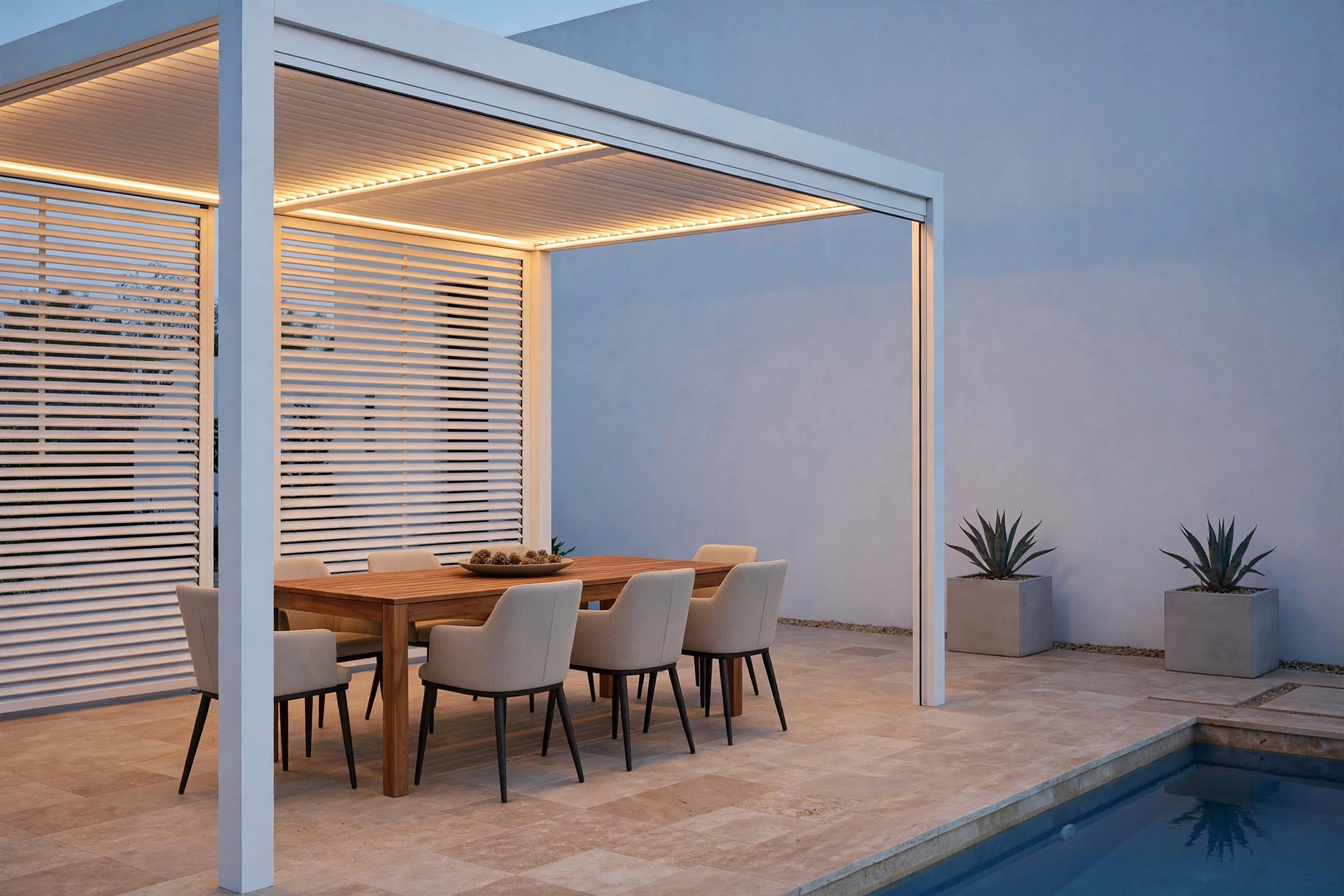
Dining outdoors is one of the great pleasures of Dubai life for much of the year, and a furnished pergola with a proper dining setup turns it from an occasional novelty into a daily habit. The key difference between a dining set placed under a pergola and a dining area designed into one is space planning: a table needs roughly 75cm of chair-pull-out space on every used side, plus walkway behind the chairs. A table that technically fits the pergola footprint can still be unusable if chairs hit the posts.
Rectangular tables seat the most people per metre and suit long, narrow pergolas — the classic villa garden layout. Round tables suit square pergolas and create better conversation, since everyone faces the centre; a round six-seater needs less overall width than most people assume. For larger family gatherings, extending tables give weekday practicality and weekend capacity in one piece — an honest solution for Dubai households that host often.
Chair choice matters outdoors more than indoors. Dining chairs for a pergola should be comfortable enough for long, slow dinners — the kind Dubai evenings invite — while surviving heat, dust and the occasional sandstorm film that coats everything. Stackable or folding chairs earn their place where the dining zone doubles as open space at other times.
Positioning the dining zone within the pergola deserves thought. Near the kitchen door or BBQ corner minimises the carrying distance for food — a practical detail that decides whether the outdoor table gets used daily or only on occasions. If the pergola hosts both lounge and dining, the dining set sits in the brighter zone (daytime use) while the lounge takes the end with the best evening light and sunset view. These are the small planning decisions that separate a furnished pergola from a furnished patio.
Traditional Arabic Outdoor Majlis
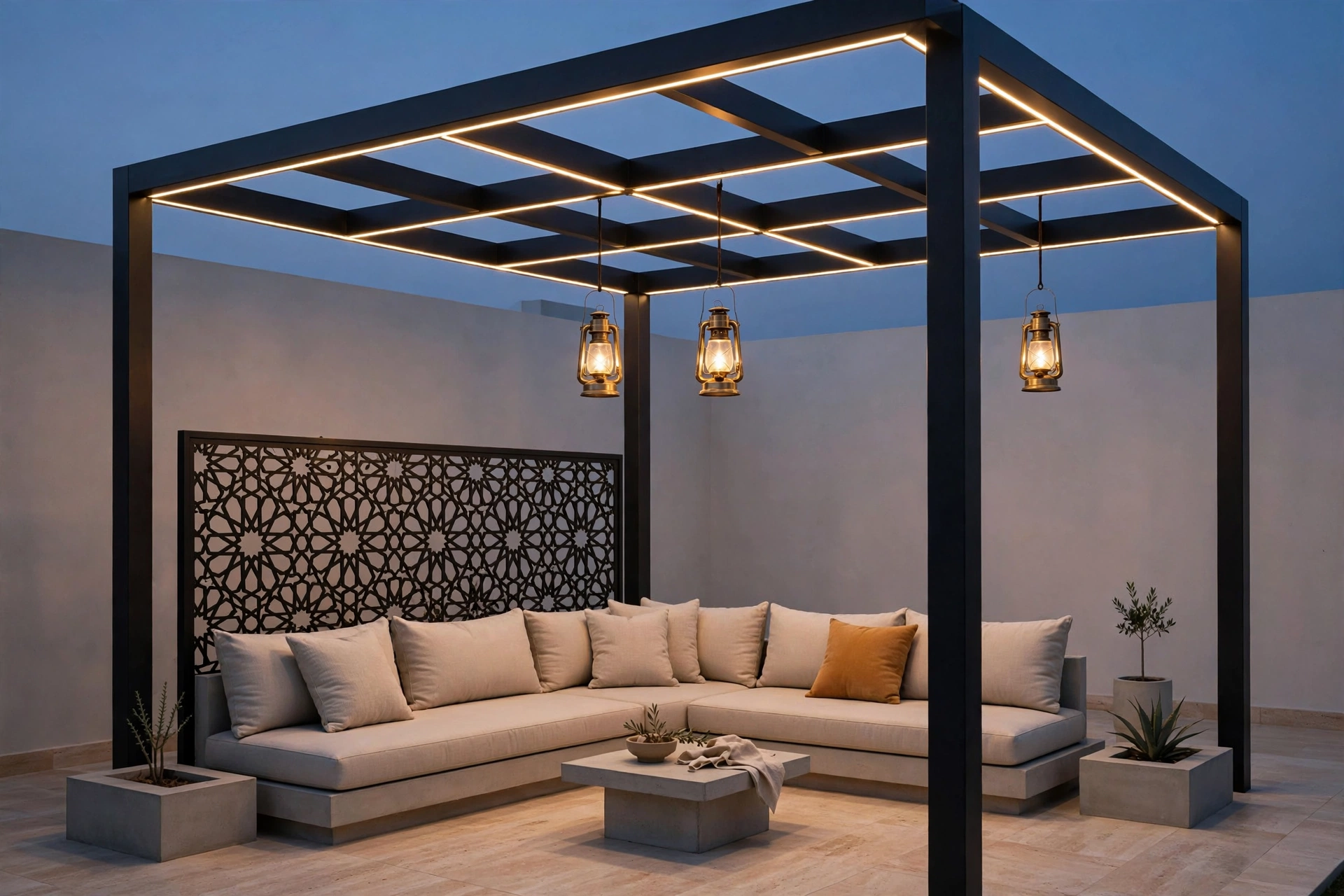
The outdoor majlis under a pergola is a furnished layout we design often for Dubai villas — a shaded, comfortable space for receiving guests in the Emirati tradition, adapted to contemporary villa life. A majlis arrangement differs from Western lounge seating in its geometry: low, generous seating running along the pergola's edges, facing inward, creating a room built for conversation and hospitality.
Under a wooden pergola, a majlis setup feels rooted and traditional — timber posts with floor-level or low seating, patterned outdoor textiles, and warm lighting read as a natural extension of the home's hospitality. Under an aluminium pergola, the same majlis principle takes a contemporary form — clean-lined low seating with modern fabrics, suited to newer villas. Both honour the same idea: guests seated comfortably, hosts able to serve easily, conversation flowing across the space.
- Perimeter seating: low sofas or built-in benches along two or three sides, leaving the centre open for serving and movement.
- Low profile: seating heights lower than Western sofas — comfortable for long visits and traditional posture.
- Service access: the open centre and clear entry points let hosts serve coffee and dates without squeezing past guests.
- Evening lighting: warm lanterns and low-level lighting suit the majlis mood far better than bright overhead light.
- Privacy by design: pergola placement and screening are planned so the majlis feels sheltered — important for family gatherings.
- Floor comfort: outdoor rugs and floor cushions complete the setting; hard flooring alone feels unfinished.
Many of our majlis pergolas serve double duty — family lounge by day, guest reception in the evening. The furnishing plan accounts for both: comfortable enough for daily family use, generous and presentable enough for guests arriving unannounced, as they do. This dual purpose is designed in from the start, not retrofitted later.
BBQ & Entertainment Setups
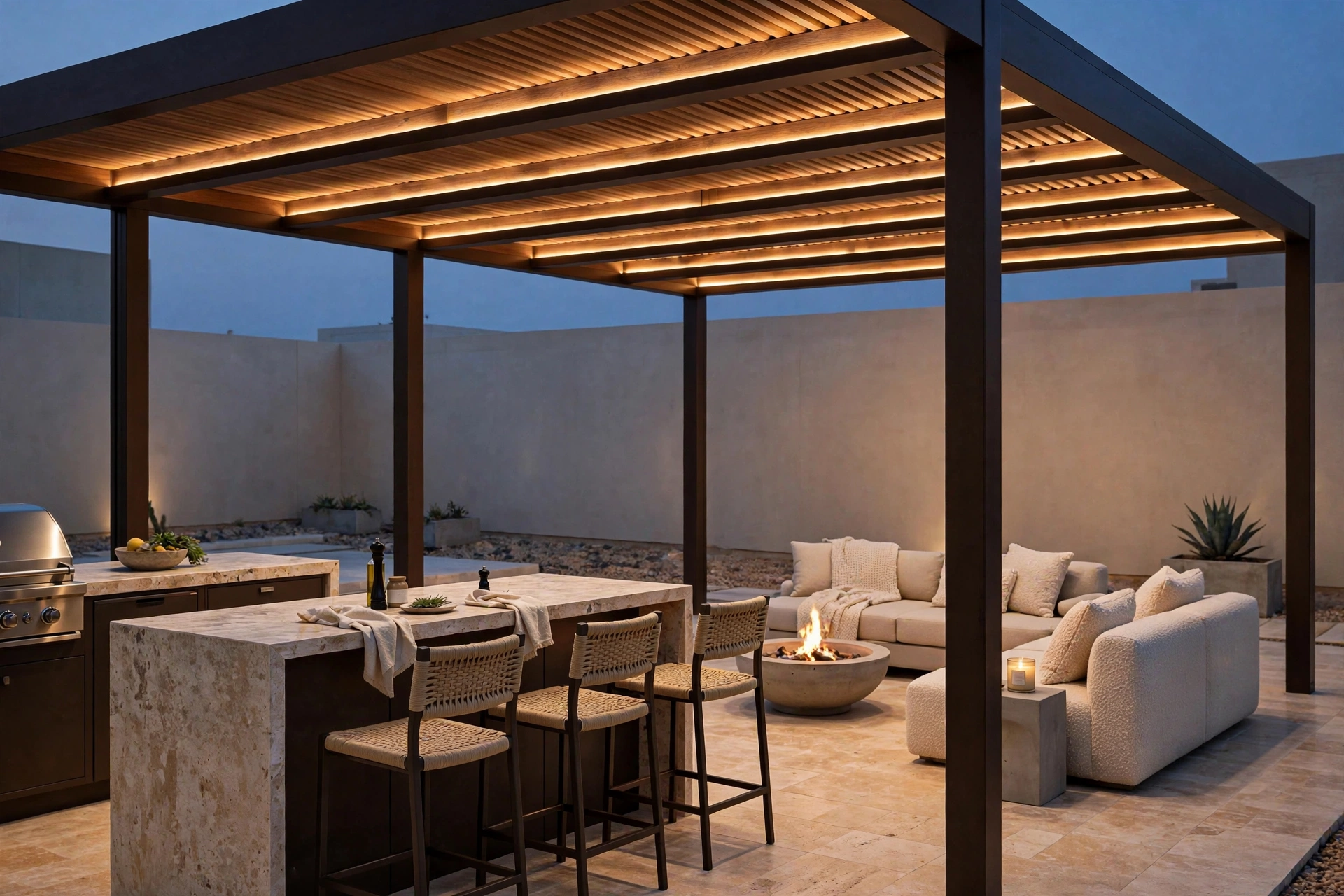
For households that entertain, the furnished pergola often centres on food — a BBQ or outdoor kitchen corner with dining and lounge arranged around it. This is the layout where structure-first planning fails most visibly: a grill placed after the pergola is built ends up in a corner with no ventilation path, no prep surface and guests walking through the cooking zone to reach their seats.
Designed together, the cooking zone gets its own logic. The BBQ or grill station sits at one end of the pergola — ideally near the kitchen door for prep and plating — with a heat-resistant work surface beside it and the dining table within a few steps. Ventilation is planned so smoke rises and clears rather than settling under the roof; this is a genuine design consideration for covered structures in Dubai's still evening air. The lounge seating goes at the far end, upwind of the cooking zone, so guests relax in clean air while the host cooks within conversation distance.
- Cooking zone at one end: grill station near the kitchen door, with prep surface and storage for tools and fuel.
- Dining within steps: the table sits close enough that food arrives hot — the whole point of cooking outdoors.
- Lounge upwind: seating positioned so cooking smoke drifts away from guests, not through them.
- Serving flow: a clear path from kitchen door to grill to table that doesn't cross the lounge conversation zone.
- Evening lighting: task lighting over the grill plus warm ambient light over dining and lounge — two moods, one space.
- Easy-clean surfaces: flooring and worktops near the cooking zone chosen for grease and food stains, not just looks.
Entertainment setups also cover the simpler version: a pergola furnished for evening gatherings without a full cooking station — a drinks console or bar cart, generous lounge seating, good lighting and perhaps an outdoor speaker setup. The principle is the same: the pergola is designed around how the evening flows, from guests arriving to the last cup of karak.
Furniture Materials That Survive Dubai Weather
Dubai is one of the hardest climates on outdoor furniture in the world — intense UV for most of the year, summer humidity, fine dust that works into every joint, and temperature swings that punish the wrong materials. Furniture that looks perfect in a showroom can fail within a season outdoors here. This is the honest guide to what actually lasts, because a furnished pergola is only as good as its furniture in year three.
Frames: what holds up
Powder-coated aluminium is the most reliable outdoor frame material for Dubai — it doesn't rust, it's light enough to move, and quality powder coating resists UV chalking for years. Teak and other dense hardwoods age gracefully outdoors, silvering to a grey patina if left untreated; they're heavy, stable in wind, and suit wooden pergolas aesthetically. Synthetic rattan (PE weave) over aluminium frames gives the woven look without natural rattan's rapid decay — but quality varies enormously, and cheap weaves go brittle in UV within two summers. Steel needs excellent galvanising plus powder coating to survive; unprotected steel rusts fast in coastal humidity.
Fabrics: what doesn't fade or rot
Solution-dyed acrylic fabrics are the standard for serious outdoor cushions — the colour runs through the fibre rather than sitting on the surface, so years of Dubai sun fade them far slower than printed fabrics. Quick-dry foam cores matter because humidity and the occasional downpour trap moisture in standard foam, leading to mildew. Removable, washable covers are non-negotiable — dust storms don't ask permission. Dark fabrics show dust; very light fabrics show everything else; mid-tones with texture hide the realities of outdoor life best.
What to avoid
Indoor furniture outdoors: indoor wood finishes, standard upholstery foam and non-UV fabrics fail within months in direct Gulf sun.
Cheap synthetic weave: brittle, cracking PE rattan is the most common disappointment — it looks fine for one season.
Untreated softwoods: pine and similar softwoods warp, split and attract insects without serious treatment.
Non-marine metals near the coast: villas near the water need corrosion-proof fixings and frames; standard hardware pits quickly.
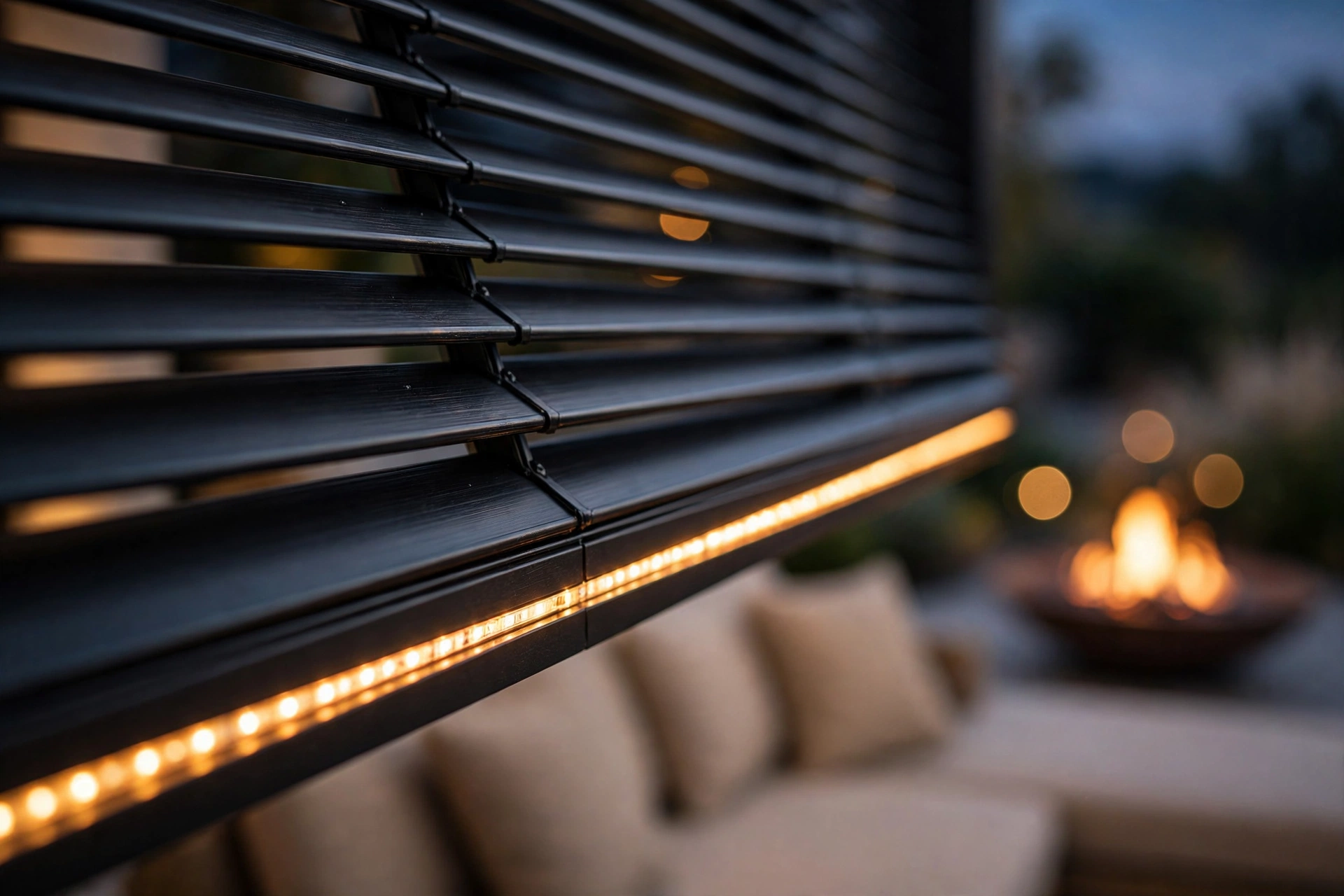
Selected for your situation, not a catalogue
We don't promise specific furniture brands — brand availability changes and honesty matters more than names. What we do is select every piece against the criteria above for your specific situation: how much direct sun the pergola gets, how close you are to the coast, and how much maintenance you're willing to do. The right material for a shaded inland garden differs from the right material for a rooftop terrace facing the sea, and the furnishing plan reflects that.
Lighting & Ambiance
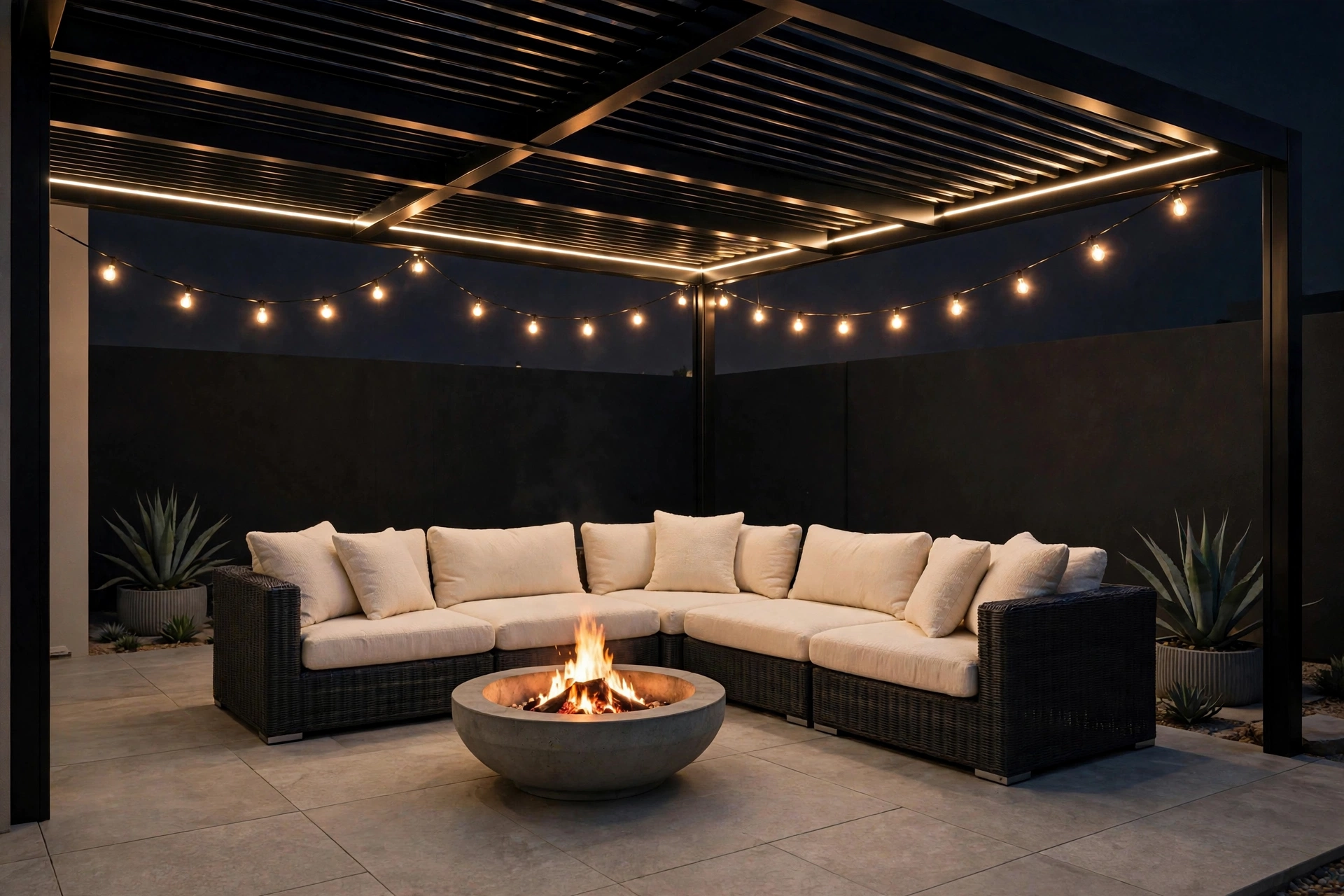
A furnished pergola used only in daylight is a wasted investment — Dubai's outdoor life happens in the evening, when the heat breaks and the space comes alive. Lighting design is what makes the pergola work after sunset, and it's planned during the build, not added as an afterthought with extension cords.
- Warm colour temperature: 2700–3000K flatters wood, fabric and skin tones; cool white light makes an outdoor room feel like a car park.
- Layered sources: a mix of post-mounted lights, string or festoon lighting across beams, and low-level lanterns creates depth — one bright source creates glare.
- Dining needs task light: the table should be clearly lit for eating; the lounge zone stays softer for conversation.
- Dimming: the difference between dinner lighting and late-evening mood should be a dimmer, not a different set of lights.
- Path and step lighting: low-level lights on steps and paths between the house and the pergola make the evening journey safe and inviting.
- Outdoor-rated everything: every fitting, cable and connection specified for outdoor use in heat and humidity — no indoor shortcuts.
Beyond lighting, ambiance comes from the soft layer: outdoor rugs that make the floor feel finished, planters with greenery suited to Dubai's climate softening the pergola's edges, and textiles — throws for the cooler months, cushions in colours that work with both the structure and the house. None of this is decoration for its own sake; each piece answers the question of why someone would choose this space over the air-conditioned living room. In Dubai's best months, the answer should be obvious.
One honest note: ambiance needs maintenance. Festoon bulbs need replacing, fabrics need seasonal cleaning, and plants need watering systems that actually work. A furnished pergola designed with realistic upkeep in mind — durable choices, accessible fittings, simple care routines — stays beautiful. One designed for a photoshoot and forgotten does not. We design for the third year, not the third day.
How the Design Process Works
A furnished pergola is a bigger design exercise than a bare structure, because every decision affects the others. Our process is built around that — structured enough to be reliable, flexible enough to fit your space and taste.
Conversation & Site Review
We start by understanding how you want to use the space — family evenings, large gatherings, quiet mornings, entertaining, or a mix — and review the site itself: dimensions, sun path, wind, access, and how the pergola will connect to the house. This shapes everything downstream. Message us on WhatsApp or call +971 52 460 1612 (7:00 AM–12:00 midnight) to start.
Design & Layout
We design the pergola structure and the furniture layout together — post positions set around seating zones, dining scaled to real walkways, lighting planned for evening use. You see the complete space on paper before anything is built, and we refine it until the layout matches how you'll actually live in it.
Build
The pergola structure goes up — wooden or aluminium, to the agreed design — with lighting conduits, fixing points and any integrated features installed during construction rather than retrofitted. Timing depends on scope, materials and site conditions; we'll give you a realistic expectation once we've reviewed your project.
Furnish & Finish
With the structure complete, the furniture is placed to the agreed layout, lighting is fitted and aimed, and the finishing layer — rugs, planters, accessories — goes in. The space is handed over ready to use: seated, lit and finished, not a construction site awaiting your furniture delivery.
Throughout, you deal with one team for the whole project — structure and furnishing together, which is precisely what makes a furnished pergola different from buying a pergola and then shopping for furniture. If you're comparing options, that single responsibility is the thing to weigh: one design, one build, one finished outdoor room.
Furnished Pergola FAQs
Ready for Your Own Outdoor Living Space?
Tell us about your space and how you want to use it — we'll design the pergola and the furnishing together as one complete outdoor room, then build it.