
Horizontal vs Vertical Water Heater Which Fits Your Ceiling
📋 Supply + install available
🎨 Ceiling color-restored
📞 Free advice on WhatsApp
⚡ Quick Answer
A vertical water heater suits tall ceiling voids — the most common layout in Dubai — and naturally keeps hot water layered above cold for a hotter first draw. A horizontal water heater fits low false ceilings better and often carries better splash protection. The right choice comes down to your ceiling void’s height. Send us a photo of your void and a Dubai Profixer technician will settle the horizontal vs vertical water heater question for your ceiling. No obligation.
By Dubai Profixer Technical Team · Open 7 AM – 12 midnight daily
What Water Heater Orientation Really Means
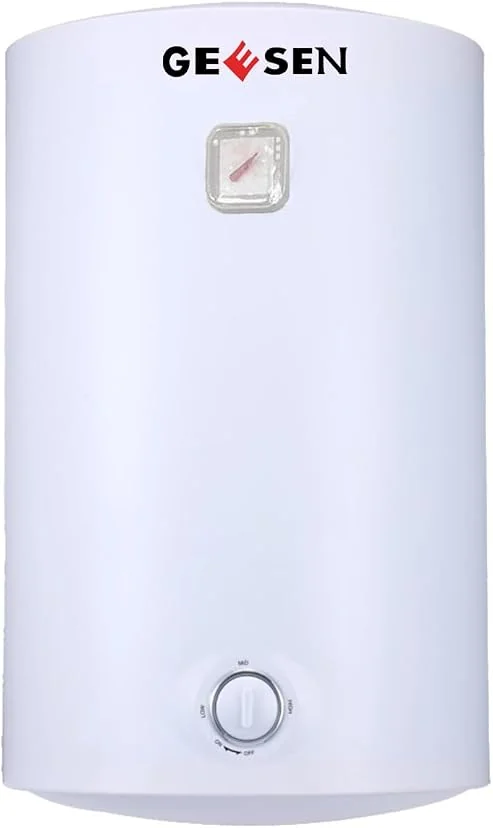
A vertical water heater stands upright like a canister — tall and narrow, connections usually at the bottom. A horizontal water heater lies on its side like a drum — long and low, hugging the slab, connections along the side. Same parts inside: tank, element, thermostat, insulation.
Why does position matter? Hot water rises and cold sinks — this is stratification. In a vertical tank, the hot layer sits undisturbed at the top, exactly where the outlet draws from. In a horizontal tank, a strong draw-off stirs the layers more, so incoming cold mixes in sooner. Delivery profiles differ slightly — in normal household use, both do the job well.
Brands engineer each orientation as its own model — element and thermostat sit relative to the water line for that posture. That is why you cannot flip a vertical heater on its side. Buy the orientation that matches your ceiling — and if the horizontal vs vertical water heater choice still feels unclear, the decision steps below will settle it.
Vertical Water Heater Pros and Cons
The case for vertical
Natural stratification is its superpower. The tall, narrow tank keeps the hot layer calm and separated from incoming cold water, so first draws come off at their hottest — genuinely noticeable during back-to-back morning showers.
Choice is widest. Vertical is the standard posture worldwide, so every major brand’s UAE catalogue leads with vertical models across the most sizes.
It suits Dubai’s typical voids. Most apartment and villa bathroom ceilings in Dubai have enough depth between gypsum and concrete slab for a vertical tank. When the void is tall, vertical mounting is straightforward — the tank hangs from slab anchors with connections conveniently below.
The honest drawbacks
Height is the deal-breaker. In a shallow false ceiling there is simply no room for a vertical tank — the single most common reason we recommend horizontal instead.
Manoeuvring needs room. A vertical tank is hoisted and positioned upright inside the void — in tight, cluttered ceiling spaces with existing ducting, that manoeuvre can be awkward. Horizontal tanks slide in lengthwise, which is easier when space is cramped.
Horizontal Water Heater Pros and Cons
The case for horizontal
It fits low false ceilings. This is the whole reason horizontal models exist: where a vertical tank would never clear the void, a horizontal one sits snugly against the slab. In Dubai’s shallow-ceilinged buildings, horizontal is not the alternative — it is the only correct answer.
Better splash protection is common. Many horizontal models in the UAE catalogues carry IPX4 splash protection, compared with the IPX1 typical of vertical models — a meaningful detail for a device mounted above a bathroom.
Neat pipe runs. Horizontal tanks run their plumbing along the slab rather than dropping connections from below. In many void layouts this produces a tidier installation with shorter pipe routes to the bathroom below.
The honest drawbacks
Mixing is slightly higher. During heavy draw-off, the incoming cold water disturbs the hot layer more in a horizontal tank. In practice this shows up only when a large share of the tank is being drawn at once — for normal family use the difference is modest.
Needs horizontal run length. While vertical demands height, horizontal demands length along the slab. A void that is both low and short can rule out both postures — the answer then is a smaller capacity. Our water heater size guide helps you match litres to household first, then pick the orientation that fits.
The Dubai Ceiling Void Reality
In Dubai, water heaters live above the bathroom false ceiling — hidden in the void between gypsum and concrete slab, mounted on brackets anchored into concrete. You see only the access panel below. This is why the horizontal vs vertical water heater question matters more here than in countries where heaters sit in garages or cupboards.
No two voids are alike. Void height varies enormously — older villas often have generous depth, while some newer towers run surprisingly shallow ceilings, and ducting eats into the space. This is why we never recommend an orientation sight unseen: a tape measure — or better, a technician’s eyes — answers in minutes what guesswork cannot.
Measure before you buy. From the gypsum to the concrete slab, plus the clear horizontal length available. Take those two measurements and the guesswork disappears. If you bought a heater already and it does not fit, our water heater installation service handles both orientations — but sending us a photo of your void before purchasing can save you a return trip to the supplier.
Performance Differences Worth Knowing
A 50-litre tank is 50 litres either way — reheating time depends on the element’s kilowatt rating, not on which way the tank lies. In the horizontal vs vertical water heater debate, the real differences show up in delivery, not speed.
Recovery feel. After a heavy draw, a vertical tank rebuilds its usable hot layer faster, because undisturbed stratification keeps the outlet drawing from the hottest zone. A horizontal tank recovers the same energy in the same time, but outlet temperature can dip sooner during back-to-back use.
Day-to-day household use. For a typical family’s showering pattern — staggered across morning and evening — both orientations perform comfortably. The gap only becomes noticeable when the tank is being drawn hard relative to its size, which is really a sizing issue rather than an orientation issue. If your hot water keeps running out, the answer is usually more litres — see our 50-litre buying guide — not a different posture.
Installation Differences
In any horizontal vs vertical water heater installation, both end up anchored to the concrete slab — gypsum alone will never hold a loaded heater safely. What changes is the bracket layout and how pipes and electrics route through the void.
Bracket layout. Vertical tanks are clamped around the circumference and anchored top and bottom; horizontal tanks rest in cradle brackets along their length. Either way, anchors go into concrete — never gypsum alone.
Pipe runs. Vertical models connect from the bottom, so pipework drops from the tank. Horizontal models connect along the side, letting the copper run flat along the slab. Either way, routes stay short and isolation valves reachable.
Access panel placement. The element, thermostat and anode live behind a service cover on one side — so the access panel must sit where that side ends up. We plan orientation and rotation together, so future servicing means opening the panel, not cutting the ceiling again.
Electrical. No difference at all — both need a properly rated dedicated circuit with correct earthing, verified before the heater is switched on.
Ceiling work. We cut only when the existing panel is too small for the tank — then restore it to the exact original color. Our installation team fits both orientations with the same ceiling guarantee.
Which Brands Offer Both Orientations
The UAE’s leading brands do not make you choose between a brand you trust and an orientation you need — Ariston, Milano and Zenith all offer both horizontal and vertical models in their catalogues.
Take the popular 50-litre class: our Ariston 50-litre is available in both vertical and horizontal variants — same tank technology and element range, just engineered in two postures. Your decision stays about your ceiling, not about compromising on quality.
One caution — always confirm the variant on the model code. Suppliers sometimes list only one orientation online. If a deal looks right but the orientation looks wrong, message us on WhatsApp before paying — we supply both and can source the correct variant.
How To Choose in 3 Steps
Step 1 — Measure your void height. The horizontal vs vertical water heater question is answered by the tape measure: gypsum-to-slab height plus clear horizontal length. Tall void? Vertical. Shallow? Horizontal — decide by measurement, not preference.
Step 2 — Size the litres for your household. Orientation is secondary to capacity — a family of four needs its litres sorted first. Get the size right with our water heater size guide, then pick whichever posture fits the void.
Step 3 — Ask a technician. Send a photo of your ceiling void on WhatsApp — void height, pipework and electrical point all show in one picture. We advise on orientation, size and brand fit, free and with no obligation.
Still not sure which orientation fits?
Send a photo of your ceiling void on WhatsApp — a technician advises free.
Horizontal vs Vertical FAQs
No sales talk. If your question isn’t here, WhatsApp us.
Keep Exploring the Water Heater Guides
More Dubai-focused guides from the Dubai Profixer team.
Water Heater Size GuidePick your litres first
Ariston 50 LiterAvailable both ways
50L Buying GuideAll brands compared
Water Heaters in DubaiMain hub — all types
Water Heater RepairAll brands fixed
Annual MaintenanceProtect your tank
Ariston 80 LiterBigger households
Dubai Profixer — Water Heater Specialists
Supply · Installation · Repair · Maintenance — apartments, villas & commercial, all Dubai.
📞 052 460 1612 · 🕐 7:00 AM – 12:00 Midnight, Daily
Astral Spaces, Sheikh Zayed Road, Dubai, UAE
Right Orientation, Right Size, Zero Guesswork.
Call 052 460 1612 with your horizontal vs vertical water heater question — one photo of your ceiling void and we will tell you which orientation, what size, and an exact quote. Free advice, no obligation, no pushy sales.