
Solar Water Heater Repair in Dubai
Is your solar water heater leaking, delivering little hot water, or behaving differently from normal? Dubai Pro Fixer accepts enquiries about solar water heater repair in Dubai. Tell us what you have noticed and where the equipment is located so we can discuss an assessment and the next step. Call 052 460 1612 or send a WhatsApp enquiry. The cause and suitable repair can only be established after the system is identified and inspected.
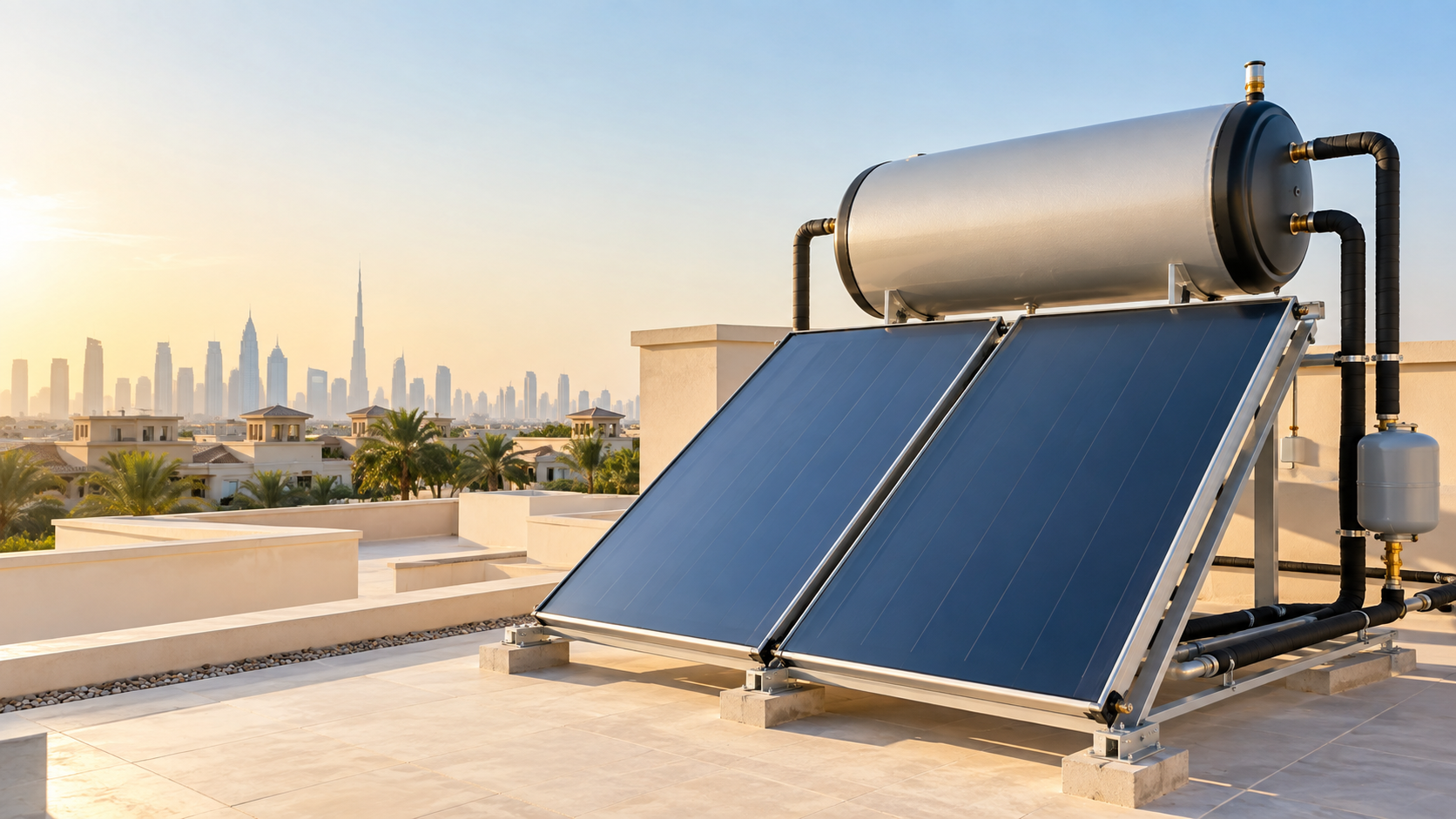
Repair begins with finding the actual fault
This page is for an existing solar thermal water heating system that appears to have a fault. It helps villa owners, property managers, and commercial property representatives describe the issue and evaluate a proposed repair. An apartment enquiry may be relevant where the apartment has a separately accessible system and the customer has authority to arrange work. A shared building plant requires coordination with the party responsible for that equipment. [VERIFY BEFORE PUBLISHING: Confirm the exact solar system types and property categories Dubai Pro Fixer accepts for repair.]
The first distinction: system-wide or one outlet?
Symptoms worth reporting
The same symptom may have several causes. The table gives examples of what a professional assessment might distinguish; it does not identify the fault in your system.
| What you notice | Possible explanations | What an assessment may clarify |
|---|---|---|
| No hot water at any outlet | Poor solar collection or circulation, empty or insufficient storage, backup heating fault, valve or distribution issue | System type, temperature and control behaviour, hot water path |
| Water is only lukewarm | High demand, heat loss, control settings, weak collection, mixing or backup issue | Usage pattern, accessible insulation, controls and delivery temperatures |
| Temperature changes unexpectedly | Draw-off pattern, mixing valve, storage or circulation problem | Whether fluctuation starts at the heater or downstream |
| Water or dampness near equipment | Joint, valve, pipe, collector connection or tank problem | Actual leak location and condition of surrounding components |
| Pump noise or unexpected operation | Pump wear, air or flow issue, control signal or another circuit fault | Whether the system has a pump, when it runs and whether flow is present |
| Weak output on sunny days | Shading, collector condition, poor circulation, heat loss, sensor issue or demand | Solar circuit performance and comparison with normal operation |
| Backup heat does not appear to work | Element, thermostat, power, control or connection issue | Backup arrangement and appropriate electrical assessment |
Lukewarm or inconsistent water
If water starts hot and then quickly cools, the stored supply may be smaller than the current demand, or it may not be replenished as expected. Intermittent temperature changes can also involve a mixing device, control response, or delivery plumbing. The useful comparison is between your current experience and the system’s known normal pattern. A technician should consider the equipment and demand before recommending a larger tank or replacing a component.
A visible leak or damp area
A wet patch beneath a tank, a drip at a fitting, and water from a relief outlet can have different explanations. Some connections may be serviceable; a corroded or damaged vessel may require a different decision. Water can travel along pipes or surfaces before becoming visible, so the drip location is not always the source. Describe where it is seen, when it occurs, and whether the water is near electrical equipment. Take photos only from a safe position.
What the equipment does and why system type matters
The collector captures solar heat. In some systems water itself passes through the collector; in others a separate heat transfer circuit carries energy to the stored water. The storage tank holds heated water for later use. Pipes, valves, and insulation connect the pieces and influence how much heat reaches the taps. The equipment at your property may be a compact roof-mounted unit or a system with separate collector and tank locations.
A passive thermosiphon system uses natural movement of heated fluid. A pumped system uses a circulation pump and usually a controller or sensors to move fluid when conditions call for it. That distinction changes the diagnostic path: asking why a pump is not operating makes sense only if the design has one. Some installations include a heat exchanger, mixing arrangement, expansion equipment, or pressure protection components; others have a different configuration. The unit label and photos can help establish what is present.
A backup heater, if fitted, supplies heat when the solar contribution is insufficient or when the system is operated that way. It may be integrated with storage or connected separately. A thermostat or controller can affect its operation. Trouble with backup heating is an electrical and hot water diagnosis, while a weak solar circuit calls for different checks. The quotation should distinguish the fault it addresses from other existing issues.
When the situation needs professional attention
Arrange an assessment if you see persistent leakage, water close to electrical parts, unusual heat or noise, an apparent fault at a pressure relief component, or a repeated loss of hot water. Keep people away from a wet electrical area and avoid using visibly damaged equipment until qualified help can assess it. If the issue affects a shared system, notify the building or property manager and follow the property’s access procedure.
Do not climb onto the roof, open pressurised pipework, remove electrical covers, or block a discharge or safety device to investigate. The safest useful information for an initial enquiry is usually an accurate description and a photograph taken from an ordinary accessible place. If you do not know whether a pipe is leaking or draining as designed, say what you see and let the assessment distinguish it.
What to send with your repair enquiry
A few specific details can make the first conversation more useful. Tell Dubai Pro Fixer your Dubai location and property type, the symptom, when it started, and whether the issue affects every outlet. Note whether there is visible water, a displayed error, unusual noise, or a change between daytime and evening. If you have safe access to a make/model label or previous invoice, share it. Do not enter a roof or plant area simply to collect details.
For a villa, explain whether the equipment is on a roof and how access is normally arranged. For a commercial property, identify the person who can authorize inspection and approve work. For a shared installation, confirm that responsibility before booking. Photos of the system from a safe viewpoint, a close-up of accessible evidence of a leak, and a screenshot of an existing control display can help, but they do not replace inspection.
A sensible inspection and repair journey
Dubai Pro Fixer’s website describes consultation, planning and quotation, execution, and a final quality check for its general property services. The precise solar repair process should be confirmed when you book. The following sequence explains what a customer should expect to clarify before authorizing work, rather than promising a fixed set of checks or visit times.
1. Describe the fault and confirm access
Start with the symptoms and any relevant photos. Identify who owns or manages the equipment, where the collector and tank are located if known, and whether roof or plant-room access needs advance arrangement. This can reveal that the request concerns a private unit, shared building equipment, or ordinary plumbing rather than a solar system. It also lets the company confirm whether the job falls within the work it can assess. [VERIFY BEFORE PUBLISHING: Confirm booking method, access requirements, and whether a diagnostic visit has a fee.]
2. Identify the system and locate the problem
An onsite assessment should establish the system type and the path from heat collection to delivered hot water. Depending on access and the reported problem, relevant checks may include visual condition, leak location, control indications, circulation behaviour, tank condition, backup operation, and downstream delivery. Not every test applies to every system. Some faults only appear under particular conditions, so a responsible explanation may include uncertainty and the next observation needed.
3. Explain findings and agree on scope
Before approving work, ask what evidence supports the proposed repair, which component is implicated, and whether another issue remains unresolved. A useful quotation states the part or work proposed, access and labour scope, compatible replacement components if needed, and any exclusions. If the equipment is badly deteriorated, ask for a replacement option as well. [VERIFY BEFORE PUBLISHING: Confirm whether Dubai Pro Fixer provides a written solar repair quotation and how revised scopes are approved.]
4. Repair and check the result
Work should follow the agreed scope and the actual condition found. The relevant connections, controls, and delivered hot water should then be checked as appropriate. A brief check after a component change may establish that it operates, while the system’s full solar performance may need normal sunlight and use to assess. Ask what was tested, what the outcome shows, and whether further action is recommended. [VERIFY BEFORE PUBLISHING: Confirm the company’s actual repair and handover practices.]
Repair possibilities by component
A targeted repair makes sense only when the cause is sufficiently clear and the rest of the system can support the result. The categories below describe possible work on solar hot water systems in general. They are not a promise that Dubai Pro Fixer repairs every listed component or that a specific unit is serviceable. [VERIFY BEFORE PUBLISHING: Confirm the components and system types the company actually diagnoses and repairs.]
Storage tank and backup heating
A tank can be affected by a fitting, valve, insulation, or the vessel itself. A leaking connection is a different proposition from corrosion or a leak through the tank wall. Backup heating may involve an element, thermostat, control, or electrical supply, and requires an appropriate assessment of that circuit. Replacing an electrical part should not be represented as a cure for weak solar collection unless the diagnosis supports both conclusions.
Repair or replace: how to decide
The right decision compares the likely outcome of a repair with the condition and remaining usefulness of the whole installation. A serviceable, localized fault with available compatible parts may support a focused repair. Repeated failures, extensive corrosion, a badly deteriorated tank, unavailable parts, or several failing components can shift the balance toward replacing a component or the complete system. Site access and the fit of new equipment also affect the choice.
| Option | When it may be sensible | Question to ask |
|---|---|---|
| Targeted repair | A fault is isolated and compatible parts are available | What evidence identifies the failed part, and what remains untested? |
| Component replacement | A tank, pump, valve, or collector assembly cannot be economically or appropriately repaired | Will the new component suit the rest of the system? |
| Complete replacement | Widespread deterioration, recurring faults, or an obsolete arrangement makes piecemeal work poor value | What new scope is required for the roof, plumbing, backup and commissioning? |
What affects the repair price and time?
A reliable figure needs the system and fault to be assessed. The cost may depend on whether diagnosis is straightforward, the part required and its availability, whether a component can be serviced or must be replaced, roof or plant-room access, the condition of connected plumbing, and the testing needed after work. Commercial or shared systems can add coordination and access requirements. No single AED figure accurately covers all of these situations.
Why contact Dubai Pro Fixer?
Dubai Pro Fixer presents itself as a Dubai renovation and property maintenance company. Its website lists solar water heater repair and installation alongside plumbing, general maintenance, water heater, and water pump services, and provides a public phone number, WhatsApp link, and contact page. That connected property-service offering may be useful when the apparent heater problem turns out to involve nearby plumbing or another piece of equipment. The actual assessment and agreed scope still determine what work can be done on your system.
Real-work evidence to add before publishing: [VERIFY BEFORE PUBLISHING: Name or role of the person who assesses solar water heating systems, relevant experience and permission to identify them.] [VERIFY BEFORE PUBLISHING: One or two documented Dubai repairs, each with property type and area, customer symptom, assessment findings, approved work, and observed outcome; obtain permission for photos and details.] Do not substitute an illustrative image for a completed company job or describe an unverified example as a case study.
Dubai service coverage and related help
If the issue appears to involve supply pipes, valves, or taps, see plumbing services. For broader property upkeep, see maintenance services. A conventional non-solar heater may be better described under water heater repair and installation; a separate building water pump issue belongs under water pump repair and installation. These are related services, not evidence that every apparent solar fault originates in one of them.
Frequently asked questions
Why is my solar water heater not producing hot water?
There is no reliable diagnosis from that symptom alone. The issue may involve insufficient collection or circulation, storage, a control or valve, backup heating, or the plumbing that delivers hot water. Note whether all outlets are affected and whether the result changes with time of day or demand. An assessment can identify the system and check the relevant parts before a repair is proposed.
Can a leaking solar water heater be repaired?
Sometimes a leak is at an accessible connection or replaceable component; sometimes the storage vessel, collector, or wider pipework is damaged. Water seen in one place may have travelled from another. Avoid touching electrical equipment or opening pressurised parts. Send a safe photo if possible, and arrange inspection to locate the source and determine whether repair or replacement is sensible.
Is a noisy circulation pump always faulty?
No. Pump noise or unexpected cycling may relate to the pump, controls, flow, or another issue in a powered circuit. Some solar systems use passive circulation and have no solar circulation pump at all. The assessor should identify the system type and check why the sound or operating pattern changed before quoting for a pump or another part.
What if the backup heating element is not working?
Backup heating should be considered separately from the solar heat collection circuit. An element, thermostat, control, power supply, or connection may be involved, depending on the system. Do not open electrical covers or test wiring yourself. Explain whether hot water is available after sunny periods but disappears at other times, and ask for an appropriate assessment of the backup arrangement.
Should I repair or replace an older solar water heater?
Age is one factor, but the observed condition matters more. A localized fault in an otherwise serviceable system may justify repair. Extensive tank corrosion, repeated failures, several deteriorated parts, or unavailable compatible components may favour replacement. Compare a written repair scope with the replacement scope, including what each option resolves and what remains uncertain after inspection.
How much does solar water heater repair cost in Dubai?
The cost depends on diagnosis, the system type, required parts, access, labour, and the extent of the fault. A simple component issue and a leaking storage vessel have very different scopes. Share the symptom, photos taken safely, model details if available, and the location. Ask whether inspection has a charge and what the eventual quote includes before approving work.
How long does a solar heater repair take?
There is no dependable duration before the fault, access, and parts are known. Some problems can be identified during one visit; others are intermittent or require compatible components to be sourced. Roof access, building permission, and testing conditions can also affect scheduling. Request an estimate of diagnosis time, any likely follow-up, and when the proposed part could be available.
Can a solar water heater work when the sun is weak?
Output depends on the design, stored hot water, available solar energy, demand, and any backup heating. A system may still deliver hot water from storage or backup even when current solar input is low. If performance has changed from its normal pattern, describe when the change occurs. An assessment should distinguish ordinary operating conditions from a fault rather than treating a single cool period as proof of failure.
Does weak hot water mean the collector needs cleaning?
No. Dust or shading can affect collection, but poor circulation, heat loss, controls, mixing, storage, or higher demand could also explain weak output. Cleaning a collector will not correct an electrical fault or leaking tank. A professional should identify the cause before recommending cleaning or repair. Do not access a roof to inspect or wash a collector yourself.
Can you assess the system in my apartment building?
That depends on whether the apartment has a separate accessible solar unit or the hot water comes from shared building equipment, who is responsible for it, and whether access and approval can be arranged. Contact the building manager first for a shared system. [VERIFY BEFORE PUBLISHING: Confirm whether Dubai Pro Fixer accepts individual apartment and shared-plant solar enquiries.]
What maintenance might prevent another fault?
Appropriate periodic checks can identify leaks, deteriorated insulation, abnormal operation, and other visible changes before they become larger problems, but they cannot prevent every failure. The schedule and tasks depend on the manufacturer’s instructions and the installed design. After a repair, ask which observations or professional checks suit that particular system. See our broader solar water heater overview for maintenance context.
How do I request a repair quote?
Call 052 460 1612, message Dubai Pro Fixer on WhatsApp, or use the contact page. Give your Dubai location, property type, symptoms, when the problem began, and access details. Add a safely taken photo or make/model if you have one. Ask what information or inspection is needed before a repair scope and price can be confirmed.
Ask for a solar water heater repair assessment
Describe the fault you can observe; you do not need to diagnose the equipment yourself. Whether the issue is a leak, unreliable temperature, poor solar contribution, or a possible control or pump problem, an informed decision starts with identifying the actual system and its condition. Contact Dubai Pro Fixer on 052 460 1612, WhatsApp, or the contact form to discuss the next step and request a quote.