
Solar Water Heater Maintenance and Cleaning in Dubai
Has your solar hot water system become less reliable, or is it due for a professional check? Dubai Pro Fixer lists solar water heater maintenance within its wider Dubai property services. Tell us what system you have, what has changed, and how the equipment can be accessed. Call 052 460 1612, send a WhatsApp enquiry, or use our contact page to discuss an assessment and quotation. The appropriate work depends on the installation and its condition.
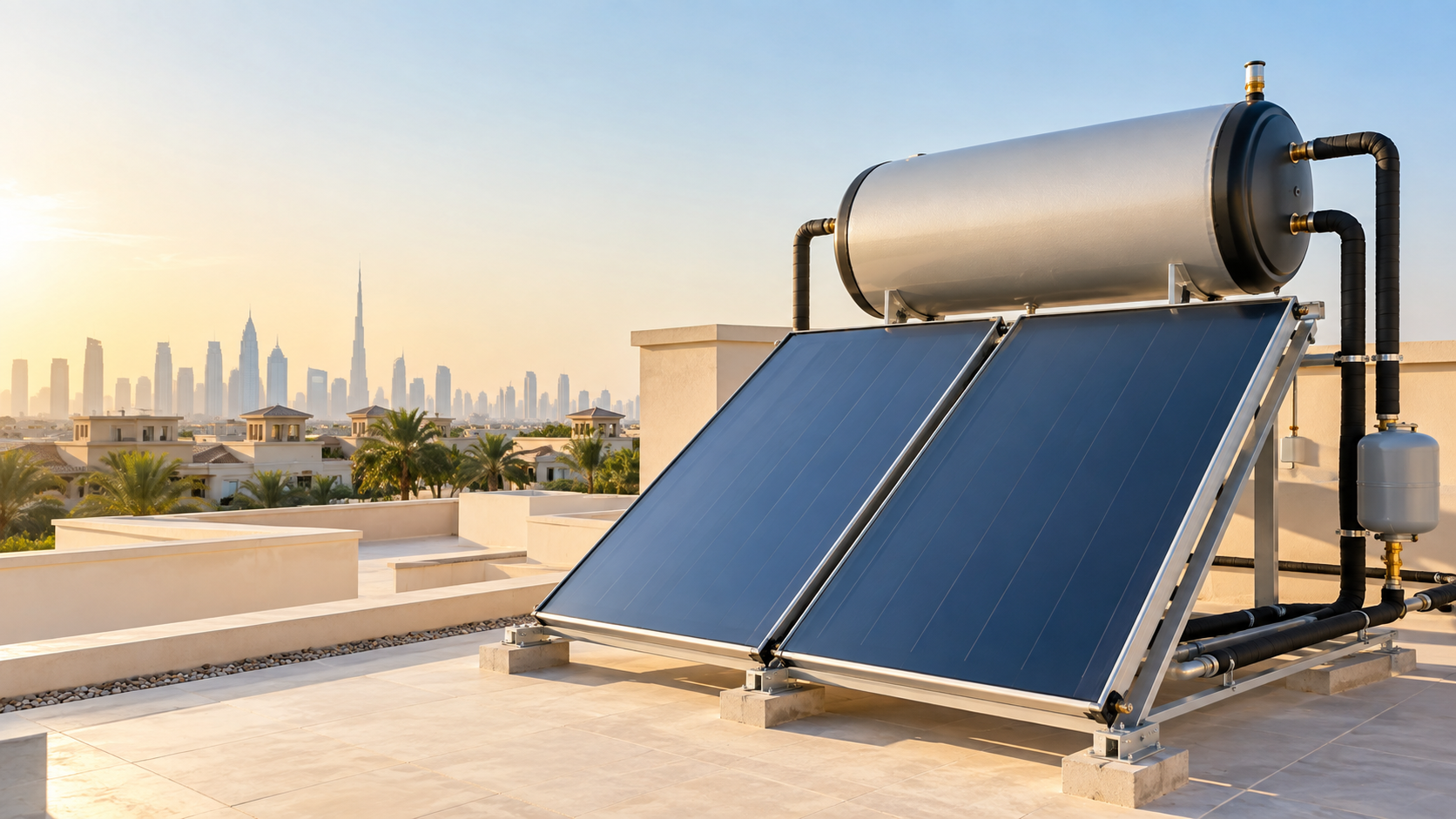
Maintenance starts with understanding the system
A solar water heater is more than the visible rooftop collector. It may include a storage tank, insulated pipework, valves, controls, a circulation pump and backup heating. Some systems use natural circulation and have no solar pump. A sensible maintenance visit considers the components actually present and the customer’s experience of hot water, rather than treating every system as a collector-cleaning job.
This page is for owners and managers of existing solar hot water systems who want to understand inspection and care. A villa owner may have direct control of the equipment and roof access. A commercial property may need facilities coordination and records of prior work. In an apartment building, the hot water plant or roof may be shared, so the building manager or owner must establish responsibility and authorize access. Service suitability and scope should be confirmed when you enquire.
An inspection cannot prevent every future failure. It can, however, help identify visible deterioration, abnormal operation or a performance concern that needs diagnosis. If the system is actively leaking or has stopped providing hot water, tell us that first. You may need a fault assessment or repair quotation rather than routine maintenance. Our main solar water heater service page explains the wider choices.
What an inspection may examine
The inspection should follow the system type, accessible components and reason for the visit. The items below are examples of what a professional might assess, not a fixed checklist or promise that each procedure is included in a Dubai Pro Fixer service. Ask for the proposed scope before booking and for an explanation of any additional work recommended onsite.
Collector and visible surroundings
The condition of an accessible collector surface, obvious damage, shading and evidence of water around its connections may be relevant. Dirt on a collector can be one factor in lower performance, but sunlight, circulation, storage, demand and backup operation also affect the result. The type of collector determines what cleaning or inspection is appropriate. A roof-mounted unit requires planned professional access; a customer should not climb up simply to check whether it looks dusty.
Tank, pipes, valves and insulation
A storage tank and its accessible fittings may show corrosion, dampness or signs of a leak. Pipe insulation can deteriorate or become displaced, affecting heat retention in exposed runs. Valves and protective components may also warrant assessment when there is an operating complaint. A small wet area can have several sources, so the aim is to locate the actual cause before proposing work.
Pump, controller and backup where fitted
A pumped system may have sensors and controls that determine when fluid circulates. Unexpected noise, repeated cycling or poor heating can call for a closer check of the control and flow arrangement. A passive thermosiphon system relies on natural circulation and ordinarily has no solar circulation pump, so its maintenance questions differ. A pump should not be replaced just because a customer reports that hot water is weak.
Where a backup heater is fitted, its operation may mask weak solar contribution or become the cause of a separate hot water complaint. Electrical assessment belongs within an appropriate professional scope. A maintenance report should distinguish observations about solar collection, circulation and backup rather than treating them as one undifferentiated issue.
Hot water experienced in the property
Ask whether performance is different at all outlets or only one. Note the time of day, the number of users and whether the problem is new or recurring. A single cold shower after heavy use is different from a persistent loss of heat at every outlet. Mixing arrangements or downstream plumbing may affect delivered temperature even when stored water is warm. These details help determine whether system maintenance, fault diagnosis or another plumbing service is the next step.
Maintenance, cleaning, descaling and repair are different
A useful quotation names the work, its purpose and its limits. Routine maintenance looks for condition and operating concerns. Collector cleaning addresses appropriate surface contamination. Descaling, where it is suitable for a particular design and condition, concerns deposits in affected parts of a water circuit. Repair addresses an identified fault. None of those labels automatically includes the others.
| Scope | Main purpose | Important limit |
|---|---|---|
| Maintenance inspection | Review relevant condition and operation | May identify a repair but does not automatically include it |
| Collector cleaning | Address suitable dirt on an accessible collector surface | Cannot fix a failed pump, tank leak or control fault |
| Descaling assessment | Determine whether deposits are relevant and an appropriate procedure exists | Depends on system design, manufacturer guidance and actual findings |
| Fault diagnosis or repair | Find and address a specific malfunction | Requires an agreed scope, parts and testing appropriate to the fault |
The table is general guidance, not a diagnosis or a description of a fixed package. Before approving work, ask what components are included, whether roof access or specialist equipment is required, what observations will be reported and whether any repair would be quoted separately. The difference matters when comparing offers that use the same word “service” for very different tasks.
When cleaning is not the answer
No hot water, an active leak or an electrical concern needs fault assessment. A collector may look dusty, but cleaning cannot make a broken connection watertight or restore a failed controller. Likewise, an unusually running pump or recurring temperature fluctuation calls for understanding the complete system. If you see water near electrical equipment, keep clear and arrange appropriate professional help.
Reduced output on sunny days can have several explanations: shading, collector condition, poor circulation, heat loss through insulation, sensor or control issues, heavy demand, and the way backup heat is being used. A professional assessment should compare the symptom with the design and normal behaviour. Avoid paying for cleaning as a presumed cure when the evidence points elsewhere or has not yet been gathered.
A leaking tank, relief outlet, fitting and collector connection can require different responses. Do not block a safety discharge, open pressurised pipework or work on electrical covers. Describe what you see from a safe location, including when it occurs. A repair recommendation should follow inspection; our broader solar service overview explains the repair-versus-replacement decision.
How system design changes maintenance needs
The same service routine is not appropriate for every solar heater. A compact thermosiphon arrangement uses natural movement of heated fluid, often with storage near the collector. A pumped arrangement has an active circulation circuit and controls, and the storage may be in another location. Some systems transfer heat indirectly; others heat the water used at taps more directly. The exact model and installed components determine the relevant checks.
For a passive system, attention may centre on the collector and tank assembly, visible connections, insulation, valves and delivered hot water. For a pumped system, pump behaviour, controls and sensors may add questions. Both can have backup heating and both can develop leaks or deteriorated pipework. “Solar water heater pump service” only makes sense if the system actually contains that pump.
The manufacturer’s instructions and previous service records can identify model-specific requirements. If the label or manual is available without unsafe access, share it when enquiring. An older system with unknown history may need an initial assessment before anyone can specify a useful repeat service. Do not assume that a cleaning method suitable for one collector design suits another.
How often should the system be checked?
There is no universal interval that fits every installation. A sensible schedule depends on the manufacturer’s guidance, collector and storage design, water conditions, use, environment, prior findings and the practicalities of safe access. A commercial property with documented operating checks may have different needs from a villa whose equipment has not been examined for years.
Ask the service provider what should be checked at the next visit and why. A record of observed condition, work performed and unresolved issues helps plan later care. If a component is deteriorating or a leak is developing, the next action may be a targeted repair rather than another routine visit. If everything appears to be operating normally, the recommendation should still explain what evidence supports the proposed follow-up schedule.
What a maintenance enquiry and visit should clarify
Dubai Pro Fixer’s general site describes consultation, planning and quotation, execution, and a final quality check. Confirm its actual solar maintenance and cleaning process when booking. The following steps are a practical way to define the customer’s request and the proposed service scope without assuming that every system receives the same procedures.
Describe the equipment and access
Tell the company the Dubai location, property type, whether equipment is on a roof or in a plant area, and who can authorize access. Share the make or model if it can be read safely, any previous service record, and whether the request is routine care or prompted by a symptom. If hot water has changed, explain when and how. Do not go onto a roof or open a plant enclosure simply to gather details.
Agree on the purpose and scope
Ask whether the first visit is an inspection, cleaning, diagnosis or a combination that has been specifically quoted. Establish which components will be considered, how access will be arranged and whether a separate repair would require approval. An observed defect may change what work is sensible. The customer should receive a clear explanation before a routine maintenance enquiry becomes a component replacement.
Review findings and next steps
After the agreed work, ask what was observed, what was actually done, what could not be assessed, and whether further action is recommended. If testing is appropriate, ask what it established and what may need observation under normal sunlight and use. For a managed property, retain a record of access, findings and approved work so the next visit starts with reliable information.
Price factors and preparing for a quote
An accurate price depends on the scope and access. A compact, accessible system and a larger or more complex installation can require different time and equipment. Collector type, storage and pump arrangement, roof access, condition, cleaning or service procedure, and any parts all affect cost. An active fault may require a separate diagnostic and repair quotation. No single AED price covers every system.
Share your location, property type, system make/model if available, number of collector or tank units if known, last service date, symptoms and access information. Photos taken safely can help the initial discussion. For shared property, identify who can approve the visit and any changes. Ask whether inspection, cleaning, parts, access equipment and follow-up reporting are included in the quoted price.
Why contact Dubai Pro Fixer?
Dubai Pro Fixer presents itself as a Dubai renovation and property maintenance company. Its website lists solar water heater repair and installation, general property maintenance, plumbing, conventional water heater and water pump services. That range can help direct an enquiry when a hot water complaint turns out to involve connected plumbing or another item. The actual scope of solar maintenance or cleaning must still be confirmed for your installation.
The website gives Dubai, UAE as its service area and provides a public phone, WhatsApp link and contact form. Confirm availability for your specific address and access arrangement. A villa, managed building and commercial plant may require different coordination; the site does not establish a physical office in every neighbourhood or a guaranteed visit time.
Real photographs of an accessible system inspection, collector condition, an agreed cleaning activity and the finished installation could make this page more useful. A documented maintenance example should identify the property type, reason for the visit, what was found, the approved work and what was observed afterward. No illustrative image should be presented as a completed Dubai Pro Fixer job.
For general property upkeep, see maintenance services. A plumbing leak may call for plumbing services, while a separate building pump problem belongs under water pump repair and installation. A non-solar heater may be better described under water heater repair and installation. These related services do not automatically form part of a solar maintenance quote.
Frequently asked questions
How often should a solar water heater be cleaned?
There is no interval that suits every collector and site. Dust exposure, shading, equipment design, manufacturer guidance and the system’s actual performance all matter. A professional should assess whether cleaning is appropriate and can be carried out with safe access. If hot water is weak, request an assessment of the whole system rather than assuming the collector surface is the cause.
Will cleaning fix poor hot water performance?
Only if suitable surface contamination is a meaningful part of the problem. Low output can also involve demand, storage, circulation, controls, insulation, backup heating or downstream plumbing. A clean collector cannot repair a leak or failed component. Describe when the hot water problem occurs and ask what the proposed cleaning would address before approving it.
What if my solar water heater is leaking?
A leak is a fault concern, not simply a routine maintenance item. The source could be a fitting, pipe, valve, collector connection or storage vessel, and the response differs. Keep clear of water near electrical equipment. Do not open pressurised parts or block a relief outlet. Arrange an assessment to locate the source and obtain a repair or replacement recommendation.
Does the storage tank need descaling?
That depends on the system design, water conditions, manufacturer instructions and evidence of deposits or restricted performance. Descaling is not a universal task to add to every visit, and a procedure suitable for one system may be inappropriate for another. Ask what finding supports it, which component would be treated and whether the proposed method is appropriate for that equipment.
Do all solar water heaters have a pump to service?
No. A passive thermosiphon system uses natural circulation and ordinarily does not have a solar circulation pump. An active system may have a pump, controller and sensors. The equipment should be identified before a pump service or replacement is proposed. If there is noise or weak heating, the cause still needs assessment rather than assuming the pump has failed.
What maintenance does a passive system need?
The appropriate checks depend on its model and condition. A professional may consider collector and tank condition, accessible connections, pipe insulation, valves, leakage and delivered hot water. Backup heating, if present, is another consideration. Natural circulation means there may be no solar pump or controller to check. Follow the equipment maker’s guidance and the findings of the previous service.
How much does solar heater maintenance cost in Dubai?
Price depends on system size and type, access, the agreed inspection or cleaning tasks, equipment condition and whether additional diagnosis or parts are needed. Ask for a scope that identifies what is included and whether a fault would receive a separate repair quote. An accurate price needs details of the actual system; no single AED figure represents all installations.
How long does an inspection or cleaning visit take?
Duration depends on access, the number and type of components, the agreed work and any fault uncovered. Roof or shared plant access may need advance coordination. Cleaning and fault diagnosis are not necessarily the same visit or scope. Ask the company for a site-specific estimate after providing system details and agree what findings would trigger a further quotation.
Do I need to arrange roof access?
Tell the company how the equipment is accessed and who controls the roof or plant room. A villa owner may be able to arrange access directly, while a managed property may require keys, permits or a facilities representative. Do not climb onto the roof to prepare for the visit. Confirm access and authority before booking so the proposed scope can be assessed realistically.
Is maintenance enough if there is no hot water?
A complete loss of hot water calls for fault assessment. Possible causes include the solar circuit, storage, controls, backup heating or the property’s plumbing. Routine inspection may help identify the issue, but cleaning alone should not be sold as a diagnosis or cure. Report whether all outlets are affected and when the problem began so the right assessment can be discussed.
Can maintenance prevent every breakdown?
No. It can identify some visible deterioration or abnormal operation and help plan repairs, but components can still fail unexpectedly. A useful service record states what was checked, what was found and what could not be assessed. Future intervals should reflect the equipment instructions, system condition and past findings rather than a blanket guarantee of trouble-free operation.
How do I request a maintenance or cleaning quote?
Call 052 460 1612, message Dubai Pro Fixer on WhatsApp, or use the contact page. Give the Dubai location, property type, equipment details if known, access arrangements and reason for the visit. Mention an active leak or loss of hot water upfront so the enquiry can be treated as a possible fault rather than routine cleaning.
Arrange a solar water heater assessment
If you want to understand the condition of an existing system, describe its equipment and any change in hot water performance. Dubai Pro Fixer can discuss the enquiry and what information is needed to define a maintenance, cleaning or fault-assessment scope. Call 052 460 1612, send a WhatsApp message, or contact the team online.