
Apartment Renovation Handover in Dubai
A renovation is only finished when it has been proved — room by room, tap by tap, switch by switch, with you standing in the flat. Dubai Profixer treats the apartment renovation handover in Dubai as a formal final stage of every project, not a quick goodbye at the door. We walk the whole apartment with you, test everything live, build one written snag list, clear it, and only then hand over the keys, documents and a flat you have personally checked.
This page explains exactly how that day should run — how the final walk is done, what to test, how a snag list is built and cleared, which documents and items you should walk away holding, and the one payment arrangement to agree in writing before work ever starts. If your renovation is being finished by anyone, this is the standard to hold it to.

An apartment renovation handover in Dubai is the formal final stage of a renovation — a room-by-room walk through the finished flat with your contractor, where everything is tested live in front of you, every defect found is written onto one snag list, and the keys, access fobs, appliance manuals and a copy of the final agreed scope are handed to you. Anything on the snag list is then fixed and re-checked with you before the handover is treated as complete. Dubai Profixer builds this stage into every renovation from the first quotation — call 0524601612 (7 AM – midnight) or message us on WhatsApp to arrange a free site survey.
What a Proper Handover Actually Is
Most renovation problems are not discovered during the work. They are discovered in the first week of living with it — the shower that drains slowly, the socket that was never connected, the door that swells and sticks, the AC that cools the room it is in but not the one next door. A proper handover exists to move that discovery forward, to a moment when the contractor is still standing in the flat with tools, materials and responsibility all in one place.
Done properly, an apartment renovation handover in Dubai has four parts. First, the flat is finished and cleaned, so you are inspecting the work itself and not a building site. Second, you walk every room together in a fixed order, testing things rather than just looking at them. Third, everything found is written down on one shared snag list — nothing left as a verbal promise. Fourth, the paperwork changes hands — keys, fobs, manuals and the final scope — and the snag items are cleared and re-checked before the job is closed. Skip any one of those four and the handover becomes a ceremony instead of a check.
This discipline starts long before the final day. It is a direct result of the written scope agreed at the start — the same scope discipline behind our full apartment renovation in Dubai service. When the scope is written line by line, the handover walk has something solid to check against. When the scope was a handshake and a lump figure, the final day turns into an argument about what was included. Everything on this page flows from that one idea — write it down early, then check against it at the end.
Preparing for Handover Day
A good final walk is won in the preparation. The handover should be booked as its own appointment, at a time of day when the flat has natural light and when nobody is in a hurry — not squeezed into the last hour of the last day of work. Our apartment renovation timeline in Dubai shows where the handover sits in the programme, as a stage of its own after the final clean, and that is exactly how it should be treated.
What to Have Ready
- Your copy of the agreed scope and quotation — the walk is a check against this document, item by item, so have it in hand rather than relying on memory.
- Any written variations agreed along the way — if the scope changed during the work, the changed items are what you check, and they should already be in writing.
- A phone for photographs — every snag item gets a photo at the moment it is found, so there is no later dispute about which mark, gap or fault was listed.
- A phone charger — you will plug it into sockets around the flat as the simplest live test that each socket is actually working.
- Time, protected — a careful walk of a typical flat takes a few unhurried hours, not twenty minutes. Book it when you can give it that time.
- The decision maker present — whoever will accept the flat and sign the snag list should be there in person, because items discussed without them tend to be re-discussed later.
If you cannot be in Dubai for the handover — a common situation for owners who live abroad — the walk can be done with a person you nominate, or worked through on a live video call while our team tests each item on camera and photographs every snag as it is logged. Our guide to a remote apartment renovation in Dubai explains how owners follow the whole project from abroad, and the handover is run the same way. What matters is that the same checks happen and the same written list is produced, whoever is holding the phone.
The Room-by-Room Final Walk
The walk follows one simple rule — start at the front door, work through the flat in a fixed order, and finish one room completely before moving to the next. Wandering produces missed items. A fixed order means nothing is left to a second visit that never quite happens, and the snag list comes out organised by room, which makes the clearing visit easy to run and easy to re-check.
Entrance and Hall
The front door first — lock, handle, hinges, closer if fitted, and the seal around the frame. Then hall walls, ceiling, flooring, skirting and every switch and socket on the way in.
Living Areas
Paint finish in natural light, flooring joints and thresholds, window operation and seals, curtain tracks or blinds if in scope, and every socket and light fitting worked one by one.
Kitchen
Every cabinet door and drawer opened, run and closed. Worktop joints and sealing, sink and tap run under pressure, and each appliance in the scope switched on and seen working.
Bedrooms
Wardrobe doors and drawers run on their tracks, windows opened and latched, AC cooling felt at the vent, paint and flooring checked in daylight, and sockets tested with your charger.
Bathrooms
The most tested rooms in the flat. Every tap and shower run, every drain filled and watched as it empties, flushing, sealing, grout lines, mirror and cabinet fixings, and the floor checked for water escaping where it should not.
Balcony and Utility Areas
Sliding doors run and latched, drainage points checked clear, tiles and rails inspected, and the washing machine connections — where in scope — run on a short cycle or at minimum filled and drained.

The walk starts at the front door — locks, hinges, seals and hall finishes first.

Fitted joinery is opened, run and closed piece by piece — not admired from the doorway.
In every room the pattern is the same. Look first, in good light, standing back and then up close. Touch second — run a hand along worktop joints, silicone lines and paint edges, because fingers find ridges and gaps eyes miss. Operate third — everything that moves gets moved, everything that switches gets switched, everything that should hold water gets filled. A room is only finished when all three passes are done, and the snag items from that room are written down before you leave it.
Test Everything Live, Not by Eye
New work photographs well and hides faults well. A tap can be plumbed to nothing, a socket can be a faceplate over an empty box, a shower can drain beautifully for ten seconds and back up at thirty. The only protection is to run everything, at realistic load, for long enough to fail if it is going to. This is the testing routine our team works through with you at handover.
Water Pressure and Drainage
- Run every tap in the flat — check the pressure feels consistent, hot water arrives where it should, and mixer taps blend smoothly without hammering or dripping after shut-off.
- Run showers for several minutes, not seconds — water should drain as fast as it arrives, with no pooling creeping toward the door and no gurgling from other fittings.
- Fill every basin and bath, then pull the plug and watch — drainage speed, leaks at the trap below, and any smell coming back up tell you more than a glance ever will.
- Flush every WC more than once — check the fill valve shuts off fully, nothing runs on quietly, and the pan and cistern connections stay dry.
- Look under every sink while water is running — a dry-looking trap that weeps only under pressure is one of the most common post-handover leaks.
- Check the water heater connections — valves operate, joints are dry, and the area around it shows no staining or damp.
Every Socket, Switch and Light
- Plug your phone charger into every socket in the flat — it takes minutes and is the fastest honest test there is.
- Work every light switch, including two-way switches at both ends — hall and stair switches wired so one end does nothing are a classic find.
- Check dimmers and fan controls through their full range — not just on and off.
- Test cooker, water heater and AC isolators — the heavy circuits are the ones that matter most and get checked least.
- Look at the distribution board — circuits should be labelled in a way that matches the flat, so a future fault does not start with guesswork.
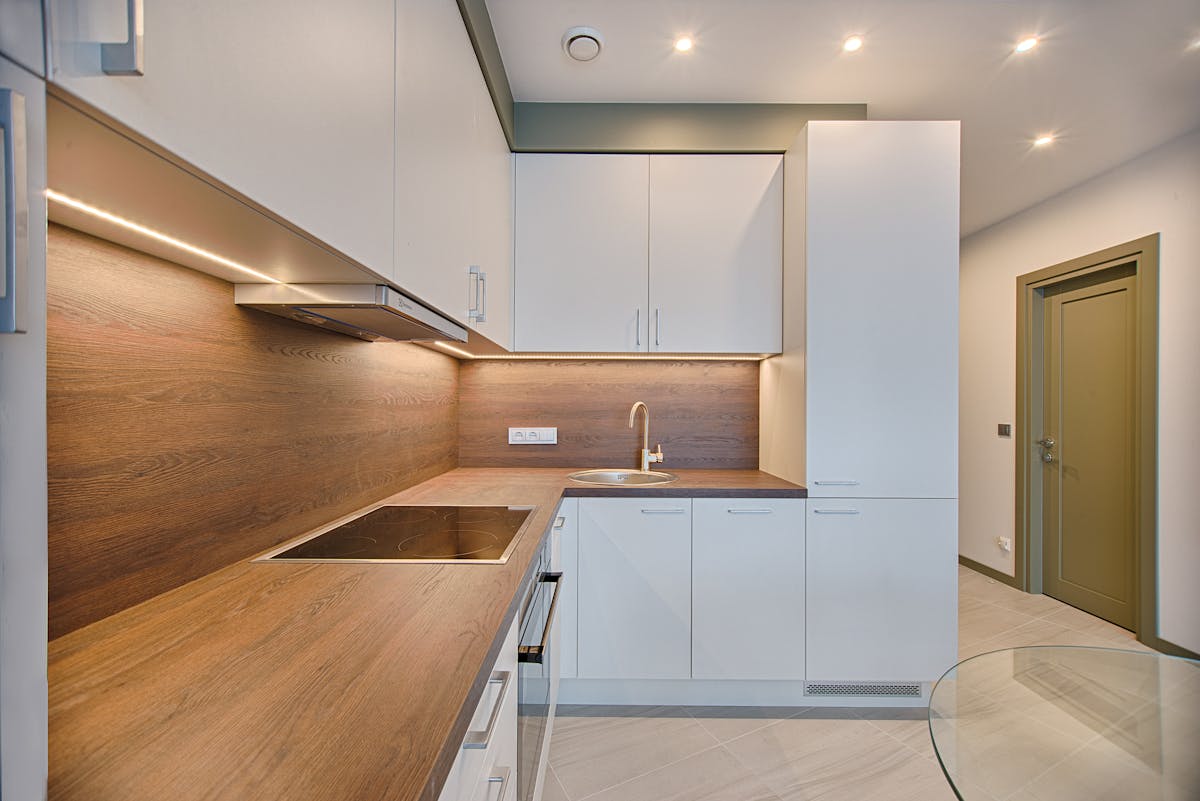
In the kitchen, every door, drawer, tap and appliance is operated — not just admired.

Bedrooms get the same discipline — wardrobes run, windows latched, cooling felt at the vent.
Air Conditioning and Cooling
- Run every unit or zone on cooling and give it time — cold air at the vent within a sensible period, in every room, not just the one nearest the unit.
- Work each thermostat or controller through its settings — temperature up and down, fan speeds, and modes, so you know the controls respond as they should.
- Listen — rattles, dripping sounds and vibration through the ceiling are easier to log now than to describe later.
- Check condensate drainage — a unit that cools but drips from the ceiling a week later usually had a drain that was never checked at handover.
- Open and refit the filters or grilles where they are accessible — you should be shown how, because you will be cleaning them from now on.
Doors, Windows and Seals
- Open, close and latch every internal door — doors should swing freely, latch without lifting or forcing, and sit evenly in their frames.
- Run every wardrobe door and drawer to its full travel — soft-close features should actually soften, runners should not grind, and doors should align when closed.
- Operate every window and balcony door — open fully, close, latch, and check the seal compresses evenly all the way around.
- Read the silicone — around baths, showers, basins and worktops it should be one continuous, smooth line with no gaps, bubbles or smeared joints, because this is the line that keeps water out of the walls.
- Check bathroom and kitchen grout lines — consistent, full and crack-free, with no pinholes at the corners where movement concentrates.
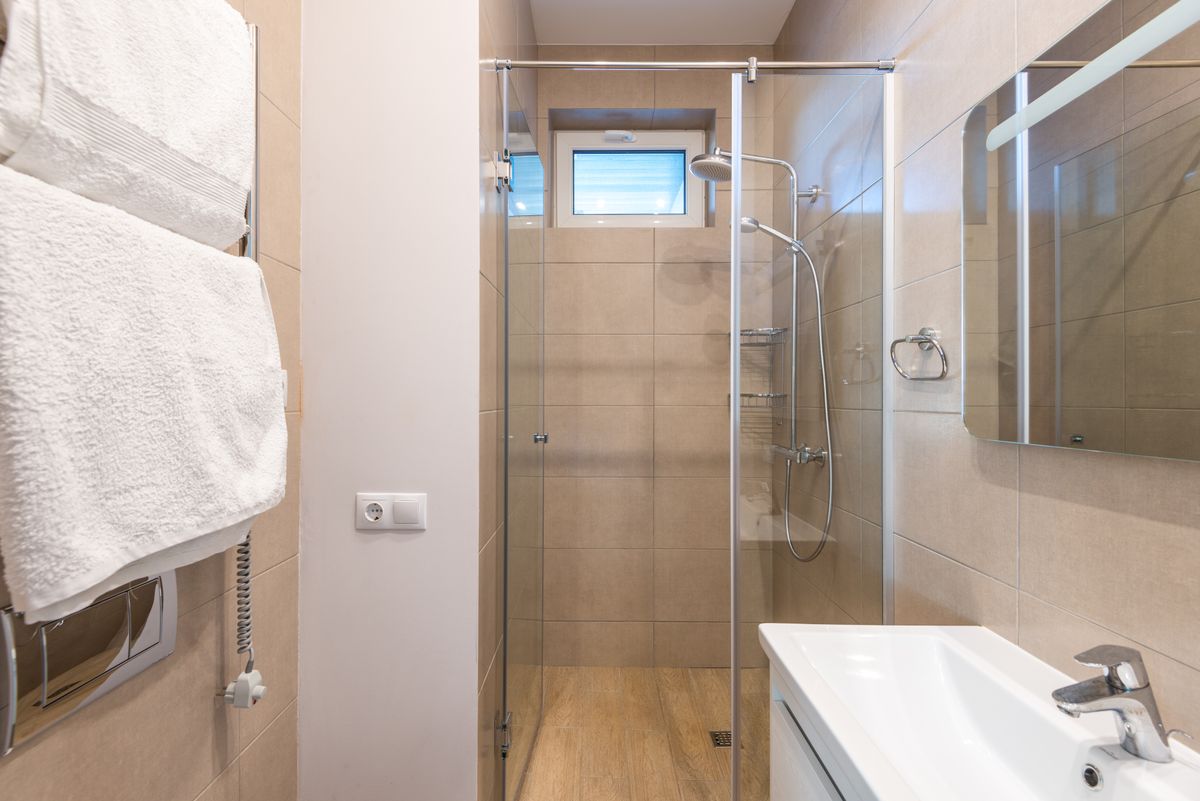
Showers are run for minutes, basins filled and drained — drainage is proved, not assumed.

Seals, grout lines and fixings get a close pass in every bathroom before sign-off.
The Snag List — Built Properly and Cleared Properly
Everything found on the walk goes onto one document — the snag list. It is the most important paper in the whole renovation after the original scope, because it converts your memory of a busy afternoon into an agreed, checkable record. Snagging is normal on every renovation, including good ones. What separates a good handover from a bad one is not whether snags exist — it is whether they are captured honestly and cleared completely.
How the List Is Built
- One list, written during the walk — not reconstructed afterwards from memory, and not split across messages and notebooks.
- Every item located precisely — room, position and a plain description, with a photograph taken at the moment it is logged.
- Both parties agree the wording on the spot — if an item is disputed, it is still written down with the disagreement noted, rather than dropped.
- Both parties hold an identical copy — signed or acknowledged in writing the same day, so the list cannot quietly grow or shrink afterwards.
- Small items fixed on the spot still get logged — marked as cleared there and then, so the record shows the full picture of the day.
How the List Is Cleared
Clearing works the same way the walk did — by room, against the document. The contractor works through the list, and then you re-walk the items together, physically re-testing each one — the tap is run again, the door is latched again, the socket is plugged into again. Items are only marked cleared when you have seen them cleared, not when you have been told they are. If an item needs a part or a return visit, that is agreed and written against the item rather than left floating. When the list reaches zero, it is signed off a second time — and that second signature, not the first, is the real end of the renovation.
Expect a snag list. A short list on a thorough walk is a sign of a good job and an honest process. The lists to worry about are the ones that were never written — because those items still exist, they are just discovered later, one by one, when leverage has gone.
Documents and Items to Collect at Handover
The walk ends with a physical exchange, and it is worth being systematic about it. People remember the keys and forget the paperwork, then need the paperwork within the month. Before the contractor leaves, you should be holding all of the following that apply to your project.
- All keys — every set for the front door, plus mailbox, balcony, utility and any internal keys, counted and tested in the locks they belong to.
- Access fobs and cards — building entry, parking, gym and pool fobs registered to your unit, tried at the readers if that can be done on the day.
- Appliance manuals — for anything new installed in the scope — oven, hob, water heater, AC controllers — so settings, cleaning and error codes are not guesswork later.
- Manufacturer warranty cards, where appliances came with them — ask for any cards or documents the manufacturers supplied with new appliances, and keep them with the manuals. These are the manufacturer’s own documents for the products installed.
- Your copy of the final agreed scope — the scope as completed, including any written variations, so the record of what was done matches the flat you are standing in.
- The signed snag list — including the second sign-off once items are cleared, or the agreed dates for any items still open.
- Product and colour references — ask for the paint colours and product references used on walls, cabinets and key finishes, so a future touch-up matches first time instead of third.
- A walkthrough of the practical points — where the water shut-off valve is, where the distribution board is, how the AC filters come out. Two minutes of being shown beats an emergency search later.
Store the bundle digitally as well as on paper — photograph the manuals’ key pages, the snag list and the scope, and keep them with your tenancy or ownership documents. If the flat is rented out later, this file is what you hand your tenant or agent, and it answers most of the questions they will ever ask about the apartment.
Final Payment — Agree the Trigger Before Work Starts
Almost every handover dispute about money has the same root — the moment the final payment falls due was never clearly defined. One side believes it is due when the work looks finished. The other believes it is due when the snag list is cleared. Both can be acting in good faith, and the argument still happens, because the trigger was left vague.
The fix is simple, and it happens at the very beginning, not at the end. Agree the final-payment trigger in writing before work starts. Define, in the quotation or scope document, exactly what event the final payment follows — for example, completion of the handover walk and clearance of the snag list — so that on the day itself there is nothing to negotiate. Our apartment renovation quotation checklist for Dubai shows what a quotation should set out before you sign anything, and the payment trigger belongs on that list alongside the scope, the programme and the variation process.
This protects both sides equally. You are never pressed to release the final payment against unfinished snag items, because the written trigger says otherwise. The contractor is never left chasing a payment that keeps moving, because the trigger is objective — the walk happened, the list is cleared, the event has occurred. When Dubai Profixer quotes a renovation, the handover and its payment trigger are written into the agreement from the start, which is precisely why our handovers stay calm.
Finding a Defect After Move-In
Even a thorough walk cannot simulate a fortnight of real living. Some defects only appear under daily use — the door that sticks only on humid evenings, the drain that copes with a test but not with a full household, the hairline crack that opens as new materials settle. Finding one is not proof the handover failed. What matters is how it gets reported and handled.
Report it promptly and in writing — a message or email describing the defect plainly, with a photograph or short video, and the date you first noticed it. Written reports protect you, because they fix the timeline, and they help the contractor, because a photo of the actual fault is worth more than a phone description of it. Keep the tone factual and keep your copy. Then allow reasonable access for inspection and repair — defects are diagnosed in person, and a contractor who responds, inspects and puts the item right is behaving exactly as a good contractor should. Most move-in problems around a renovated flat are small, and the owners who settle fastest are the ones preparing the flat properly before the furniture arrives, as our move-in apartment renovation in Dubai guide sets out.
One practical habit makes all of this easier — keep a single running note on your phone during the first month, logging anything that seems off, with dates. Most entries will turn out to be nothing. The ones that matter will have a clear record behind them, and a clear record is what turns a defect from an argument into an appointment.
Good Handover Practice — and the Warning Signs
You can tell a great deal about a renovation company from how it behaves on handover day. The work is done, the leverage is shifting, and habits show. Here is what each side of that picture looks like.
Signs the Handover Is Being Done Properly
- The contractor books the walk as its own appointment and arrives with the scope, the snag list format and time to use them.
- Testing is encouraged, not endured — taps are run before you ask, sockets are offered for your charger, the AC is already cooling when you arrive.
- Snags are written down by the contractor as willingly as by you — including small ones you might have let pass.
- The flat is genuinely clean — dust hides defects, and a contractor who cleans properly is a contractor who wants the work seen.
- Documents are produced without being chased — keys counted, fobs handed over, manuals and the final scope in one bundle.
- Timings for clearing the list are agreed on the day and written against the items, then kept.
Warning Signs to Slow Down For
- The walk is rushed or steered — rooms skipped, testing waved away, or the visit scheduled in fading light.
- Anything you find is argued with instead of written down — a snag list that only holds what the contractor accepts is not a snag list.
- The final payment is pressed for before the walk — contrary to whatever trigger was agreed in writing at the start.
- Documents are promised for later — manuals, fobs and the final scope have a way of never quite arriving once the team has left site.
- The flat is handed over dirty or unfinished in corners — what is visible usually reflects what is hidden.
- Vague answers about who returns to clear snags, and when — the clearing visit should be as concrete as the walk itself.
The Dubai Profixer Handover Standard
Everything on this page is simply how Dubai Profixer already works. The written scope at the start defines what the handover will check. The final walk is booked as its own stage after the final clean. Testing is done with you, live, room by room. The snag list is written, shared and cleared against re-tests, and the keys, fobs, manuals and final scope change hands in one bundle. It is not a special service and it is not an extra — it is the last stage of the renovation you were quoted, planned before the first tool came out of the van.
If you are planning a renovation anywhere in Dubai — or if another contractor is nearing the end of your project and you want an experienced eye on the final walk — talk to us first. Call 0524601612 any day from 7 AM to midnight, or send the form below and your message opens straight into WhatsApp.
Start With a Scope That Ends Properly
The calm handover is decided on day one — by a written scope, an agreed programme and a payment trigger set down before work starts. Book a free site survey and we will build your renovation that way from the first visit.
Handover Questions, Answered
What is an apartment renovation handover?
How long does a handover walk-through take?
What should I test during the final walk?
What is a snag list and how does it get cleared?
What documents and items should I collect at handover?
When should the final payment be made?
What if I find a defect after moving in?
Can handover happen if I am not in Dubai?
What should be agreed before the renovation starts to make handover smooth?
Tell Us About Your Apartment
Fill in the form and your message opens directly in WhatsApp, ready to send. We will arrange your free site survey from there — and your written scope will include the handover stage from day one.