
New Apartment Upgrades in Dubai
The keys are in your hand and the paint is barely dry, yet the apartment already does not feel like yours. There are no wardrobes, the kitchen runs short on storage, and every wall is the same developer white. Dubai Profixer delivers selective new apartment upgrades in Dubai — the targeted improvements owners actually choose after handover, planned in one written scope and finished before your furniture arrives.
A brand-new unit does not need rebuilding, and we will not sell you a renovation it does not need. It needs the gaps filled properly — storage where the developer left an empty recess, lighting that suits how you live, your own colours on the walls, and the small finishes that turn a handover unit into a home. We start with a snagging walk, agree every upgrade in writing, then carry out the work.

New apartment upgrades in Dubai are the selective improvements owners make to a brand-new developer-handover unit — built-in wardrobes and storage, kitchen additions, feature lighting, repainting in your own palette, flooring laid over developer tile, bathroom accessories and glass partitions, and balcony finishing. The order matters — snagging comes first, because defects from construction are the developer’s to fix before your upgrades cover them up. Dubai Profixer starts every upgrade package with a free site survey and snagging walk, then prices the upgrades you choose in one written quotation. Call 0524601612 (7 AM – midnight) or message us on WhatsApp to arrange yours.
Snagging First — Check the Handover Unit Before Upgrading Anything
Every new apartment leaves the developer with small defects — a hollow tile here, a sticking door there, a sealant line that was rushed. None of this is unusual, and none of it is yours to pay for. Construction defects are the developer’s responsibility to put right, and most developers run a defect liability period after handover during which reported defects are repaired by their team. The catch is timing. Once your own upgrades cover a defect up — new flooring laid over a leaking balcony threshold, fresh paint over a damp patch, a wardrobe built against a wall with a plumbing weep behind it — it becomes far harder to show the problem was there from handover, and your upgrade work can be disturbed when the repair finally happens.
So the first visit to a new apartment should never be a measuring visit for wardrobes. It should be a snagging walk — a slow, room-by-room check of the unit exactly as the developer handed it over, with every defect photographed and listed while the apartment is still empty. An empty unit is the easiest unit to inspect. Defects that hide behind furniture later are obvious now.
What a Snagging Walk Checks
- Floor and wall tiles tapped and checked for hollow spots, cracks, lippage and failed grout lines
- Paint and plaster checked for cracks, bubbles, damp staining and uneven finishing at corners and ceilings
- Every door and window opened, closed and locked — alignment, seals, handles and sliding tracks
- Water run in every bathroom and the kitchen — pressure, drainage speed, leaks under basins and behind cabinets
- Air conditioning run in every room — cooling, thermostat response, unusual noise and condensate drainage
- Every power point, switch, light fitting and appliance connection tested and noted
- Balcony checked properly — door seal, threshold, floor slope and drainage outlet, because balcony leaks damage new flooring fast
- Silicone and sealant lines inspected around baths, showers, basins and the kitchen worktop
Anything on that list that is a construction defect goes to the developer or the building’s facility team through the handover channel your developer provides — check your handover pack for how defects are reported and how long your defect liability period runs, because the terms differ between developers. What we do at the survey is walk the unit with you, flag what belongs on the developer’s snag list and what is simply a characteristic of the unit, and mark anything that would affect the upgrades you are planning. Upgrades then start on a sound unit, in the right order, with nothing valuable buried over an unresolved defect.
If the survey shows the apartment needs more than selective upgrades — because an older resale unit has tired bathrooms, worn flooring throughout or a kitchen at the end of its life — the honest route is our apartment refurbishment in Dubai service or the full apartment renovation in Dubai programme. This page is for the far more common case — a new unit that is sound, but unfinished in the ways that matter to daily life.
Upgrades New Apartment Owners Actually Choose
The pattern is consistent — new owners ask for the same families of upgrades, because developers build to a specification that sells the unit, not one that stores your clothes or lights your evenings. You choose only the families your apartment needs. Each one below is priced as its own line in the written scope, so you can add or drop families without the whole quotation changing shape.
Built-In Wardrobes and Storage
The single most requested upgrade. Many new apartments are handed over with an empty wardrobe recess, a bare niche, or no fitted storage at all — and freestanding wardrobes rarely fit the recess cleanly. Made-to-measure built-in wardrobes use the full height and width of the space, with hanging runs, shelving, drawers and shoe storage planned around what you actually own. The same joinery visit usually adds the storage the developer left out elsewhere — a hallway unit, a laundry cupboard, a TV wall with concealed storage, or a study desk built into an alcove. Because everything is measured and made for your unit, this work is handled by our carpentry services in Dubai team as part of the same scope — one survey, one programme, no separate contractor to coordinate.
Kitchen Additions and Cabinet Upgrades
Developer kitchens in new towers are usually sound but basic — limited wall cabinets, few drawers, a standard worktop and no space planned for the appliances you actually use. Upgrades here are surgical rather than structural. Additional wall units and tall storage extend the run in matching finishes, drawer systems replace awkward cupboards, under-cabinet lighting fixes the shadowed worktop, and worktops, handles and splashbacks are upgraded where the developer’s choices date the room. Where the fitted kitchen is genuinely too small for the household, an added island or a breakfast counter often solves it without touching the plumbing. Deeper changes belong to our kitchen renovation in Dubai service — on a new unit, they are rarely necessary.


Lighting Upgrades and Feature Lighting
Developers light new apartments for the handover photograph — rows of identical downlights, one colour temperature, no dimming, no focal point. Living with it feels flat within a week. Lighting upgrades layer the scheme properly — pendant lights over the dining table and kitchen island, a statement fitting in the living room, wall lights beside the bed, LED strips in wardrobes, coves and shelving, and warmer lamps in the rooms you relax in. Where the ceiling allows, dimmers and separate switching zones let one room work for dinner, work and film nights. Lighting is also the upgrade with the best effort-to-impact ratio on a new unit, because the wiring points usually exist — the fittings and the plan are what change.
Feature Walls and Repainting in Your Own Palette
Developer white is a blank page, not a colour scheme. Most owners repaint at least the living room and master bedroom before moving in — a deep feature wall behind the sofa or the bed, warm neutrals through the living areas, a colour in the children’s room. Panel moulding and trim details on a feature wall add the architectural interest that new-build rooms often lack, and they are quick to install while the apartment is empty. Repainting before furniture arrives is faster, cleaner and cheaper in labour than painting around a furnished home later, which is why it sits near the top of almost every upgrade list. Our apartment painting in Dubai team handles full repaints and single feature walls inside the same programme.
Flooring Upgrades Over Developer Tile
The standard developer tile is durable, glossy and cold — and it is the finish owners most often want gone in living areas. In many new units there is no need to remove it. Engineered wood, laminate and luxury vinyl flooring can be laid over sound, level tile with the correct underlay, which keeps the programme short and avoids demolition dust in a brand-new home. Door clearances, skirting and thresholds are adjusted as part of the same job, and the balcony door seal is checked before anything is laid near it — a point the snagging walk covers. Where tile is hollow or uneven, the honest answer may be local repair first or removal in that area, and the survey will tell you which situation you are in. Flooring options and finishes are covered by our flooring services in Dubai team.
Bathroom Accessories and Glass Partitions
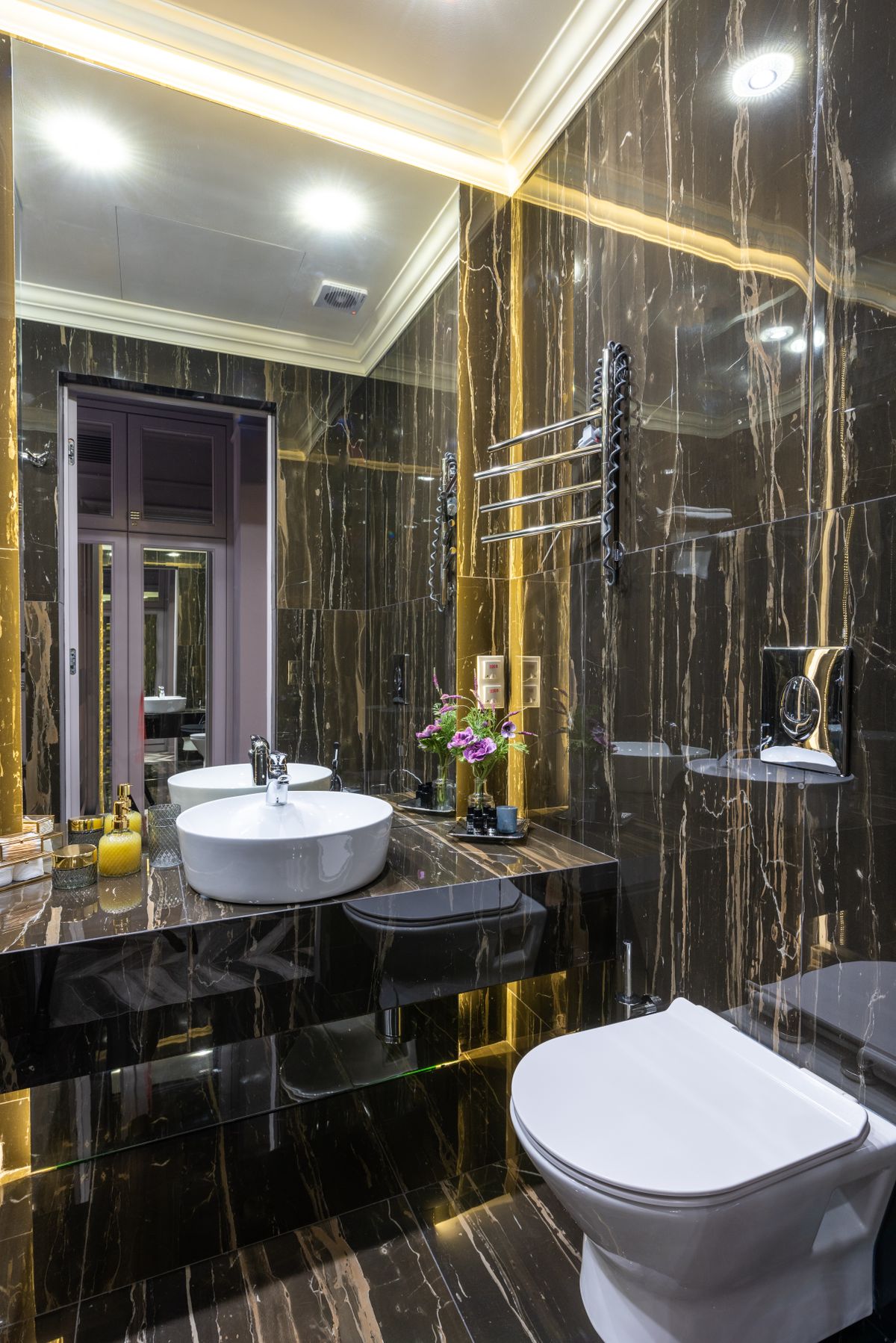
New bathrooms work — they just feel unfinished. A shower curtain rail where a glass partition should be, a small standard mirror, no shelving, and accessories still in their packaging or missing entirely. The upgrades owners choose are precise — a fixed glass shower partition that makes the bathroom feel like a hotel’s, a larger mirror with proper lighting, towel rails and hooks where you actually reach for them, a vanity unit or shelving for storage, and upgraded shower heads and accessories. None of this requires touching the developer’s tiling or plumbing, which keeps it fast and keeps the waterproofing exactly as it was handed over. Larger bathroom changes sit under our bathroom renovation in Dubai service.

Balcony Tiling and Finishing
The balcony is the room developers finish last and least — bare screed or basic tiles, an outlet drain, and nothing else. Finishing it properly turns dead space into the most-used corner of the apartment. Outdoor-grade tiles or deck-style flooring rated for heat and sun, a check of the floor slope and drainage before anything is laid, and attention to the door threshold so wind-driven rain stays outside. Many owners add a simple storage box solution and plan the lighting point while the indoor work is running. One caution from experience — never let anyone tile over a balcony drain or change the floor level against the door threshold. The finishing must respect how the balcony sheds water, and the survey checks this before the balcony is quoted.
What Usually Does Not Need Touching in a New Unit
A page selling upgrades should also tell you what to leave alone — because the easiest way to waste money on a new apartment is paying to replace things that are already good. Unless the snagging walk finds a defect, these elements on a brand-new unit are normally sound and best kept exactly as they are.
Bathroom Tiling and Waterproofing
Developer tiling in wet areas sits over new waterproofing. Ripping it out to change a colour disturbs a system that is working. Change the glass, mirror and accessories instead — the bathroom transforms without the risk.
Sanitaryware Cores
Basins, WCs and bath tubs on a new unit are new. Upgrading shower heads, accessories and storage gives you the daily-use improvement at a fraction of the disruption of replacing the cores themselves.
Windows and Balcony Door Seals
The developer’s seals and weatherproofing are part of the building envelope. Breaking them for cosmetic reasons invites leaks and disputes. Report seal defects through the snagging channel instead of covering them.
The Air Conditioning System
The system is new, sized for the unit and commissioned at handover. If a room cools poorly, that is a snag to report, not a reason to pay for changes. Your money works harder on lighting and storage.
Kitchen Cabinet Carcasses
On most new units the cabinet boxes are square, dry and firmly fixed. New fronts, handles, worktops and added units deliver the visible upgrade while the sound structure underneath stays untouched.
Internal Doors
Developer internal doors are usually flat, plain and perfectly functional. If one sticks or scrapes, it is a snag. Replacing a full set of new doors for style alone is rarely where an upgrade budget earns its keep.
If a contractor quotes you for removing and replacing large parts of a brand-new apartment, ask one question — what is actually wrong with what is there? If there is no defect and no functional gap, there is no reason to pay for its replacement. That principle runs through every quotation we write, and it is why the survey comes before the scope, never after it.
Working in a New Tower — Approvals, Access and Neighbours
A new apartment sits inside a new building with fresh common areas, a busy handover period and a management team protective of both. Every tower sets its own rules for contractor work, and they genuinely differ — what one building allows with a simple notification, another requires a formal approval for. As a general picture, most buildings distinguish between purely decorative work and anything involving flooring, joinery fixed to walls, wet areas or repeated material deliveries. Decorative work such as painting and hanging lights often needs only notification and crew access arrangements. Fixed joinery, flooring replacement and bathroom additions commonly need a no-objection or work approval from building management before the first toolbox arrives.
Beyond the approval itself, expect practical conditions in most towers — the service lift booked for materials and protected while in use, working hours set by the building so drilling does not disturb neighbours at unsocial times, crew and vehicle details registered at security, and common-area floors and walls protected along the route from lift to apartment door. Some buildings ask owners to confirm who is responsible for making good any common-area damage before work starts.
Because the details vary by building, we verify the requirements for your tower as part of the survey and plan the programme around them — approvals requested before start dates are promised, lift bookings built into the sequence, and protection put down before the first delivery. The one rule that never changes is this — never start fixed work in a tower without confirming what its management requires. A stopped job costs more than a short wait for an approval, and neighbours in a new building remember who caused the noise and the mess.
Sequence Upgrades Before the Furniture Arrives
The empty weeks between handover and moving in are the cheapest working time your apartment will ever offer. Every trade moves faster in an empty unit, nothing needs masking around sofas and beds, joinery is measured against bare walls, and nobody is living around the dust. If your furniture delivery is already booked, tell us the date at the survey — the programme is built backwards from it. The sequence below is the order that protects finished work and avoids doing anything twice.
- Step one — snagging walk and defect reporting, while the unit is empty and every defect is visible
- Step two — building approvals and access confirmed for the work your tower requires them for
- Step three — wet and dusty work first — balcony tiling, bathroom glass and any flooring that involves removal
- Step four — built-in joinery — wardrobes and storage measured, made and installed against finished floors
- Step five — kitchen additions and cabinet upgrades, with worktops and splashbacks completed
- Step six — painting and feature walls, after the dusty trades are out of the apartment
- Step seven — lighting fittings, mirrors and bathroom accessories — the finishing layer
- Step eight — final clean, snag check of our own work with you, then furniture delivery into finished rooms
Two sequencing mistakes are worth avoiding. Painting before joinery means painters return to touch up around fitted wardrobes — and you pay for the revisit. Laying new flooring before the snagging repairs are finished means developer crews working over your new floor. The order above prevents both. If you have just received your keys and plan to move straight in, our guide to move-in apartment renovation in Dubai covers how upgrades and move-in day fit together when the timeline is tight.
What Shapes the Cost of New Apartment Upgrades in Dubai
There is no honest standard price for upgrading a new apartment, because no two owners choose the same menu. What we can do — and what this section does — is show you the factors that move your quotation, so the written figure you receive after the survey holds no surprises. Our wider guide to apartment renovation cost in Dubai explains how upgrade budgets compare with refurbishment and full renovation budgets.
How Many Families You Choose
The menu is modular. Wardrobes plus painting is a modest programme — wardrobes, kitchen additions, flooring, lighting, bathroom glass and balcony finishing together is a substantial one. Each family is priced as its own line, so the total is simply the sum of what you picked.
Joinery Volume and Materials
Wardrobes and storage are usually the largest single line. The run length, internal layout, door style and finish materials set the figure — a full-height master wardrobe with drawers and lighting costs more than a simple hanging unit in a guest room, and both are measured before they are priced.
The Flooring Route
Laying new flooring over sound developer tile is the efficient route. Where tile must be repaired or removed first, or where levels need correcting at thresholds, the preparation work adds to the programme — the survey establishes which route your floors are on.
Kitchen Depth
Added units, new fronts and handles are one level of spend. New worktops, a replaced splashback and appliance integration sit above it. Because the carcasses usually stay, a new-unit kitchen upgrade is normally a contained line rather than a project of its own.
Apartment Size and Access
More rooms mean more painting, more flooring and more fittings. Tower logistics matter too — lift bookings, protection requirements and the building’s working hours shape how the programme is staffed and how many visits the work takes.
Finishes You Select
Within every family there is a range — glass thickness and hardware on a shower partition, stone or laminate on a worktop, standard or designer light fittings. The quotation prices the finishes you choose, with alternatives shown where a choice moves the total significantly.
After the free site survey you receive one written quotation covering exactly the families you selected — inclusions, exclusions and the programme stated in plain language. Nothing is priced from a photograph or a floor plan alone, because the snagging findings and the building’s rules both change what the work involves.
Start With a Free Survey of Your New Apartment
Send us your handover date and building name on WhatsApp. We will walk the unit with you, flag the snags for the developer, and price only the upgrades your apartment actually needs.
New Apartment Upgrades — Questions Owners Ask
Should I upgrade my new apartment before or after the snagging is fixed?
What upgrades do owners of new apartments in Dubai choose most often?
Can flooring be laid over the developer tiles in a new apartment?
Do I need building management approval to upgrade a new apartment?
Can you add wardrobes to a new apartment that came without them?
Is it worth repainting a brand-new apartment?
How long do upgrades on a new apartment usually take?
Can upgrades be finished before my furniture is delivered?
How much do new apartment upgrades cost in Dubai?
Tell Us About Your New Apartment
Fill in the form and your message opens directly in WhatsApp, ready to send. We will arrange your free site survey and snagging walk from there.