
3D Wall Panels — Pros and Cons (Honest Guide)by Dubai Profixer
Considering 3D wall panels? The honest guide — what they're great at, where they disappoint, which materials to choose, how to vet installers, and when to walk away. From installers who fit them weekly across Dubai.
On this page
- What 3D Wall Panels Are
- The Pros
- The Cons (Honestly)
- 3D Panels vs Alternatives
- Where 3D Panels Shine
- When NOT to Use 3D Panels
- Choosing Your Design & Material
- Installation: What Good Looks Like
- The Science: Why 3D Works
- 3D Panels in Dubai's Climate
- Common Installation Failures
- Questions to Ask Any 3D Panel Installer
- Cost & Value
- Caring for 3D Panels
- 3D Panels for Renters
- 2026 Trends in 3D Panels
- 3D Wall Panels FAQs
- See 100+ 3D Panel Designs
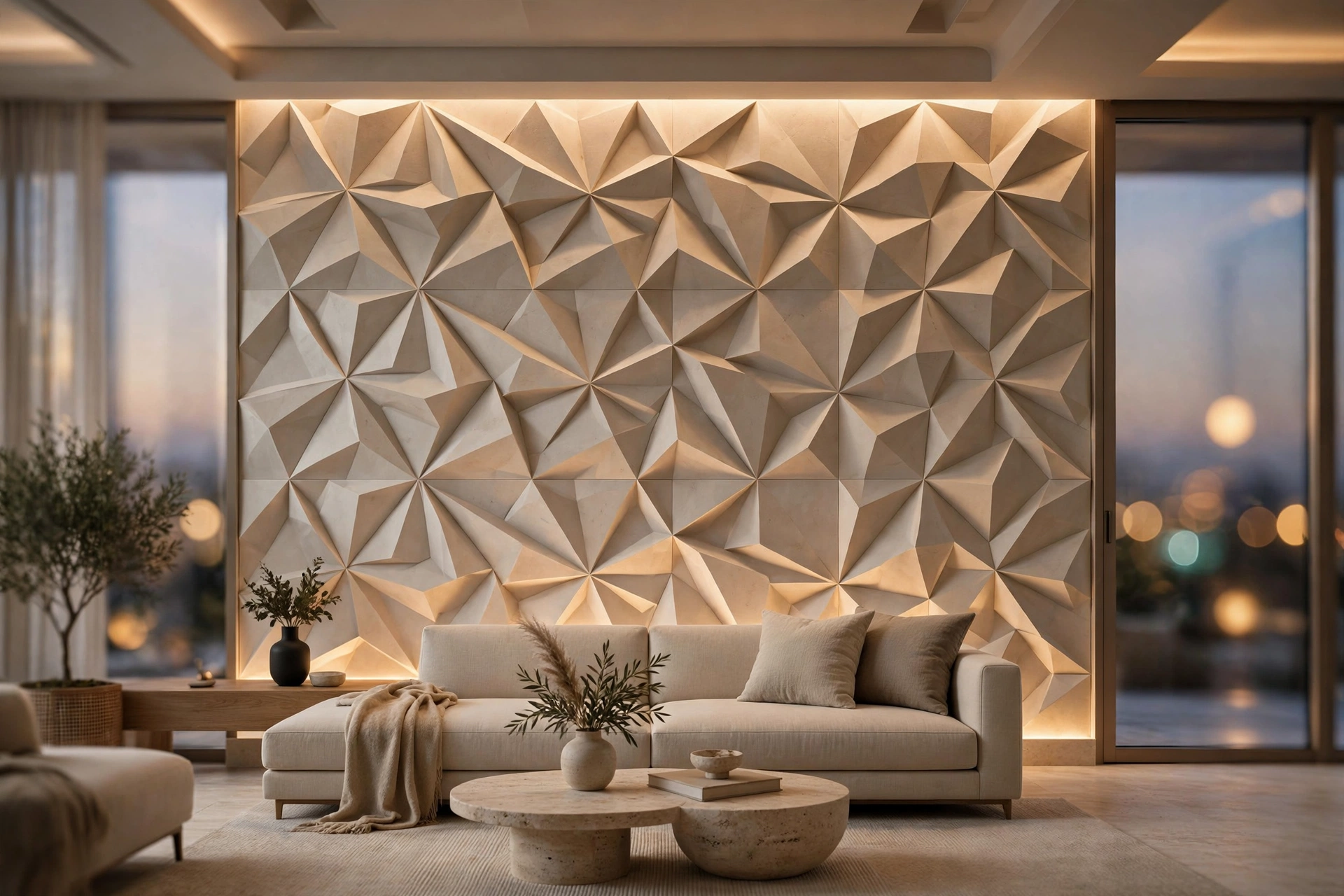
3D wall panels are having a moment — and for good reason. Nowhere else do you get this much drama per square metre: sculptural relief that catches light, throws shadows, and turns a flat wall into art. But they're not right for every wall, every room, or every budget. As installers who fit 3D panels weekly across Dubai, here's the genuinely honest assessment — including the drawbacks most sellers won't mention, the installation failures we've been called to fix, and the situations where we'd talk you out of them entirely.
What 3D Wall Panels Are
3D wall panels are manufactured relief panels — typically 50×50cm — that mount to walls creating continuous sculptural patterns. They come in four main materials, each with distinct characteristics that suit different rooms, budgets and ambitions. Choosing the right material is half the battle:
| Material | Character | Best For | Watch Out |
|---|---|---|---|
| Gypsum | Crisp detail, seamless, paintable | Premium interiors, seamless looks | Heavy; not for wet areas |
| PVC | Lightweight, waterproof, economical | Budgets, bathrooms, rentals | Less crisp detail; can look plastic up close |
| MDF | Smooth, paintable, versatile | Dry interiors, painted finishes | Swells with moisture; avoid wet zones |
| PU (polyurethane) | Light, detailed, durable | Lightweight luxury, ceilings too | Premium pricing |
The Pros
Let's start with why 3D panels earned their popularity — the genuine, durable advantages that keep them in demand:
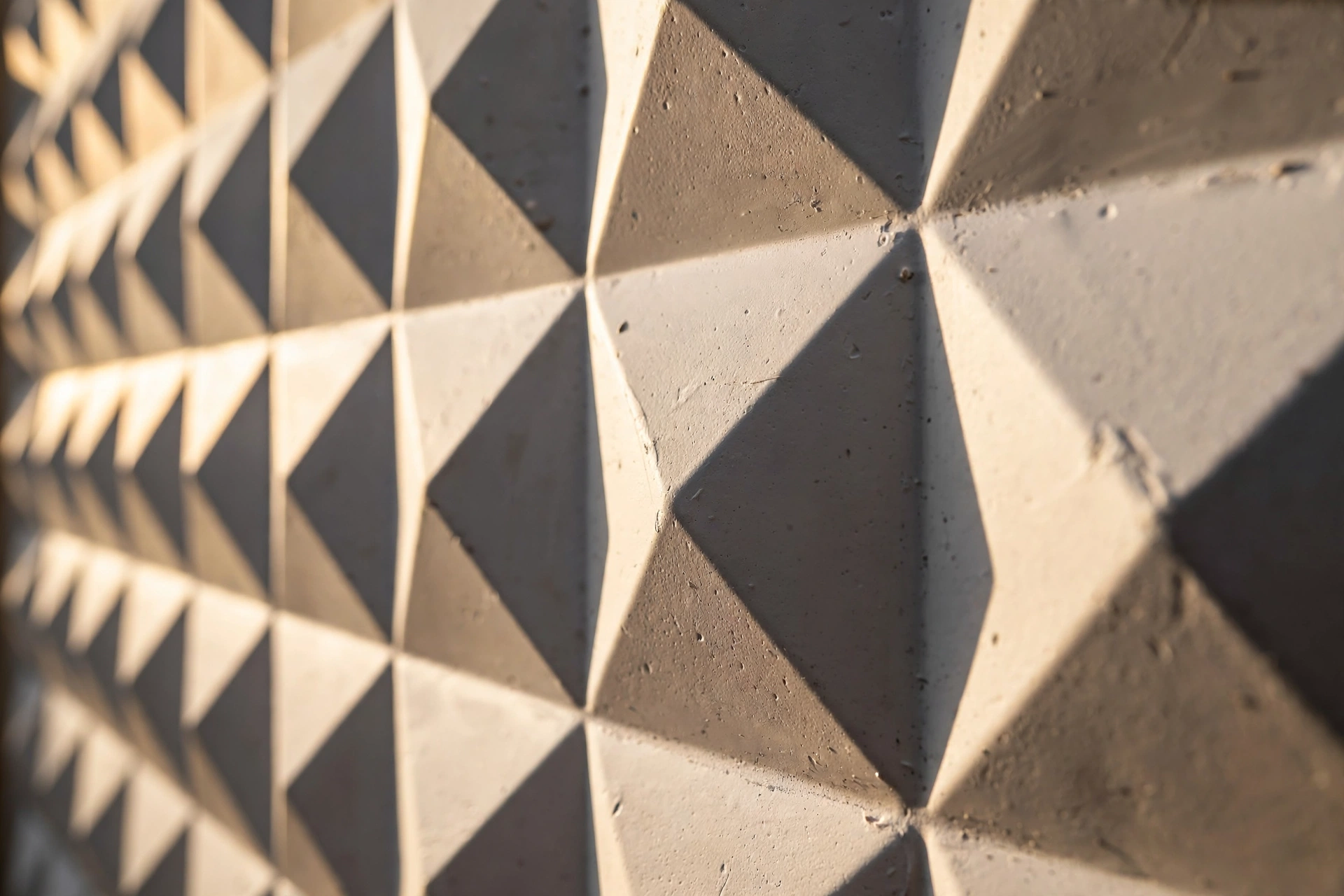
- Unmatched impact per square metre: no other treatment transforms a wall this dramatically for the investment. The relief creates architecture where there was none.
- Living light: shadows shift through the day as light moves — the wall feels alive in a way flat finishes never do.
- Fast installation: most feature walls complete in just a few days. Compare stone's weeks.
- Far cheaper than stone: similar drama at a fraction of natural stone's cost and weight.
- Paintable: change the colour anytime — the wall evolves with your taste.
- Hides imperfect walls: relief disguises bumps and unevenness that paint would expose.
- 100+ designs: geometric, wave, hexagonal, organic, quilted — a pattern for every style.
- Photographs beautifully: the wall guests ask about and cameras love.
The Cons (Honestly)
Now the part most sellers skip. Every one of these is real — but every one is manageable or avoidable with honest specification:
- Dust collects in deep relief: the honest maintenance cost. Deep geometric patterns need occasional dusting with a soft brush or vacuum attachment. Shallower designs (waves) need minimal attention.
- Bold patterns can date: today's dramatic origami is tomorrow's "oh, that's very 2020s." Timeless designs (waves, soft geometrics) age better than hyper-specific ones.
- Not for wet areas: gypsum and MDF fail in bathrooms and kitchens. Only PVC belongs in wet zones.
- Reduces room depth slightly: deep relief protrudes 2–5cm — negligible in most rooms, noticeable in tiny ones.
- Poor installation shows forever: visible joints, misaligned patterns and paint drips in the relief are obvious permanently. The installer matters enormously.
- Removal is work: more involved than stripping wallpaper or repainting. Consider it semi-permanent.
- Can overwhelm small rooms: deep dramatic relief needs space to be appreciated; in tiny rooms it oppresses.
- Needs designed lighting: flat, even light wastes the relief. Without a lighting plan, you're paying for half the effect.
3D Panels vs Alternatives
| 3D Panels | Stone Cladding | Timber Slats | Wallpaper | |
|---|---|---|---|---|
| Impact | Very high | Very high | High | Medium–high |
| Cost | Moderate | Premium | Mid-range | Accessible–premium |
| Install time | Days | Weeks | Days | Days |
| Changeability | Repaintable | Permanent | Repaintable | Re-papering needed |
| Maintenance | Occasional dusting | Minimal | Minimal | Minimal |
| Best for | Drama on a timeline | Forever luxury | Warmth | Pattern & colour |
Where 3D Panels Shine
Context is everything. Here are the applications where 3D panels consistently delight — the rooms and uses where their strengths align perfectly with the need:
Living Room TV Walls
The classic application: 3D panels frame the TV, cables conceal behind, LED strips wash the relief. The wall becomes sculpture that happens to hold a television. Our most-installed 3D configuration.
Bedrooms (Soft Designs)
Wave and quilted patterns in calm colours behind the bed — texture without stimulation. Keep relief shallow and colours serene where you sleep.
Offices & Receptions
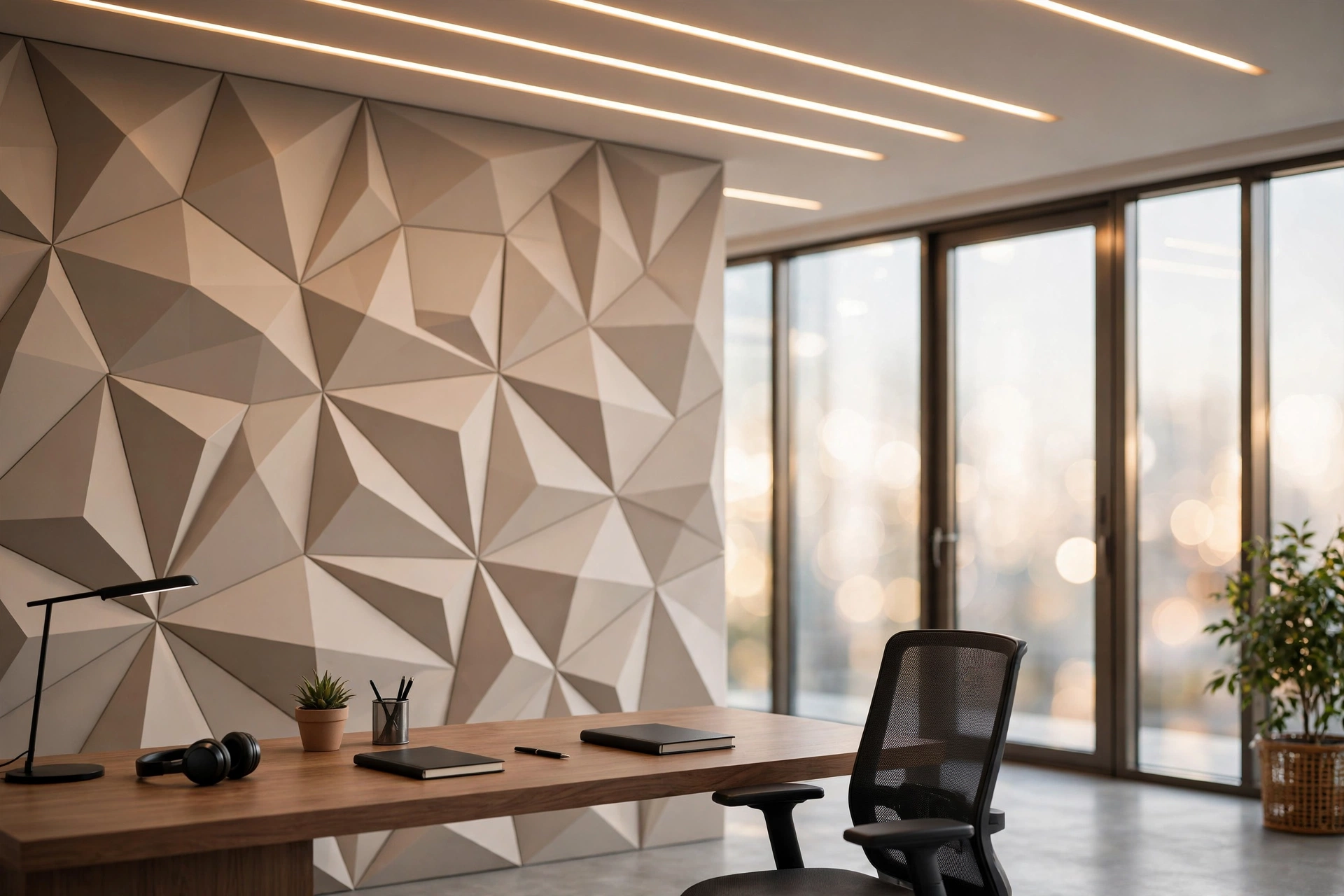
Hexagonal and geometric panels signal modernity in receptions and boardrooms. They photograph well for brand imagery and create designed first impressions. We install after hours for commercial clients.
Restaurants
Metallic-finish 3D panels under moody lighting are unforgettable — the relief catches candlelight and creates atmospheric depth. Our hospitality installations use durable, cleanable commercial finishes.
When NOT to Use 3D Panels
We'd rather talk you out of 3D panels than sell you the wrong treatment. Honest installers turn down work that won't delight — here are the situations where we'd advise against panels:
- Tiny rooms: deep relief overwhelms spaces under ~10sqm. Choose paint or shallow texture.
- Bathrooms (non-PVC): gypsum and MDF in steam is a slow failure. Only PVC belongs here.
- Walls needing access: don't panel over access panels, meters or plumbing you service regularly.
- Frequent redecorators: if you change style yearly, paint's reversibility beats panels' commitment.
- No lighting plan: if you won't light the relief properly, save your money — flat light wastes 3D.
- Rented without permission: panels are semi-permanent; get landlord approval in writing.
Choosing Your Design & Material
The difference between a stunning 3D wall and a regrettable one usually comes down to these six decisions — get them right and the panels do the rest:
- Match relief to room size: deep drama needs large walls; small rooms want shallow patterns.
- Consider the light: ensure directional light (natural or designed) or the relief stays flat.
- Timeless over trendy: waves and soft geometrics age gracefully; hyper-specific patterns date.
- Material for the room: PVC for moisture or budget; gypsum for seamless premium; MDF for painted versatility; PU for lightweight detail.
- Sample at scale: a 30cm sample can't show a 4-metre wall. We show large samples and completed-wall photos.
- One wall: 3D panels are a feature treatment — one wall per room. Full-room 3D is visual overload.
Installation — What Good Looks Like
3D panels are deceptively simple-looking — and punishing of bad installation. Here's what separates professional work from expensive regret:
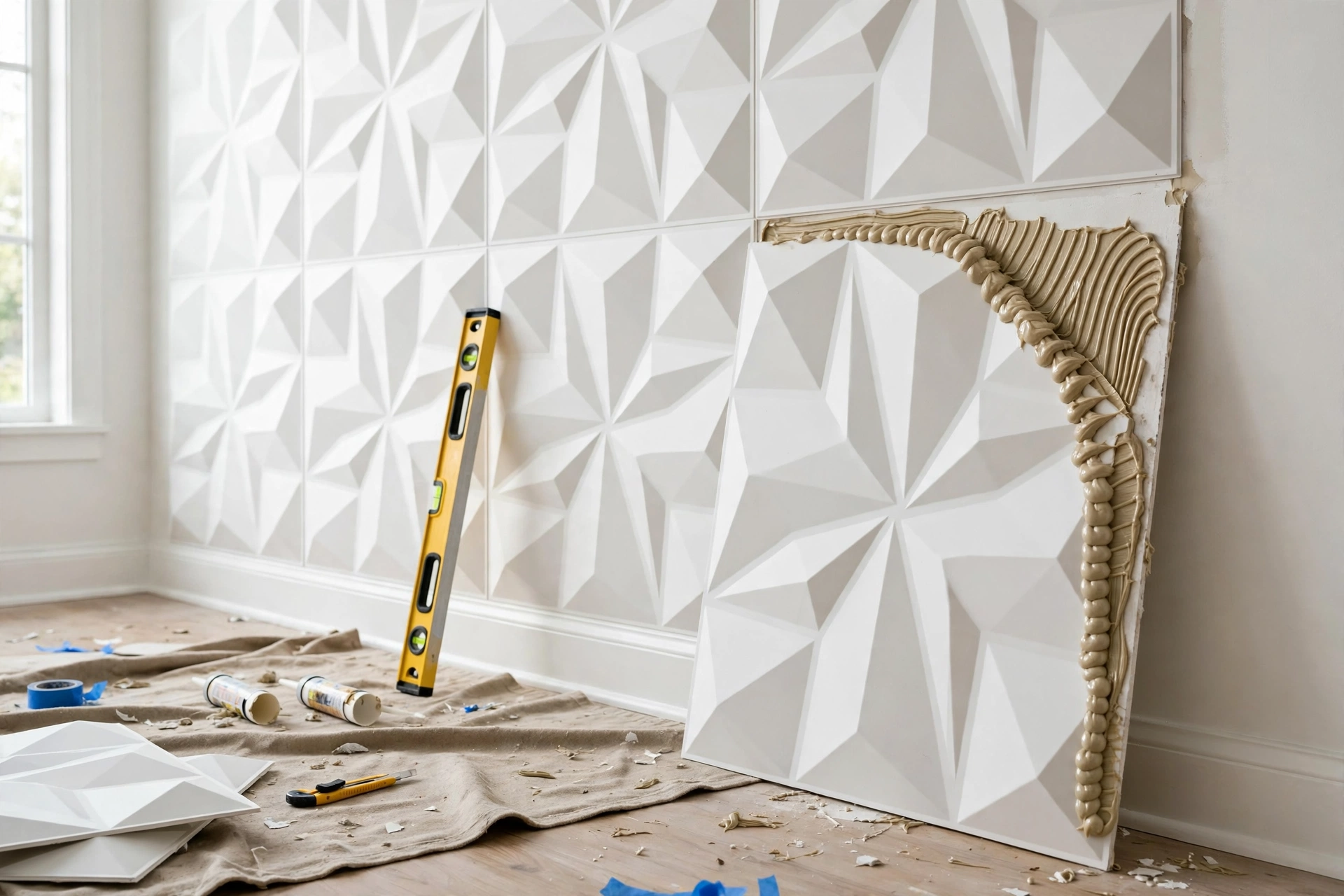
- Laser alignment: geometric patterns must continue seamlessly panel to panel — no eyeballing.
- Invisible joints: proper filling, sanding and finishing make seams disappear.
- Wall preparation: levelled and primed before a single panel goes up.
- Lighting integration: designed with the panels from day one, not added after.
- Paint-grade finish: the final coat should be flawless in raking light.
Ask any installer how they handle joints and alignment. Vague answers mean visible seams — the difference between a stunning wall and an expensive regret.
The Science — Why 3D Works
The magic isn't the panels — it's the shadows. Human vision reads depth from shadow; a flat wall gives the eye nothing to explore, while relief offers constant subtle variation. This is why 3D walls feel "alive" and photograph so well: the camera loves what the eye loves — depth, contrast, texture.
It also explains the golden rule: relief depth must match viewing distance. Deep dramatic panels need room to be appreciated — viewed from across a living room, shadows resolve into art. The same panels in a narrow hallway overwhelm, because the eye can't step back far enough to read the pattern. During consultation, we match relief depth to your room's dimensions — the technical detail separating stunning from uncomfortable, and the question most sellers never ask.
3D Panels in Dubai's Climate
Dubai's environment is kinder to 3D panels than to many other wall treatments — with one critical moisture exception to respect:
- Heat: indoor panels are unaffected by heat in air-conditioned spaces. Avoid unconditioned areas (some balconies, warehouses) for gypsum and MDF.
- Humidity: bathrooms, kitchens and pool areas need PVC only. Elsewhere, standard materials are fine.
- Dust: Dubai's fine dust settles into relief. Washable painted finishes wipe clean; plan for occasional dusting.
- Sun: direct sun can fade painted finishes over years — same as any painted surface. Quality paint resists well.
Common Installation Failures
Most 3D panel horror stories trace to installation shortcuts, not the product itself. These are the failures we see when we're called to fix other companies' work:
- Visible seams: panels butted without filling and sanding. Proper joints disappear entirely.
- Pattern breaks: geometric patterns misaligned between panels — the eye catches it instantly and can't unsee it.
- Paint drips in relief: rushed spraying leaves drips that catch light forever.
- No primer on raw panels: paint absorbs unevenly; the finish looks patchy within months.
- Wrong adhesive: heavy gypsum panels need proper fixing; inadequate adhesive means panels shifting or falling.
- Skipped levelling: panels on uneven walls telegraph every bump through the relief.
Every one of these is preventable by a careful installer. This is why the cheapest 3D panel quote is often the most expensive — you pay for the redo.
Questions to Ask Any 3D Panel Installer
- How do you handle joints? (Want: fill, sand, prime, paint — invisible. Worry: "they just butt together.")
- How do you align patterns? (Want: laser levels, dry layout first. Worry: "we eyeball it.")
- What's your wall prep process? (Want: specific steps. Worry: "we just stick them on.")
- Which material for my room, and why? (Want: room-specific reasoning. Worry: one material for everything.)
- Can I see completed walls? (Want: photos or visits. Worry: only catalogue renders.)
- What's your lighting plan? (Want: integrated design. Worry: blank stare.)
Cost & Value
3D panels sit in the sweet spot: more than paint and wallpaper, far less than stone — with impact rivalling both. They're the value play of the feature-wall world. What moves the quote:
- Material: PVC most economical; MDF mid-range; gypsum and PU premium.
- Design complexity: simple waves vs deep intricate geometries.
- Wall area: straightforward per-area pricing after a site visit.
- Finish: factory white vs custom colours and metallics.
- Lighting: basic spots vs full cove and dimming systems.
Most walls complete in just a few days. Send dimensions and a photo on WhatsApp for an exact quote — and ask for the 100+ design catalogue.
Caring for 3D Panels
3D panels are low-maintenance — the relief needs only occasional attention to stay pristine for decades:
- Dusting: soft brush or vacuum with brush attachment every few months.
- Cleaning: damp cloth with mild detergent; never abrasive pads on painted finishes.
- Touch-ups: keep leftover paint for scuff repairs.
- Repainting: easy when tastes change — the wall's second life.
Our Honest Verdict
3D wall panels are the highest-impact wall treatment per square metre — when they're the right choice for the room, specified in the right material, installed by people who obsess over joints, and lit properly. They're wrong for wet areas, tiny rooms, commitment-phobes and anyone who won't plan the lighting. For living rooms, bedrooms, offices and restaurants with the right design? Nothing touches them. We install them weekly across Dubai and we'd be delighted to show you — honestly, including telling you when another treatment suits better. That's the difference between a seller and an installer: we'll talk you out of panels if your room wants paint.
3D Panels for Renters
Renters can have 3D panels — with caveats. Lightweight PVC panels mount with minimal fixings and remove with far less damage than feared; we photograph walls before starting and use the least invasive methods available. For the commitment-shy, freestanding 3D panel screens create the sculptural effect with zero wall contact. As always: landlord approval in writing first, and keep the design tasteful — you'll want your deposit back.
2026 Trends in 3D Panels
- Oversized relief: deeper, bolder sculptural patterns replacing subtle textures.
- Metallic finishes: bronze, champagne and brushed gold turning panels into jewellery.
- Colour-drenched: panels painted wall-colour for tonal texture rather than white contrast.
- Mixed media: 3D panels combined with timber slats or stone in one composition.
- Backlit panels: translucent designs with integrated LED for glowing walls.
Trend advice: enjoy trends in lighting and finish (changeable); stay timeless in pattern (permanent). A wave panel in this year's metallic is next year's repaint away from timeless. The pattern is the commitment — choose it like you'll live with it for a decade, because you might.
3D Wall Panels FAQs
See 100+ 3D Panel Designs
Send us your wall dimensions and a photo — get the full catalogue, honest material advice for your room, and a free quote for supply and installation. No obligation; just straight answers from installers who do this every week.
Get My Free Quote