
Does a Solar Water Heater Need Electricity?
⚡ Electric systems
🔧 Repair all brands
📋 Maintain annually
🏡 Villas & apartments
⚡ Quick Answer
Does solar water heater need electricity? Yes, but only a small amount. The collectors heat water with sunlight alone — no power needed for that part. The electricity goes to three small consumers: the backup heating element (cloudy days and heavy evening use), the circulation pump in active systems, and the controller with its sensors. Together they draw only a fraction of what a pure electric water heater uses, because the sun — not the grid — does the heavy lifting on most Dubai days.
By Dubai Profixer Technical Team · Updated October 2026 · Open 7 AM – 12 midnight daily
How a Solar Water Heater Actually Works
Collectors, a tank, and the path between them.
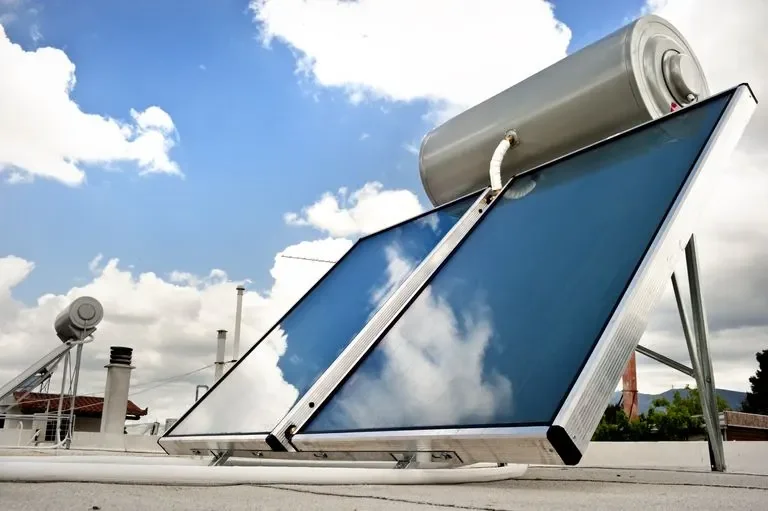
A solar water heater has three working parts: collectors (the dark roof panels) that absorb sunlight and turn it into heat, a storage tank that holds the hot water, and the path between them. No fuel is burned and no grid power is consumed for the heating itself — just sunlight hitting dark metal.
How water moves between collectors and tank divides solar systems into two families. In a thermosiphon system, physics does the pumping: hot water rises into the tank above the collectors while cooler water sinks down to be reheated. No moving parts, no pump, no electricity for circulation — the classic roof-tank design you see across Dubai villas. In a pumped (active) system, an electric circulation pump moves the fluid instead, allowing the tank to sit lower than the collectors — inside the building or at ground level. That matters when the roof cannot carry a heavy full tank. The pump adds placement flexibility at the cost of a small electricity draw. Either way, the heating itself is free sunlight.
What the Electricity Is Actually For
Does solar water heater need electricity? Here’s the honest breakdown — exactly three consumers draw power.
The Backup Element
A standard electric element inside the storage tank. It fires up only when water falls below a set temperature — cloudy stretches, rainy winter days, or evenings after the whole family has showered. It guarantees hot water regardless of weather, and is by far the largest electrical draw in the system.
The Circulation Pump
Active systems use a small pump to move fluid between collectors and tank. It runs only when there is heat to collect — typically daylight hours — and stops when the tank is up to temperature. Thermosiphon systems skip this entirely, using less electricity.
Controller and Sensors
Sensors on the collectors and in the tank feed a small controller — the system’s brain. It decides when the pump should run, when the backup element should engage, and when to switch off to avoid overheating. Its draw is tiny.
Notice what is not on the list. The collectors are passive — they absorb heat with zero power — and the insulation that keeps water hot overnight uses none either. Only the backup element could ever rival an ordinary electric heater, and in a well-sized Dubai installation it runs far less often.
Not sure which system you have?
Send a rooftop photo on WhatsApp — we will identify it and explain what uses power in yours.
Passive vs Active Systems Compared
Passive thermosiphon systems use the least electricity
The tank sits above the collectors, hot water rises on its own, and there is no pump to power. The only electrical draws are the backup element (weather-dependent) and the controller (negligible). If the power goes out, a passive system keeps collecting solar heat exactly as before — you just lose the backup boost until power returns.
Active pumped systems add control and placement freedom
When the tank cannot sit above the collectors, a pump closes the gap — the tank can live inside the building, sheltered from sun and dust. The trade is a small pump running during sunny hours plus full dependence on electricity for circulation. For most villas, passive thermosiphon wins on simplicity — no pump to replace, and it keeps working through power cuts. Active systems suit larger buildings where the tank must sit apart from the collectors. Unsure which you have? Our solar installation team can assess your roof.
Dubai Reality How Often Does Backup Actually Kick In
This is the question every villa owner asks. Here is the honest picture.
Most of the year, almost never
Dubai’s strong, reliable sunshine means the collectors carry the full load on clear days and the backup element stays silent — the water is already hot by evening.
Winter and cloudy stretches change the story
Short winter days and multi-day cloudy or dusty spells mean the collectors cannot always finish the job. This is when the backup element earns its keep — topping the tank up to a comfortable temperature.
Evening demand is the real test
The backup element matters most when solar input is zero and demand is high — back-to-back evening showers. Well-sized tanks absorb this by storing a full day of solar heat.
Dust dulls the collectors
Dubai’s dust settles on panels and quietly cuts their output, forcing the backup element to work harder. Regular cleaning through our solar maintenance service keeps the sun doing its full share.
Can a Solar Water Heater Run With Zero Electricity
Almost — but not quite. If you’re asking does solar water heater need electricity at all, honesty matters more than a catchy headline.
A passive thermosiphon system collects and stores solar heat with zero electricity: no pump, no motor, nothing mechanical to power. Accept that cloudy days mean cooler water, and the heating itself is fully off-grid — something an ordinary electric heater can never do.
The catch is the controller: modern systems use electronic sensors to prevent overheating and manage the backup element, and as normally wired they pull from the mains. And then there is the backup element — the one part that genuinely needs grid-scale power. So the practical answer: a passive system can be made functionally grid-independent for everything except backup heating. For most Dubai homes, the sensible path is simply near-zero electricity — a well-maintained solar system whose backup element almost never runs. If independence during power cuts matters to you, talk to us on WhatsApp about controller options that keep a passive system fully solar through outages.
Running Costs vs a Pure Electric Heater
This is where solar quietly wins. A pure electric heater heats every liter from cold using grid electricity — winter, summer, cloudy or clear. A solar system asks the sun to do the heating and only calls on electricity when the sun falls short.
In Dubai, the sun covers the heating load on the vast majority of days, so the backup element — the expensive part of the electrical draw — runs far less often than an electric heater’s daily-running element. The pump and controller are small consumers by comparison. The result: total electricity use is a fraction of a pure electric heater’s. Villa owners who switch consistently see their water-heating energy use drop to a small fraction of what it was.
See our solar water heater pricing guide for the full investment picture, or message us — we will talk through the running-cost math for your household honestly, including the cases where solar is not the right recommendation.
Maintenance That Keeps It Efficient
A solar water heater only stays near-free to run if the system stays healthy. Neglect slowly hands work back to the backup element — the most expensive way to heat water.
Panel cleaning in dusty Dubai
Dubai’s fine desert dust coats collectors and blocks sunlight faster than most owners realize. A dusty panel harvests noticeably less heat, and the backup element quietly fills the gap — on your electricity bill. Regular cleaning protects your savings more than any other habit.
Descaling against hard water
Dubai’s mineral-heavy water leaves scale inside tanks and on elements. Scale insulates the backup element and slows heat transfer, forcing longer heating cycles. Periodic descaling keeps both the tank and the backup element working efficiently.
Anode and valve checks
Most solar tanks carry a sacrificial anode rod and pressure relief valves. Our annual solar maintenance visit covers anode inspection, valve testing, sensor calibration, and a check of pumps and controllers — keeping the backup element a rare guest, not a daily one.
Book a maintenance visit on WhatsApp — cleaning, descaling, and a full efficiency check in one visit.
Solar Electricity — FAQs
No sales talk. If your question is not here, WhatsApp us.
Solar Water Heaters — Keep Reading
Everything Dubai Profixer covers on solar systems and water heating.
Dubai Profixer — Water Heater Specialists
Solar · Electric · Instant — supply, installation, repair & maintenance across Dubai.
📞 052 460 1612 · 🕐 7:00 AM – 12:00 Midnight, Daily
Astral Spaces, Sheikh Zayed Road, Dubai, UAE
Thinking About Solar for Your Villa?
Whether you are weighing up a new system, still wondering does solar water heater need electricity for your villa, or your existing solar heater needs a technician — the first step is a conversation. Honest advice, no obligation.