
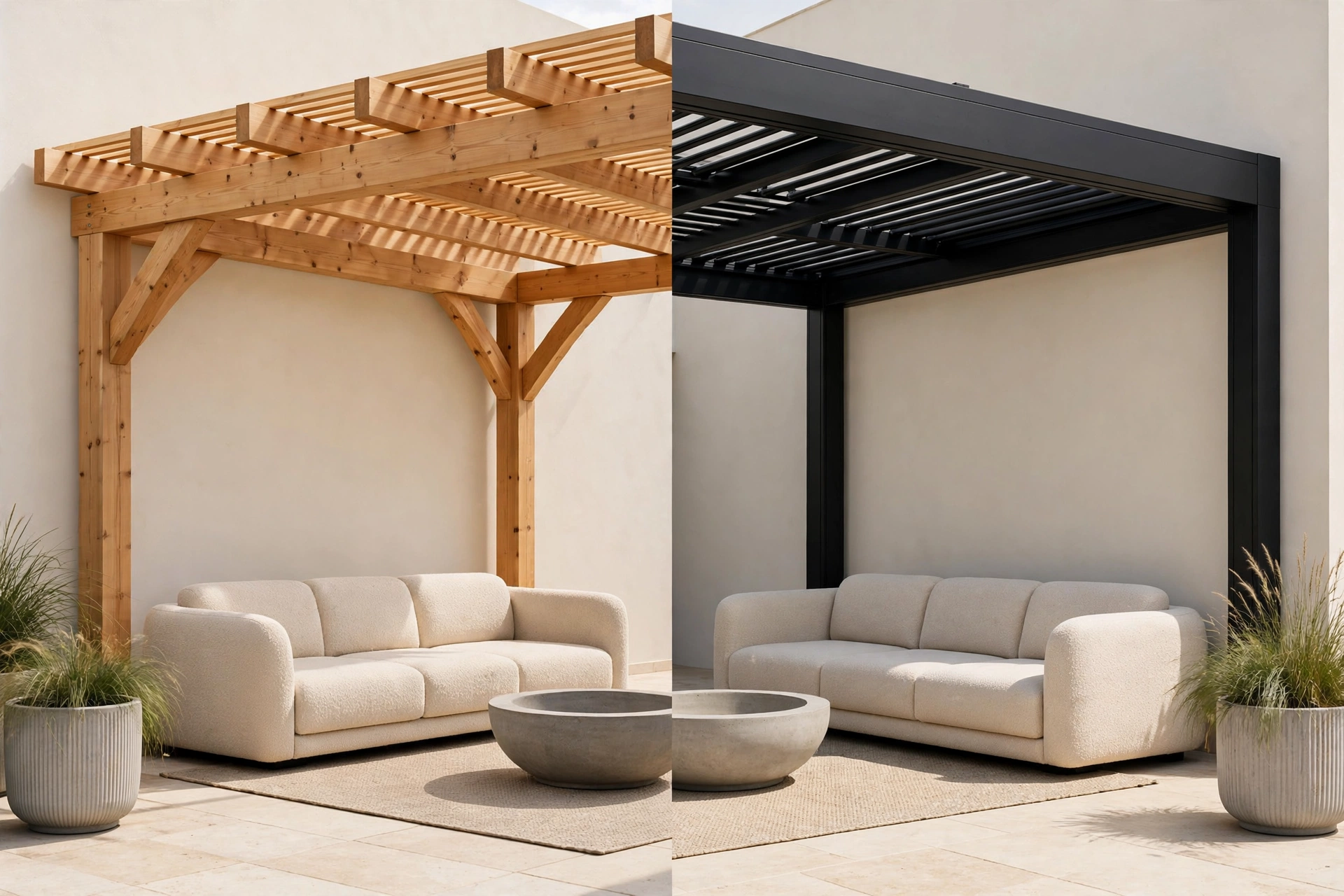
Wooden Pergola vs Aluminium Pergola: Which Is Better?by Dubai Profixer
Wooden pergola vs aluminium pergola: the honest comparison — durability in Dubai's climate, maintenance, looks, cost factors and best uses for each. No sales pitch: just what each material does well and where it falls short.
On this page
Wood or aluminium? It's the first decision in any pergola project, and the internet is full of confident answers — usually from companies that only sell one of them. We build both, so we can be honest: each material has real strengths and real weaknesses in Dubai's climate, and the "better" choice depends entirely on your priorities. This guide compares wooden and aluminium pergolas across durability, maintenance, looks, cost factors and best uses, ending with a genuinely balanced verdict.
One note before we start: this comparison assumes quality in both materials — good timber properly treated and finished, and proper structural aluminium with quality powder-coating. Cheap versions of either material fail in Dubai, and comparing premium aluminium against bargain-bin timber (or vice versa) tells you nothing useful. Judge each material at its best, then choose. Where relevant, we also flag the questions worth asking any builder before you commit.
Wooden Pergolas: Pros & Cons
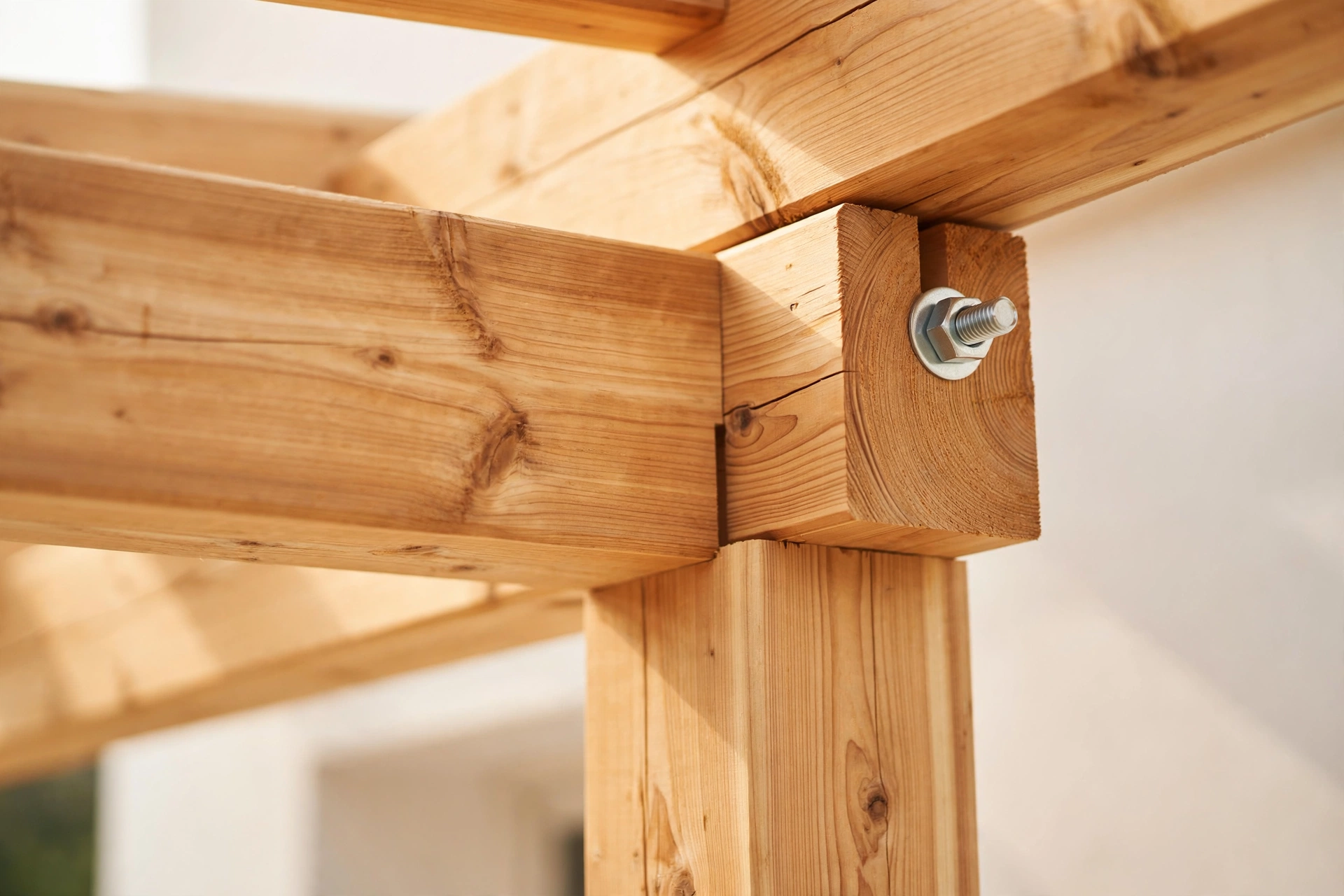
Timber is the original pergola material, and nothing else looks quite like it. Natural grain, warm tones, the way it softens and silvers with age — a wooden pergola feels crafted in a way metal structures rarely do. In Dubai, hardwoods handle the climate well when properly specified and finished, and timber suits everything from Arabic-inspired lattice designs to rustic-modern structures.
Wooden pergola pros
- Natural beauty: grain, warmth and character no manufactured material fully replicates.
- Design versatility: timber cuts, shapes and joins beautifully — lattice, arches, shaped beam ends and curves are all natural in wood.
- Warmth underfoot of the eye: timber feels welcoming; it softens modern architecture and suits traditional styles.
- Repairable: damaged sections can be sanded, re-finished or replaced individually.
- Species choice: from accessible softwoods to premium hardwoods, there's a timber for most budgets.
Wooden pergola cons
- Needs maintenance: sun and heat break down finishes — expect periodic re-staining or oiling to keep timber at its best.
- Weathers visibly: unfinished or neglected timber silvers and greys; some love the look, others don't.
- Species matters enormously: cheap, poorly treated timber fails fast in Dubai — the species and treatment decide the lifespan.
- Heavier engineering: large timber spans need substantial sections and proper joinery.
Aluminium Pergolas: Pros & Cons
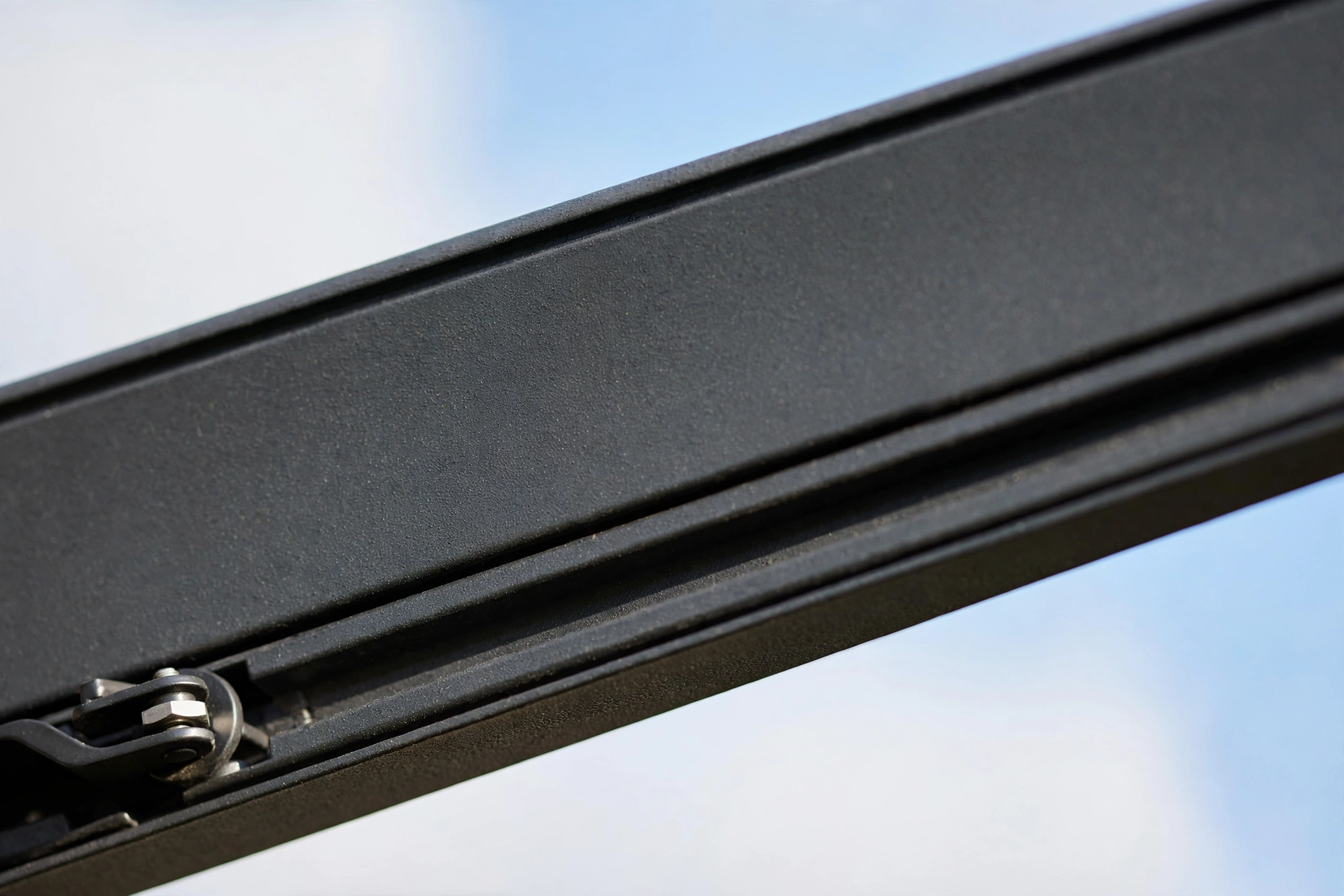
Aluminium is the modernist's material: precise, consistent and nearly maintenance-free. Powder-coated structural aluminium arrives in clean, even colours, holds slim profiles across generous spans, and shrugs off the issues that trouble timber — no rotting, no warping, no re-staining. For minimalist designs, it's the natural choice.
Aluminium pergola pros
- Minimal maintenance: no staining, oiling or sealing — occasional washing keeps it looking new.
- Crisp modern lines: slimmer achievable profiles and sharper geometry than timber allows.
- Consistent finish: powder-coating gives even colour across the whole structure, in any neutral tone.
- Won't rot, warp or split: aluminium is dimensionally stable through heat, humidity and dust.
- Predictable pricing: no species ladder — costs scale mainly with size and engineering.
Aluminium pergola cons
- Less natural warmth: even the best powder-coat doesn't replicate timber's grain and character.
- Can feel cold: in traditional or rustic settings, aluminium can look out of place.
- Harder to modify: on-site alterations and repairs need metalwork skills, not basic carpentry.
- Heat conduction: bare aluminium in direct sun gets hot to the touch — design shading and contact points accordingly.
Durability in Dubai's Climate
Dubai tests outdoor structures harder than most climates: intense UV, summer heat, fine dust, humidity spikes and, near the coast, salt in the air. Here's how each material copes.
Sun and UV are timber's main enemy — UV breaks down lignin and finishes, which is why unmaintained wood silvers and surface-checks. Quality hardwoods with proper UV-resistant finishes handle it well; the finish is sacrificial and needs renewal, but the timber beneath endures. Aluminium's powder-coating is formulated for UV exposure and holds colour far longer without intervention, though cheap coatings can chalk and fade — coating quality matters.
Heat affects both. Timber is a poor conductor, so it stays comfortable to touch and doesn't radiate heat the way metal does. Aluminium conducts heat readily — structural members in direct sun get hot, which matters for seating areas where people touch posts or lean on rails. Design around it with shade placement and finish choice.
Moisture and humidity favour aluminium outright — it doesn't absorb water, rot or swell. Timber's vulnerability depends entirely on species and treatment: dense hardwoods and properly treated softwoods cope well, but untreated or low-grade timber in damp footing conditions will deteriorate. Proper footings that keep timber out of standing water are non-negotiable.
Dust and sand are equal-opportunity: both materials collect Dubai's fine dust and need periodic washing. Timber's texture can trap dust in grain, making cleaning slightly more work; aluminium's smooth surfaces wipe clean easily.
Maintenance Head-to-Head
This is the most practical difference between the two materials, and the one that should weigh heaviest if you're honest about how much upkeep you'll actually do.
Wooden Pergola Maintenance
Plan on periodic re-finishing — cleaning, light sanding and re-staining or oiling — to keep timber protected and beautiful. The interval depends on sun exposure, species and finish quality, but it's a real recurring task, not a one-time job. Neglected timber doesn't fail overnight; it gradually silvers, checks and loses its richness. Annual inspection of fixings and footings is wise for any structure.
Aluminium Pergola Maintenance
Wash it. That's nearly the whole routine — periodic cleaning with water and mild detergent keeps powder-coating bright and prevents dust and salt buildup, especially near the coast. No staining, no sealing, no refinishing. Inspect fixings and drainage paths occasionally, as with any structure, but there's no finish to renew.
Be honest with yourself here. If you love the ritual of maintaining timber and will actually do it, wood rewards you beautifully. If maintenance is something you'll mean to do and never quite get to, aluminium's indifference to neglect is worth more than timber's warmth.
Looks & Design Flexibility
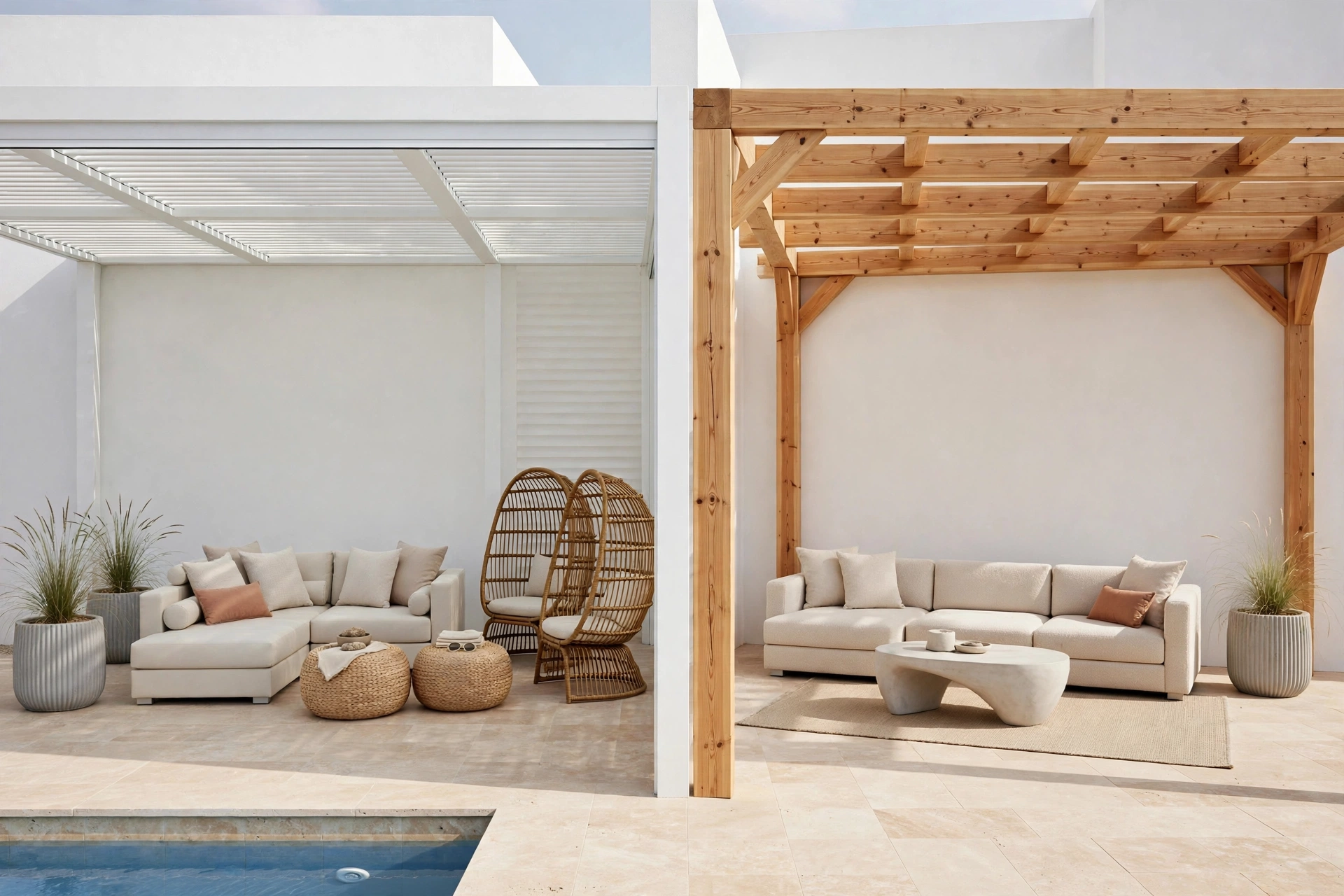
Aesthetically, the materials speak different languages. Timber is organic: grain patterns, colour variation, a surface that changes with light and age. It suits Arabic-inspired lattice work, Mediterranean warmth, rustic-modern designs and any setting where the garden should feel alive and crafted. Timber also takes decorative detailing naturally — shaped beam ends, arches, intricate lattice are woodwork's home territory.
Aluminium is architectural: precise edges, uniform surfaces, disciplined geometry. It suits minimalist villas, contemporary townhouses and any design where the pergola should read as a crisp extension of the architecture. Colour is a design tool — charcoal for drama, white for lightness, sand tones to blend with render.
The honest summary: timber offers warmth and craft; aluminium offers precision and restraint. Match the material's language to your villa's architecture and you'll rarely go wrong — a minimalist glass villa wants aluminium's discipline, while a stone-clad Arabic contemporary villa sings with timber.
Cost Factors Compared
Neither material is always cheaper — the comparison depends on what you're comparing. Timber spans the widest range: accessible softwood pergolas can be the most economical option, while premium hardwood structures with intricate joinery sit at the top of the market. The species you choose moves the price more than any other single decision.
Aluminium sits in the middle of that range with far less variation — its cost scales predictably with size, profile sizes and engineering rather than material grade. For a like-for-like simple design, aluminium often lands between basic timber and mid-range hardwood.
But purchase price isn't the whole picture. Factor in timber's maintenance over the years — materials and labour for re-finishing — against aluminium's wash-and-forget routine, and the lifetime economics shift. A cheaper timber pergola that's never maintained can end up costing more in repairs and early replacement than an aluminium one that simply endures. Read our wooden pergola and aluminium pergola pages for more on each.
Best Use Cases for Each
- Choose timber when: your villa leans traditional, Mediterranean or Arabic contemporary; you want lattice screens, arches or decorative joinery; you love natural materials and will maintain them; the garden's character is organic and planted.
- Choose aluminium when: your villa is minimalist and contemporary; you want the crispest lines and slimmest profiles; low maintenance is a priority; the design is strictly geometric; you're near the coast and want maximum corrosion indifference.
- Either works when: the design is simple and rectilinear — then it's purely a question of warmth versus precision, and maintenance appetite decides.
And remember both can be furnished: our furnished pergolas pair either structure with outdoor seating designed around it from the start.
Sustainability Notes
If environmental impact matters to you, both materials have a case — and both have caveats worth knowing.
Timber is renewable and stores carbon, but only when it's genuinely well-sourced. Ask where the timber comes from and whether the supplier can speak to responsible forestry — vague answers are a red flag. Dense tropical hardwoods last longest but travel furthest; faster-growing treated softwoods have a lighter footprint but shorter service life. The greenest timber pergola is the one you never have to replace, so durability is itself a sustainability choice.
Aluminium is energy-intensive to produce but almost endlessly recyclable — recycled aluminium uses a fraction of the energy of new, and the material doesn't degrade through recycling. A powder-coated aluminium pergola that serves for decades with nothing but washing is, in lifecycle terms, a very efficient use of material. The caveat is the coating: quality powder-coating lasts; cheap coatings that chalk and need early replacement waste the advantage.
Either way, the most sustainable pergola is the one built well enough to last. A structure replaced after a few years — in any material — dwarfs the footprint difference between wood and aluminium chosen well.
Questions to Ask Before You Choose
Still torn? These five questions cut through the debate faster than any comparison table:
- Will I actually maintain timber? Not "should I" — will I. If the honest answer is no, aluminium's indifference to neglect outweighs timber's warmth.
- What does my villa speak? Stand in the garden and look at the house. Minimalist glass and render asks for aluminium's discipline; stone, arches and texture ask for timber's warmth.
- Where does the sun hit hardest? For west-facing seating used in the afternoon, timber's cool-to-touch comfort matters. For a purely visual garden feature, it matters less.
- What does my budget reward? If the budget is tight, a well-built aluminium pergola beats a cheap timber one that will need early work. Spend on quality of whichever material you choose.
- Who's building it? Timber rewards good carpentry; aluminium rewards good metalwork and coating. Ask to see previous work in the material you're choosing — the craftsman's skill matters as much as the material.
The Balanced Verdict
There is no universally better material in the wooden pergola vs aluminium pergola debate — only the better material for your situation. If you want natural warmth, crafted detail and a structure with soul, and you'll maintain it, choose timber. If you want crisp modern lines, minimal upkeep and predictable cost, choose aluminium.
The most common regret we see isn't choosing the "wrong" material — it's choosing timber and then never maintaining it, or choosing aluminium for a traditional villa where it looks cold. Match the material to your architecture and your honest maintenance habits, specify quality in whichever you choose, and either will serve you well for years.
One final thought: don't let the material debate delay the project. Homeowners sometimes research wood versus aluminium for months while their garden sits empty through the best outdoor season. Both materials, properly specified and well built, make beautiful pergolas — pick the one that fits your home and habits, and start enjoying the space.
Still undecided? Tell us about your villa and garden on WhatsApp — we'll give you a straight recommendation, including which we'd choose for our own homes in the same situation.
Wooden vs Aluminium Pergola: FAQs
Still Deciding Between Wood and Aluminium?
Still torn in the wooden pergola vs aluminium pergola debate? Send us a photo of your villa and garden — we'll give you a straight recommendation and a quote for the material that suits your home best.
Request a Quote